As a collector of a De La Rue issue, I wanted to write this article to hopefully give fellow collectors ideas on how rewarding building a specialised collection of a De La Rue issue or issues can be. Thanks mostly to the Robson Lowe sales of the De La Rue archives in the 1970s, there is a wealth of archival material direct from the archives (despite the company’s factories and offices at Bunhill Row being destroyed in the Blitz), and much of it, even very rare or unique items, don’t have to break the bank. Below I take a look at stages of production from essays, to die proofs, to colour trials through to the final stage of printing, whilst shining a light on the artistry, design and work from a range of De La Rue issues from around the world, which feature in our May 28th-June 1st auction series.
Essays
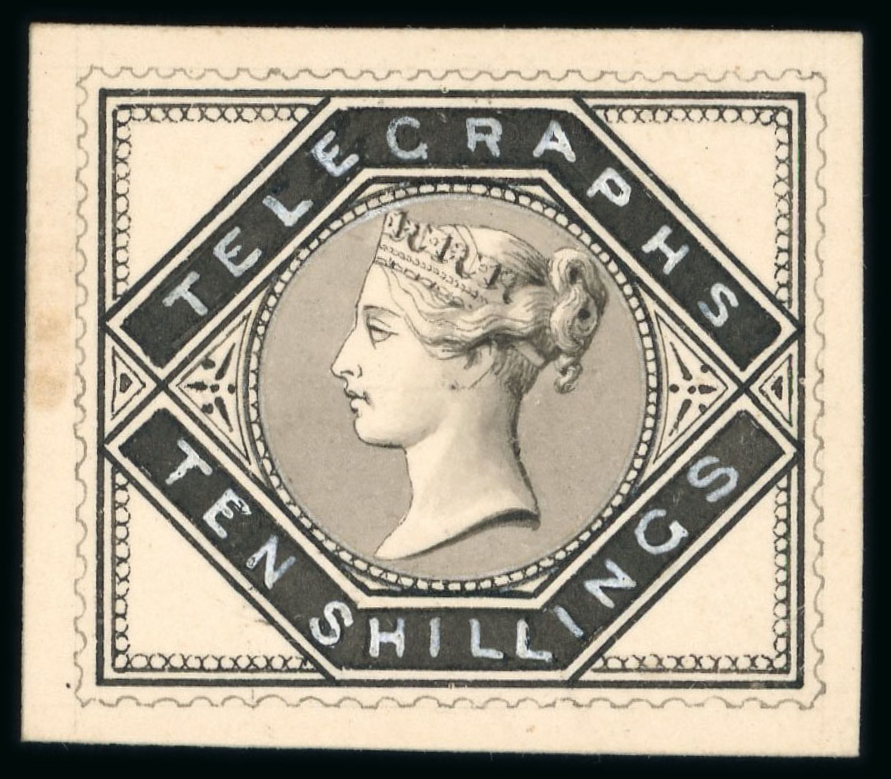
Lot 70462 above is a stamp-size essay of a British 10s Telegraph stamp, handpainted in black and Chinese white on card, which De La Rue prepared in 1880 for a proposed second issue. However Telegraph stamps were abolished on 1 November 1881 when postage stamps could once again be used, so this preliminary essay wasn’t developed. This beautiful and unique essay comes from the De La Rue archives, and is estimated at only £800-£1’000. And if that is tempting, then be sure to check out the essay of the 5s we also have for auction.
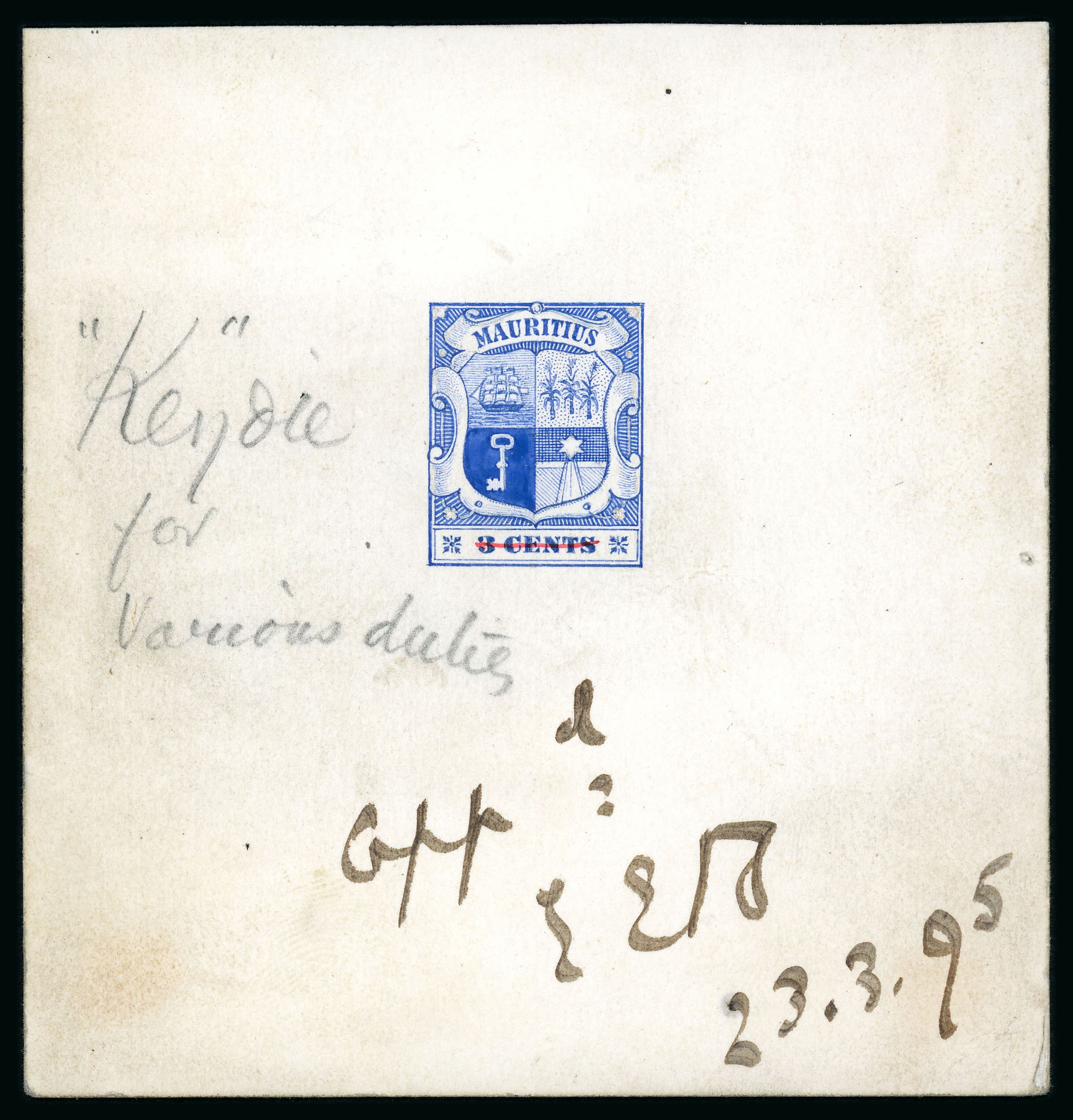
Lot 65913 shows a finalised essay for the Mauritius Arms of 1895. In blue ink, it is again a stamp-size essay but on a larger card with annotations alongside in the printer’s hand. In pencil it says “”Key” die for various duties”, and below with manuscript “Approved” and signed and dated. The “3 CENTS” has also been crossed out in red pen to signify that this is the approved essay for all the low values of this issue, which was in use for 15 years before being slightly modified, so it is an important essay for key issue of Mauritius at the turn of the 20th Century. Again, for a one-of-a-kind item from the DLR archives it is only estimated at £1’600-2’000.
We have over 220 lots in our section of Mauritius including over 30 lots of the 1895-99 and 1900-03 Arms issues, which are mostly proofs and colour trials of these attractive bi-coloured issues

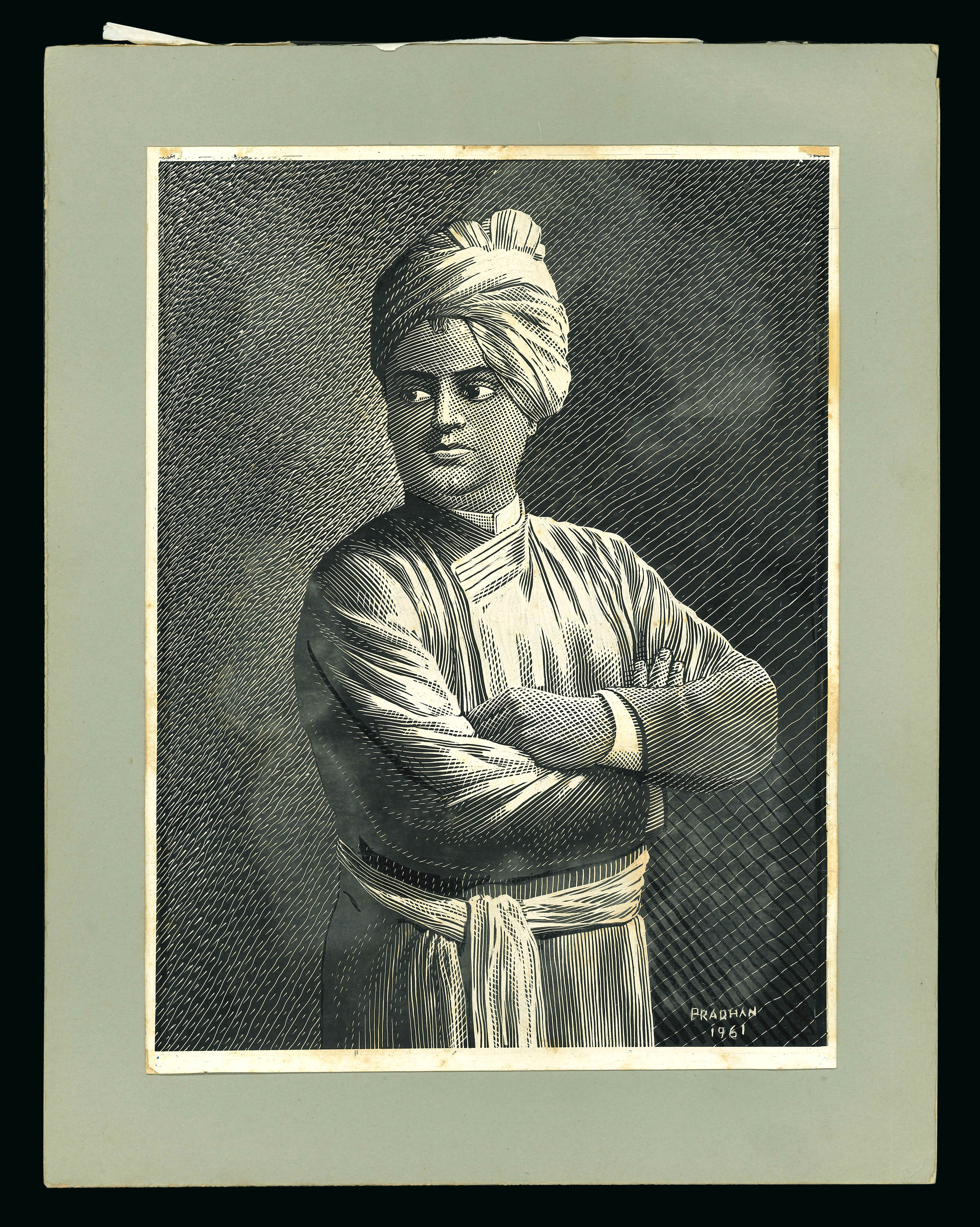
We also have a small archive of essays from Vasant Pradhan, new to the market from the artist’s family. Pradhan was employed with De La Rue, London, from 1958 to 1966 as a Security Artist. Lot 80651, illustrated at right is one of his essays that was chosen for the India 1963 issue to commemorate the birth centenary of the philosopher Vivekananda. What’s unusual about this essay is that it has been produced on a scratch board, which has a black surface and is white underneath, so all the white design that shows has been scratched away (see detail below). Very much like an engraver would to produce the die but this essay is 27cm tall.

Proofs
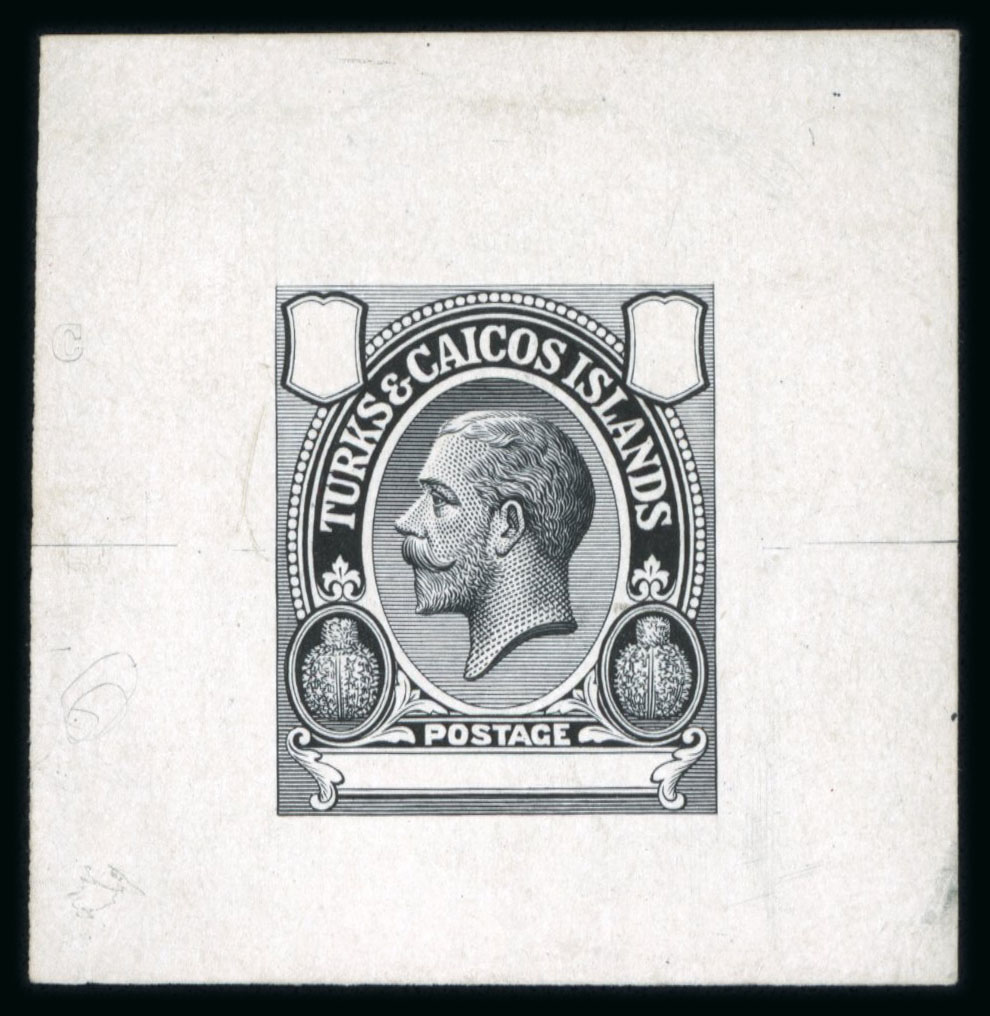
The next step in the process is the master die proof, when the engraver takes the artist’s work and engraves the master die. In the case of a “key-type” series, this means leaving the value tablets void to be engraved on separate dies. Lot 66672 is a die proof of the 1913 King George VI issue and is part of a nice section we have of Turks and Caicos.
Going back to Mauritius, below are two proofs of the 1879-80 8c value. What I like is that the one on the left, lot 65899, dated November 6th 1877 has pencil annotations pointing out areas which aren’t up to scratch. And lot 65900 on the right, dated two days later shows the die with these improvements made, so they make a lovely pair on an exhibit page.
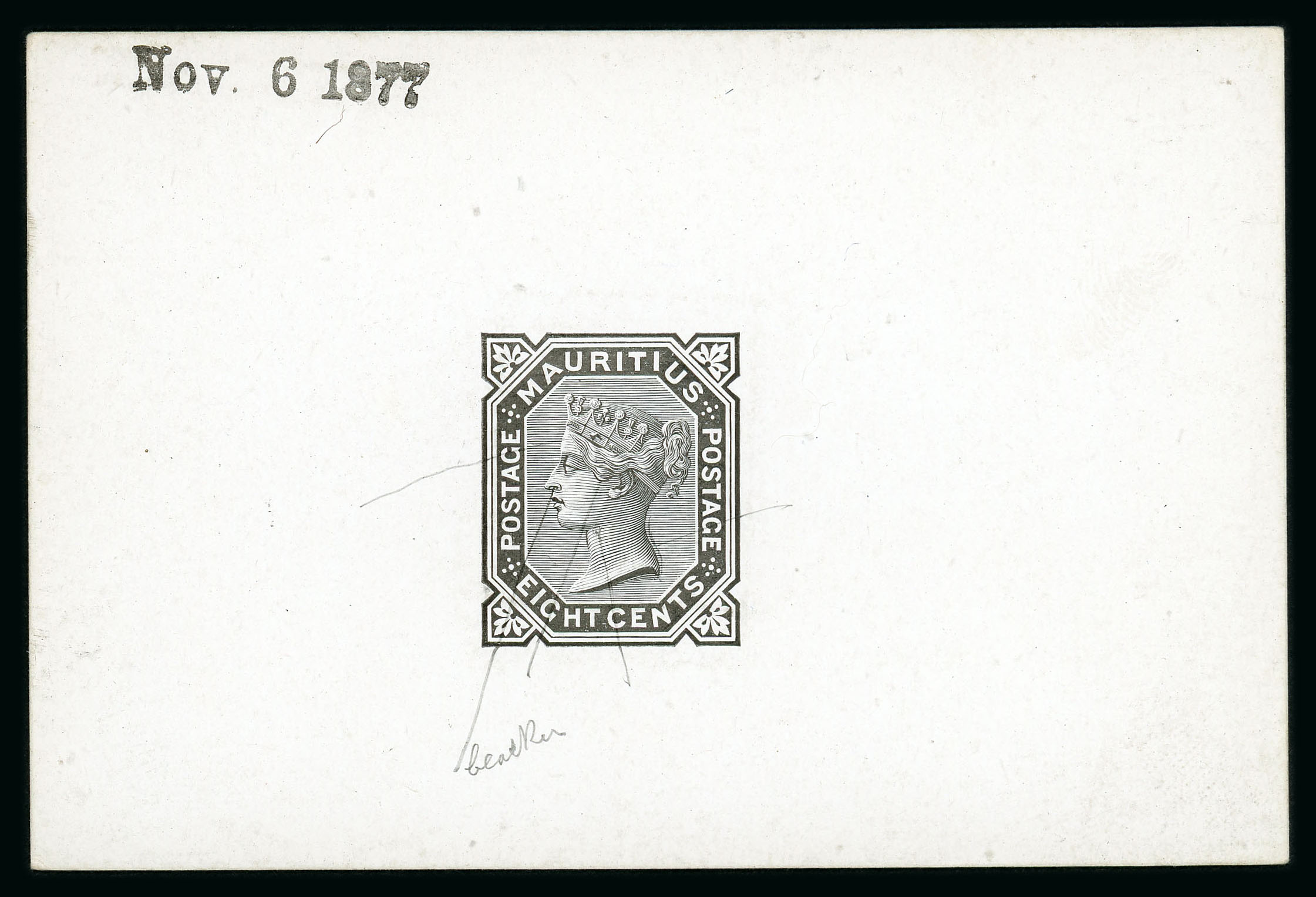
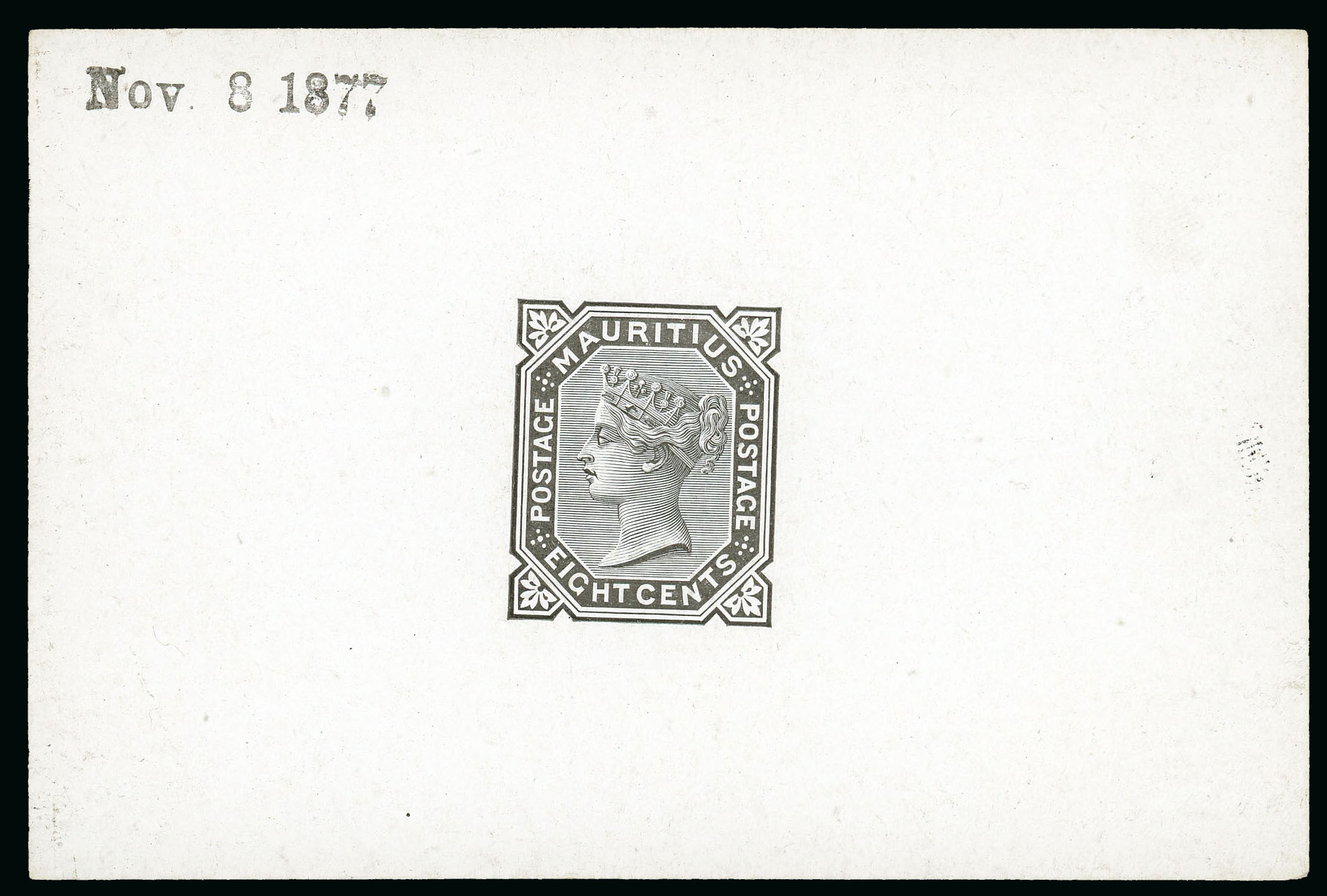


Above are two enlargements of the dies (which will expand if you click on them). The length of lines on the forehead are now reduced, the curl of hair by her ear has a reduced outline, the uneven shading lines in the crease of her neck and along the back of here neck are also fixed.
Colour Trials
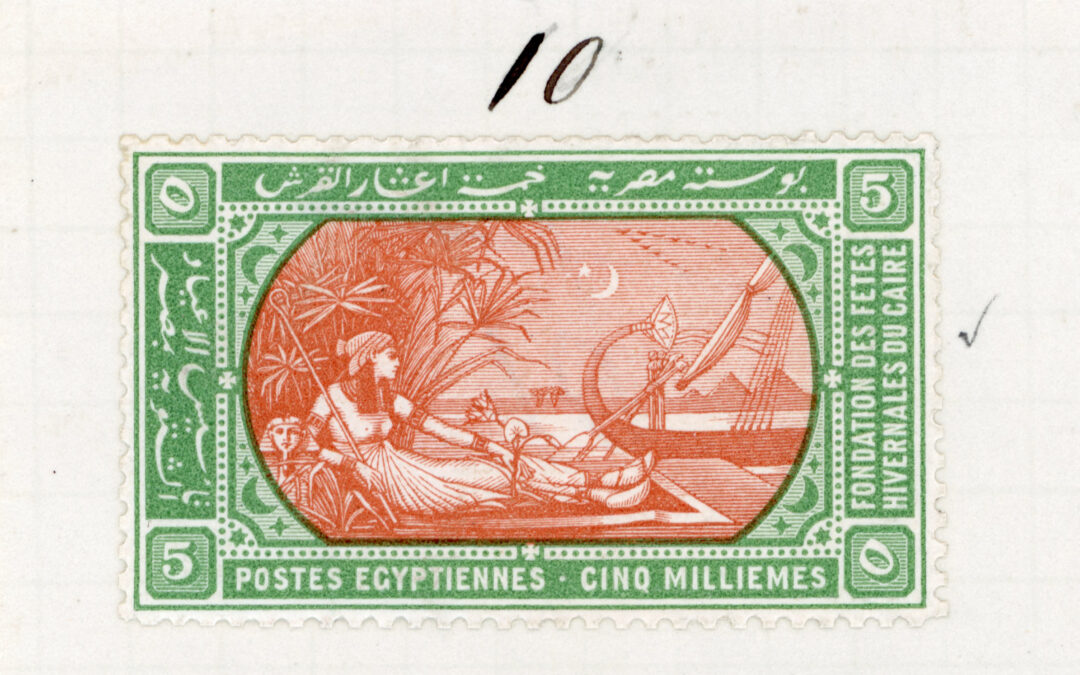
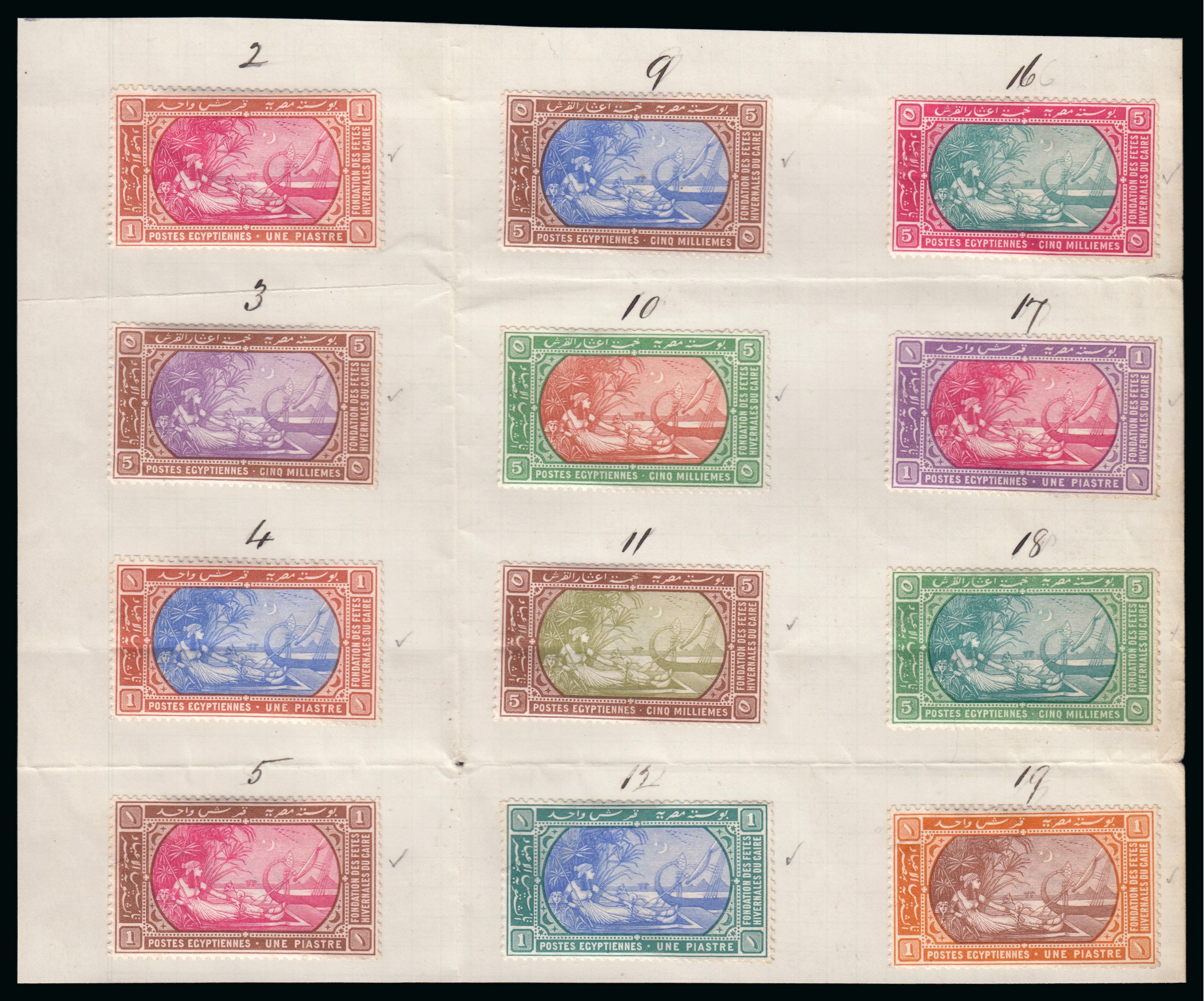
De La Rue are more well known for having made stamps of Great Britain and the Colonies, but the did create stamps for Egypt including an unissued commemorative set of three stamps in 1895 for the Winter Festivals Foundation.
And it’s a shame they were never issued because they are particularly attractive stamps (detail at right which expands when you click on it), with an ornate design in the centre of a woman laying down with a trading ship passing by with pyramids in the background. Lot 90388 is a piece from the De La Rue archives (missing 1 row of stamps at top and 2 rows at bottom) which shows a combination of bi-coloured colour trials. In the end the stamps were printed in mono-colour. It is not known why there weren’t issued.

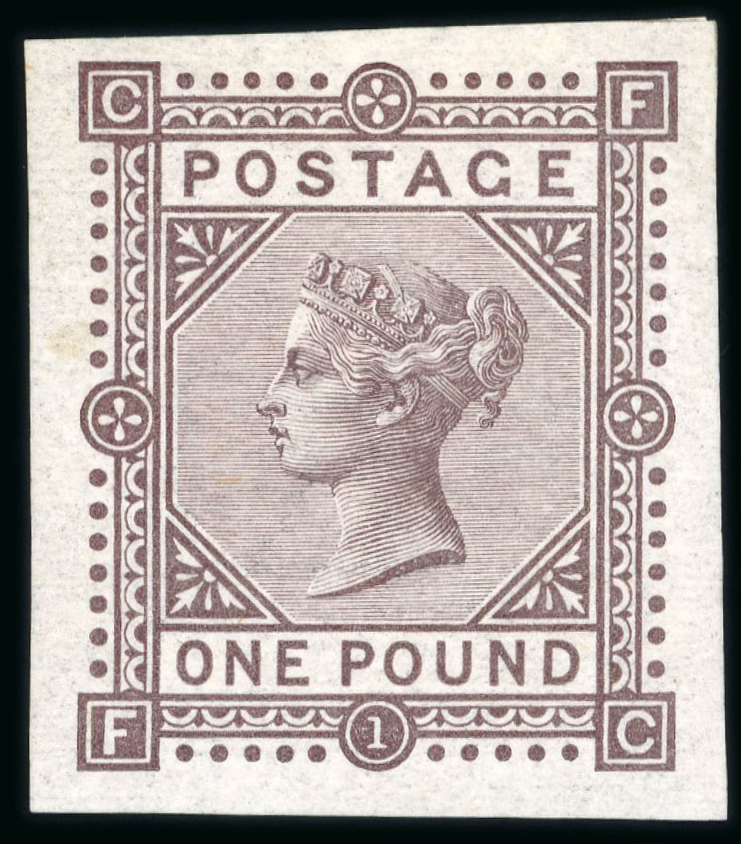
And finally, once the die has been perfected, the colour chosen, and the plate poduced, the printer produces a registration sheet for their records. The stamps from these sheets are known in the philatelic world as “imprimaturs”. Most often they are imperforate, and these days the imprimatur sheets for Great Britain certainly reside in the British Postal Museum archives (and are fully scanned and available to view on their website). A handfull of examples have been removed from each sheet. Sometimes for official purposes, sometimes not! Lot 70268 adjacent is a Great Britain 1867-83 £1 brown-lilac from the registration sheet. Because the stamp is a rarity in mint condition, it is known that these imprimaturs, which are less valuable, have been provided with fake perforations to try and pass off as the real thing. So although 27 examples were removed from the sheet, far fewer survive today.