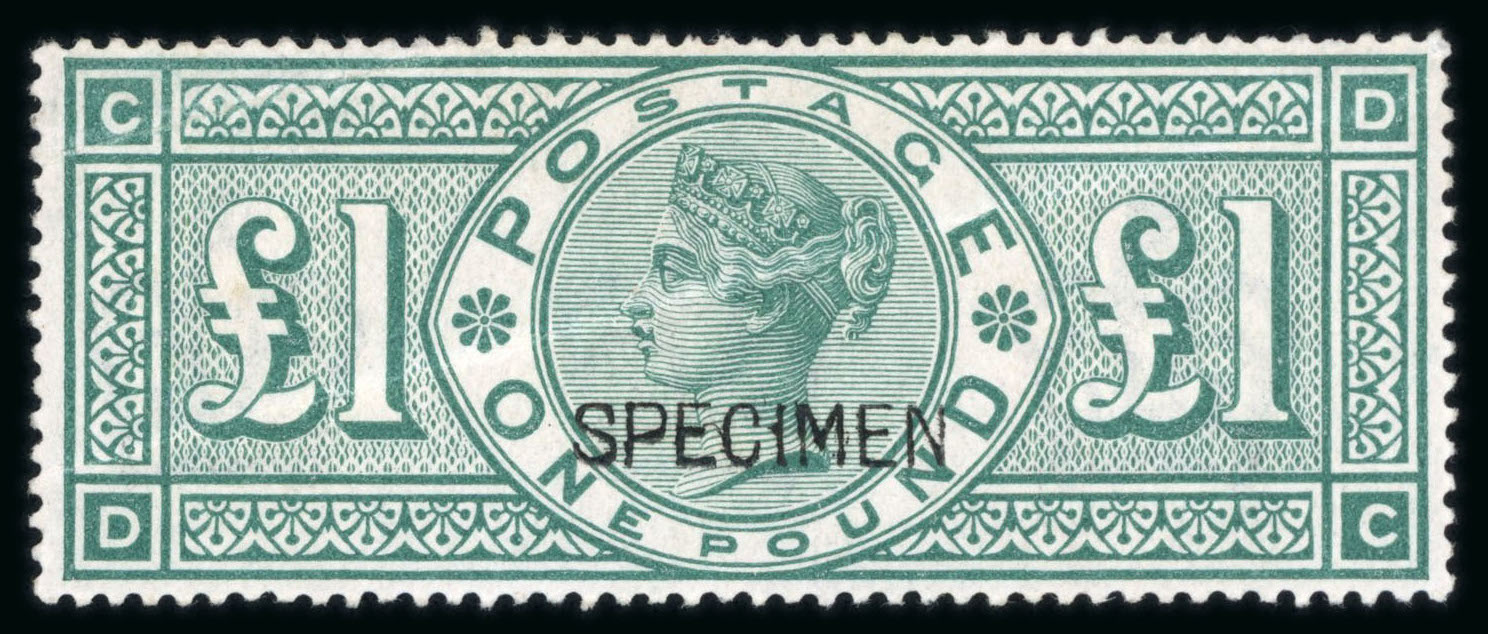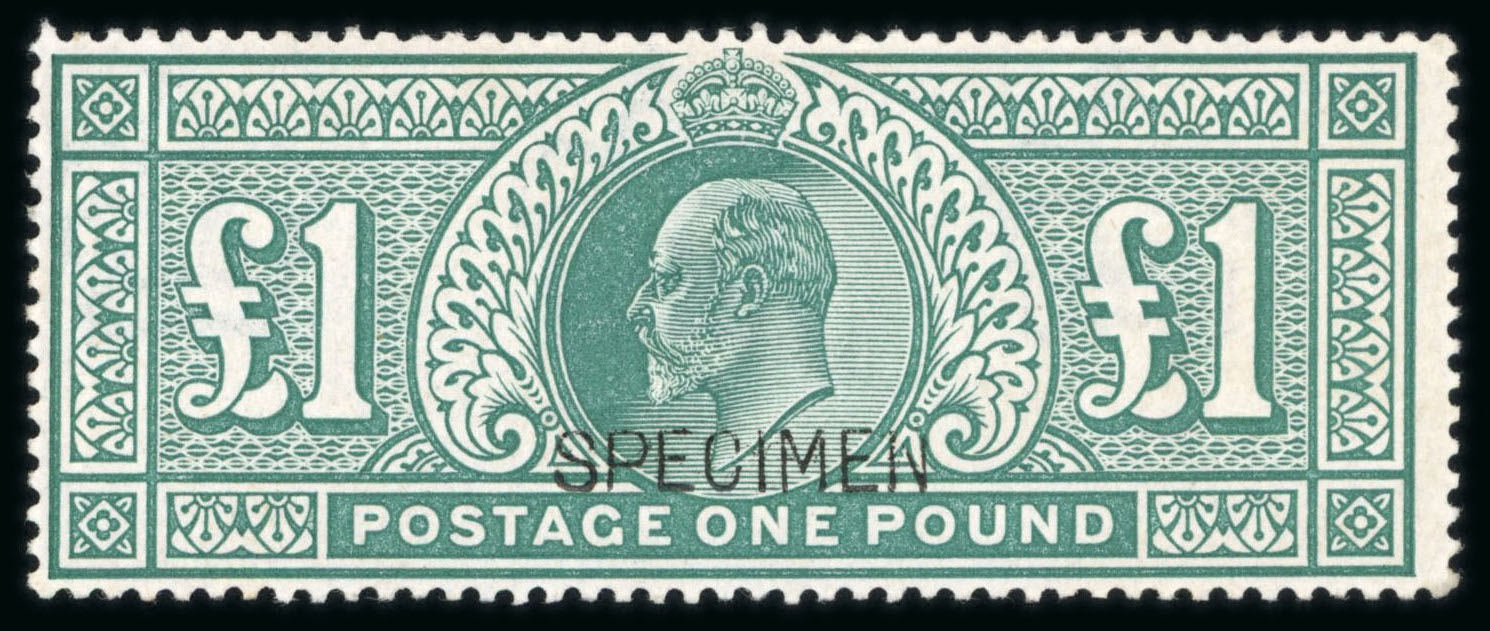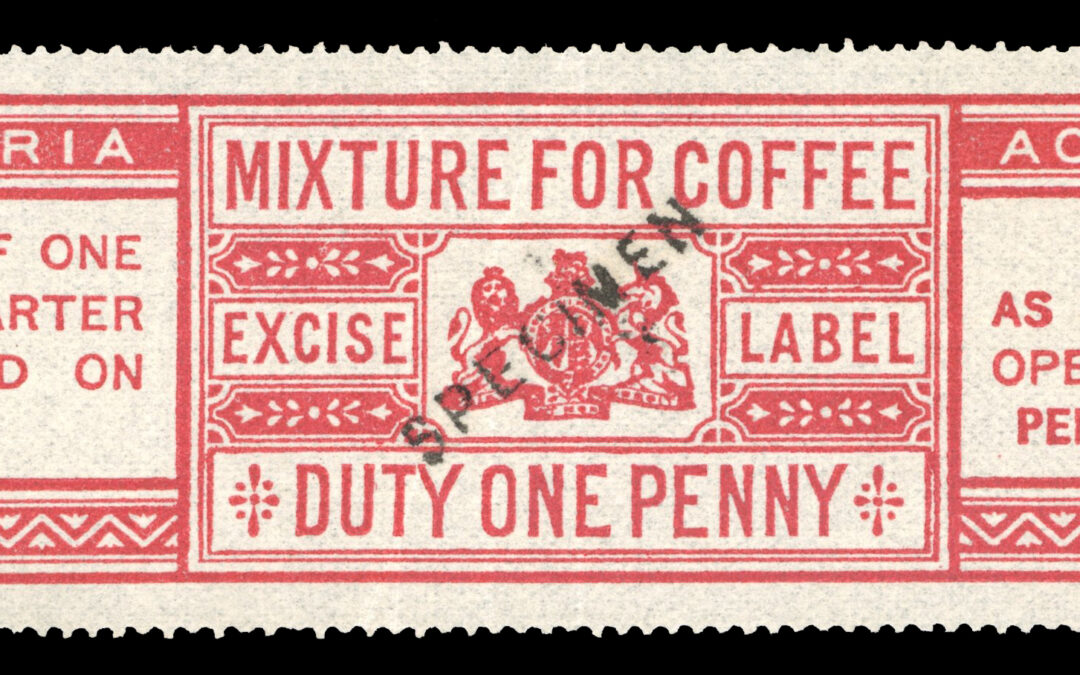
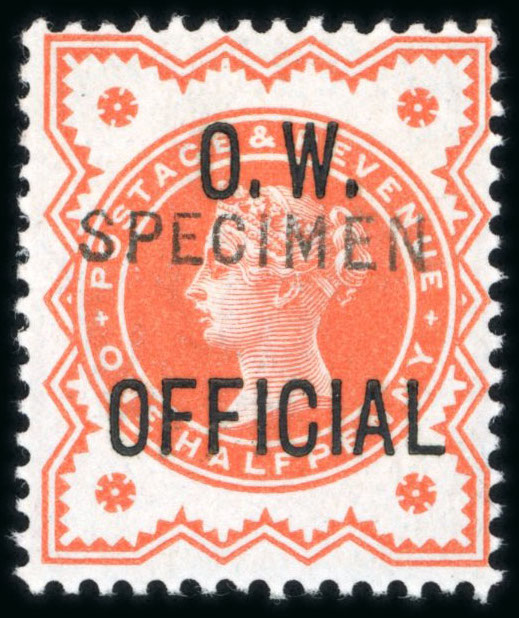
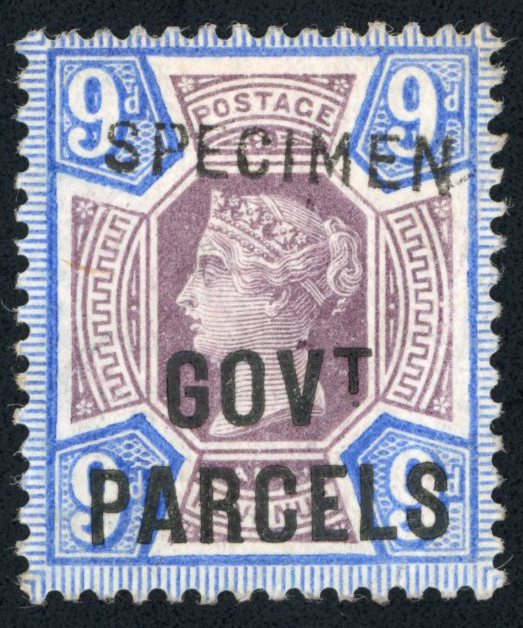
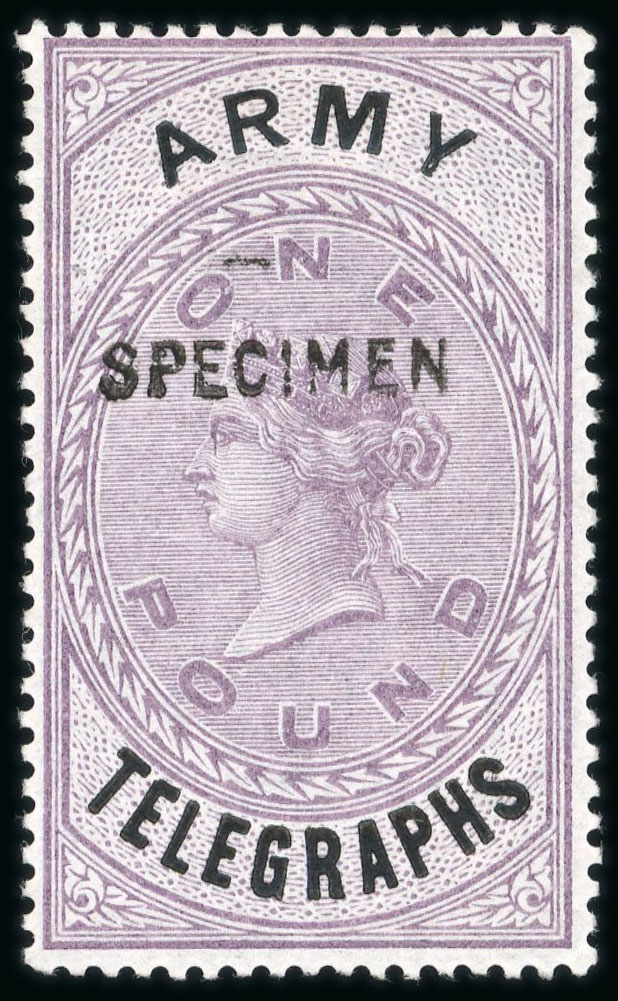
It gives us great pleasure to offer the David Leathart FRPSL collection of Great Britain in our auction on 16th June 2026 (starting at 10am CET, i.e. 9am in the UK), which primarily features “SPECIMEN” overprints on the postage, telegraph and revenue issues as well as the postal stationery.
Unquestionably the collection has been a labour of love for David, and he has managed to form a collection of Specimen overprints the likes of which has not offered on the open market since the sale of the Marcus Samuel’s collection back in 2003. Hopefully this auction will encourage new collectors to step forward into an area of GB where there are still things to be discovered. Searching through the indicies of the GB Journal brings up only a handful of articles, with the most thorough article on the general subject written by David himself (GB Journal vol.51 no.3 pp.56-64). Even in the Stanley Gibbons specialised catalogue there is a lack of information on the scarcity of different types as it doesn’t list them separately, grouping the rarest with the most common and stating a value as “from £XXX”. Even some of the illustrations of the different types aren’t clear or are misleading. Hence why I took the time to graphically produce our own table of the Specimen types in the introduction of the catalogue. Although I’ll admit that mine aren’t all perfect either, and it’s important to note that there are variations in the impressions in real life.
So below I illustrate each type found on Queen Victoria issues, as per the Stanley Gibbons listing which is in approximately chronological order, with some comments from David and what I have picked up along the way. I’ve included a few examples from the collection for each type to highlight some of the more unusual stamps. But first, a bit of background information and an introduction from David.
Collecting SPECIMEN Oveprints
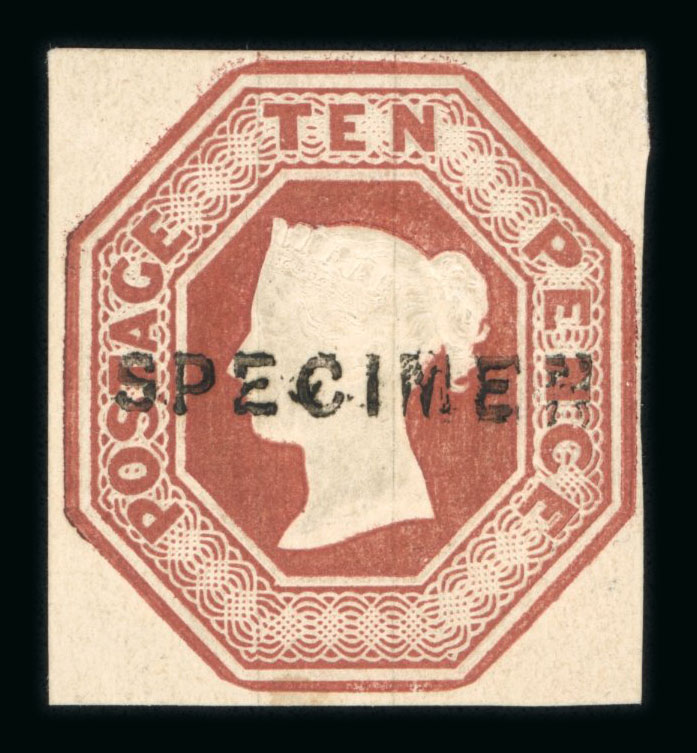
So, what is so special about collecting SPECIMEN and CANCELLED overprints? Well, there seems to be about 360 or so different Postage stamps with SPECIMEN overprints on them. There are somewhat fewer with CANCELLED cancelled. I think there are about 220 different Postage stamps with SPECIMEN overprints in this sale. Collectors need to be aware that the overprint handstamps can appear to be very similar. There are also some stamps can be found with several different overprints. For example the 1867 10d Red-Brown, a lovely stamp, can be found with types 2, 5, 6, 8, 9, 10, and 11, so there are 7 stamps to collect. The 1867 2s Blue has types 2, 5, 6, 8, 9, 10 and 11 so a further 7 to collect.
Here are five bullet points of how I have categorised and prioritised collecting Specimen overprints.
- Is a common stamp with a common SPECIMEN overprint types 6, 8, 9 & 11. E.g. 1887 Jubilee low value type 9. There are about 115 type 9 overprints with about 8 different versions.
- Is a Common stamp with a rare overprint types 1, 2, 3, 7, 13 & 16 and CANCELLED 14 and 18. E.g. 1855 4d Small Garter Type 3. The first Surface Printed stamps.
- Is a Rare stamp with a common overprint. E.g. types 6, 8, 9 & 11. E.g. 1880 2/- Brown type 9.
- The ultimate is a rare stamp with a rare overprint. E.g. Types 1, 2, 7, 13 & 16 and 14 & 18. E.g. 1862 3d Carmine with dots, Abnormal stamp with Type 2. There is only one known of this stamp with an overprint.
- Extras are given to double or treble overprints and inverted overprints.
Listing of “SPECIMEN” and “CANCELLED” Handstamps on QV Issues, ordered by SG type
Type 1
19.75 x 2.5mm, 1847-70

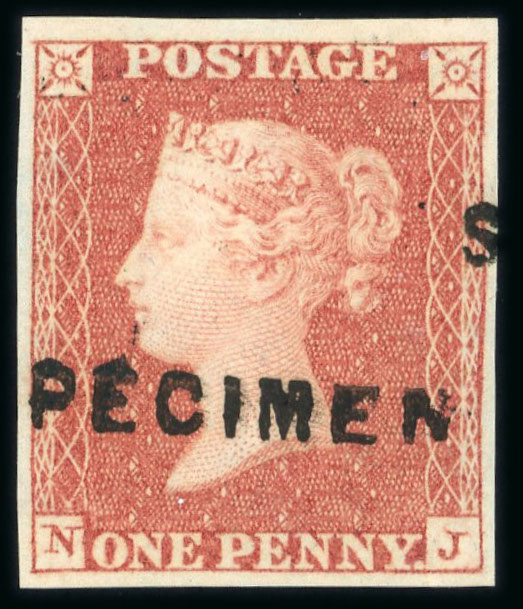
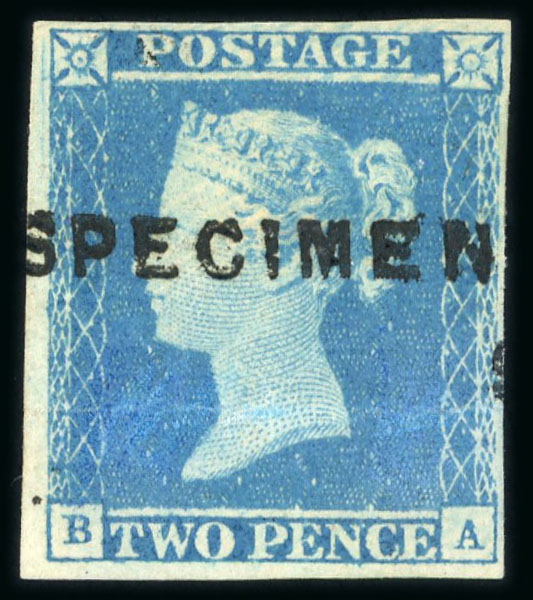
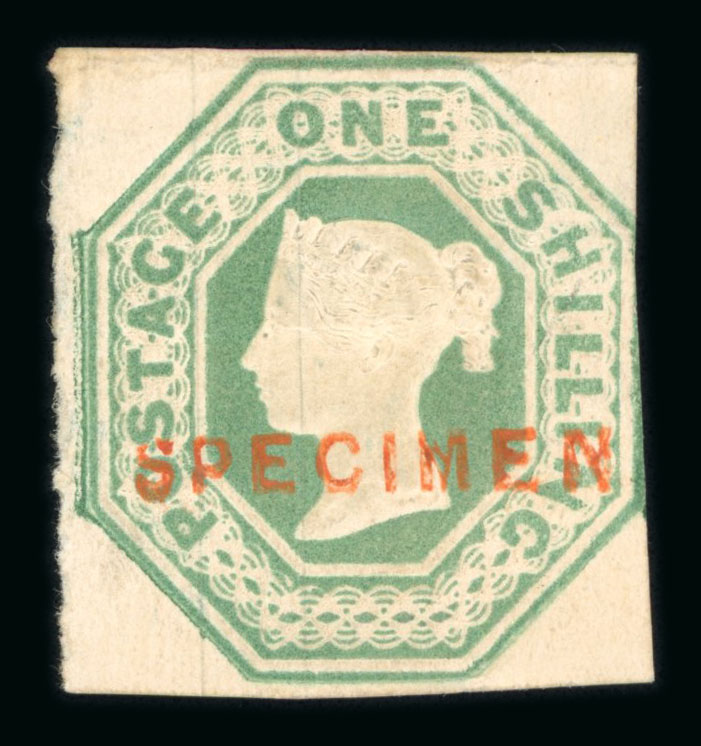
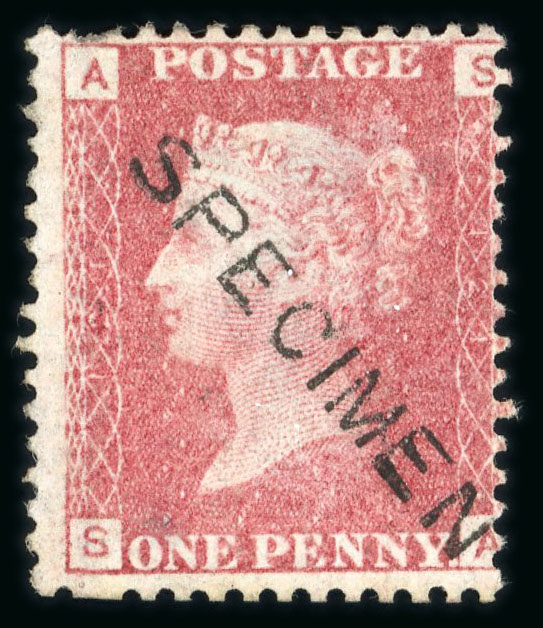
Type 1, as can be seen below, is a good example of how the impressions can appear to differ in style based on their inking, how they were struck and what paper they were stuck on, with the overprint on the Line Engraved stamps appearing almost slanted whereas the Embossed issues shows a much better defined strike. The first stamp ever in the world to be overprinted “SPECIMEN” was the 1s Embossed.
Type 2
20 x 2-75-3mm, 1854-73

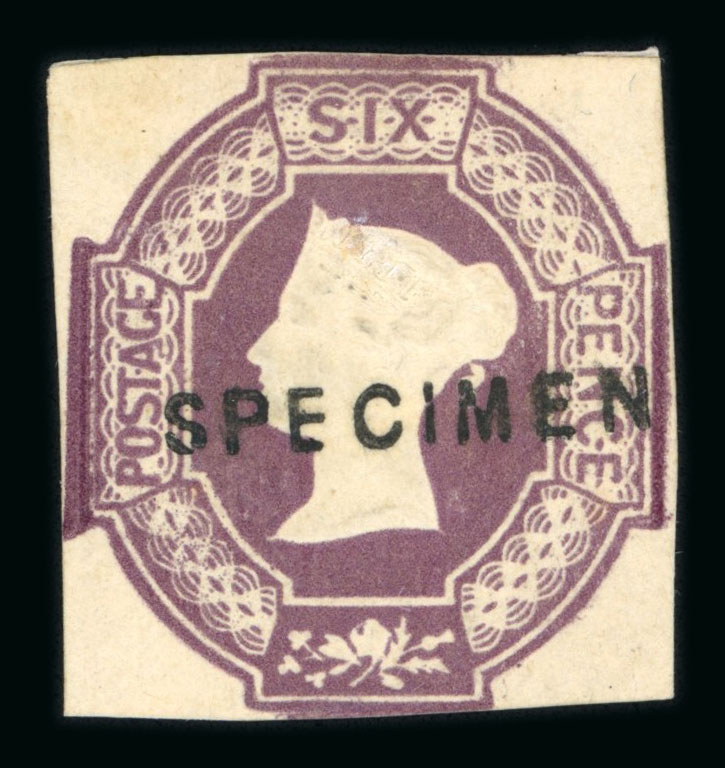
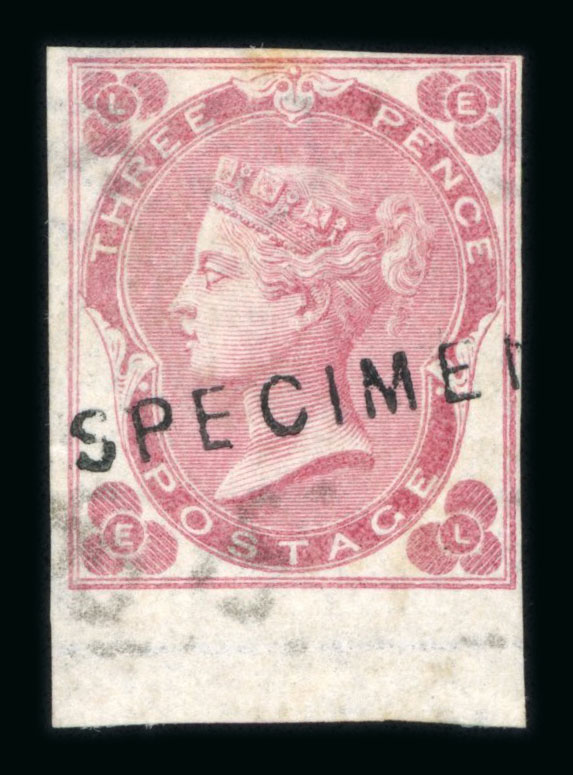
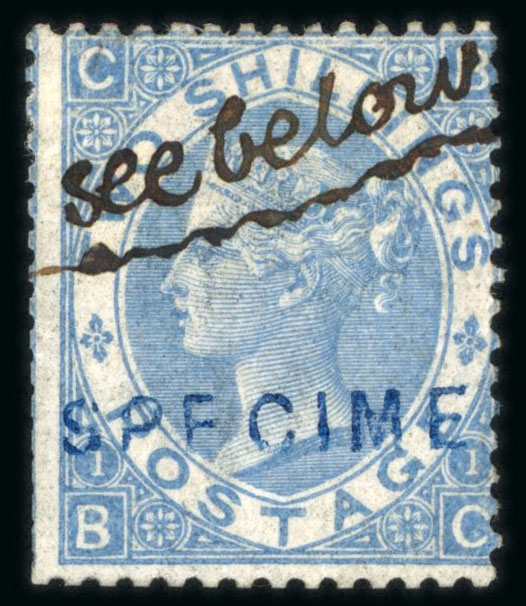
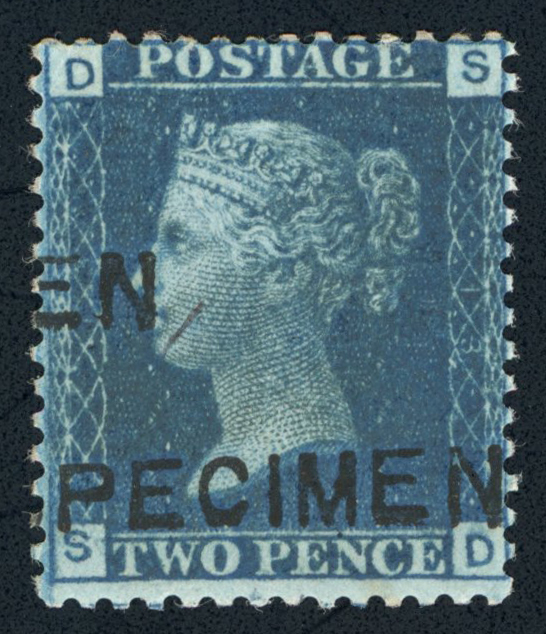
Type 2 shows the first “E” with a short base stroke and a middle stroke which is longer than both top and bottom strokes. It is also known struck vertically. As far as I’m aware (Ricky speaking), the only examples of coloured “SPECIMEN” handstamps on postage stamps are type 1 on the Embossed and type 2 in blue as seen on the 2s blue below. The imperf. 3d rose below is the rare “abnormal” with white dots and is one of 10 lots in this auction that is “ex Marcus Samuel”.
Type 3
21 x 2.5mm, 1855

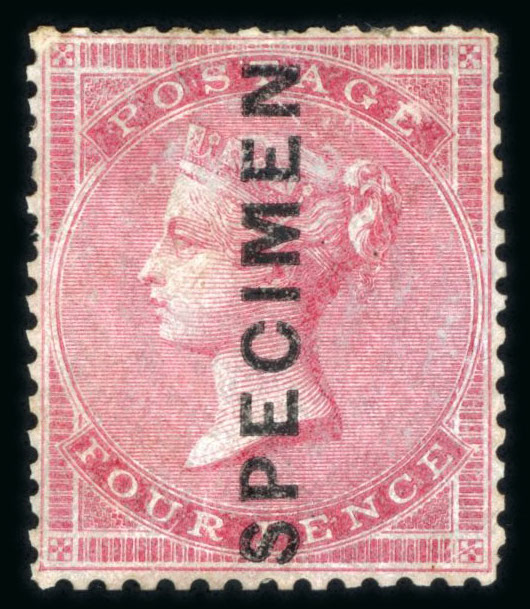
Type 3 is only vertical and only on the 1855 4d carmine. It’s very similiar in style to type 4 but more widely spaced.
Type 4
18 x 2.5mm, 1856

Type 4 is only on No Corner Letters stamps.
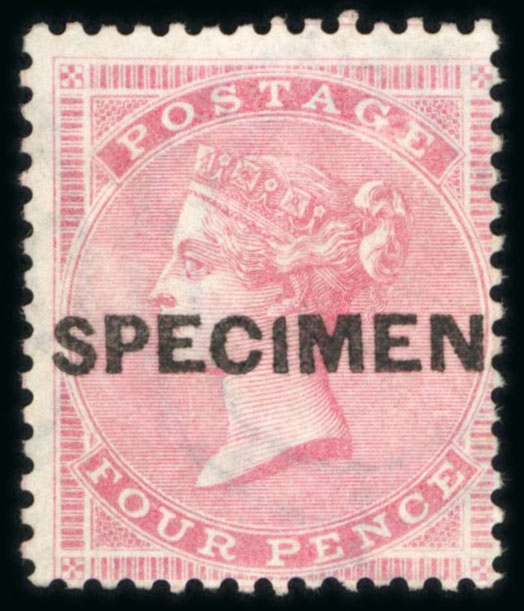
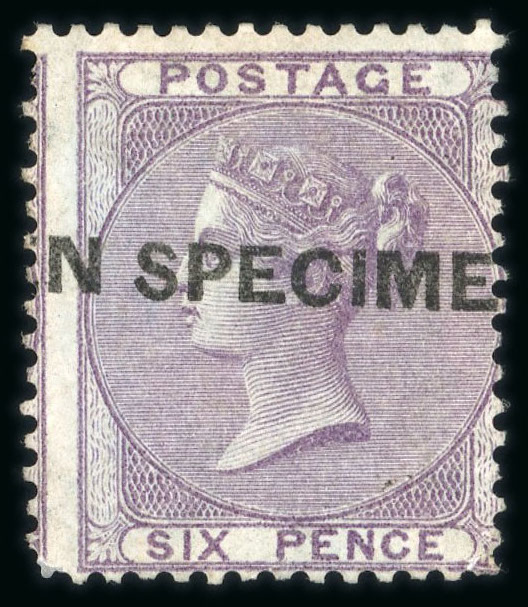
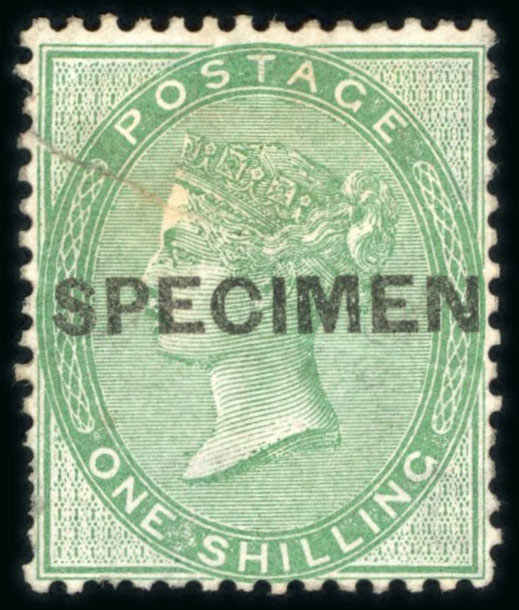
Type 5
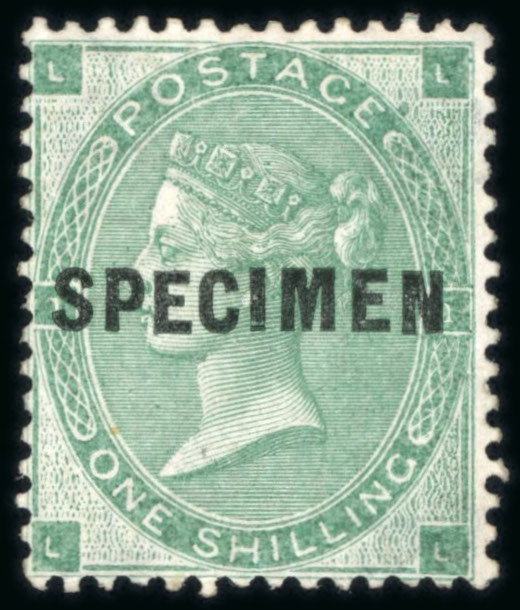
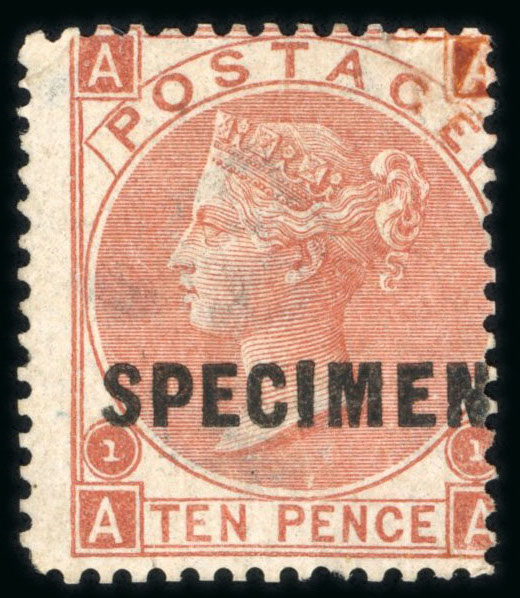
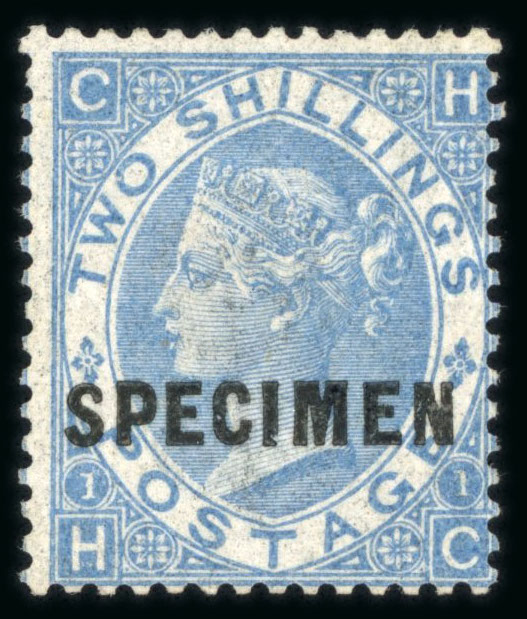
16.5 x 2.75mm, 1862-67

Type 5 is on Small and Large Corner Letters.
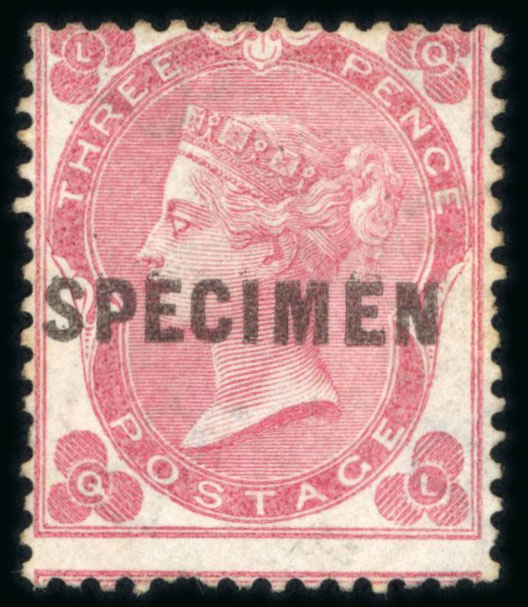
Type 6
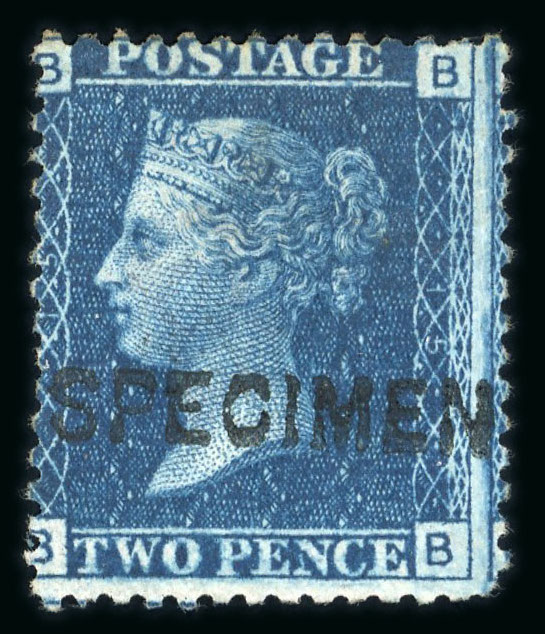
18.25 x 2.75-3mm, 1860-87

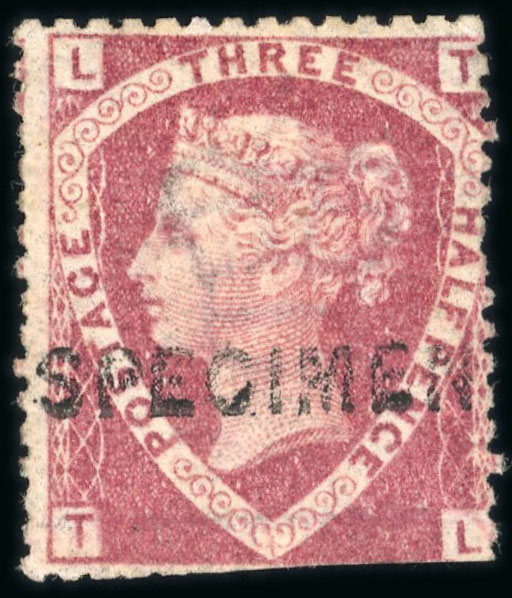
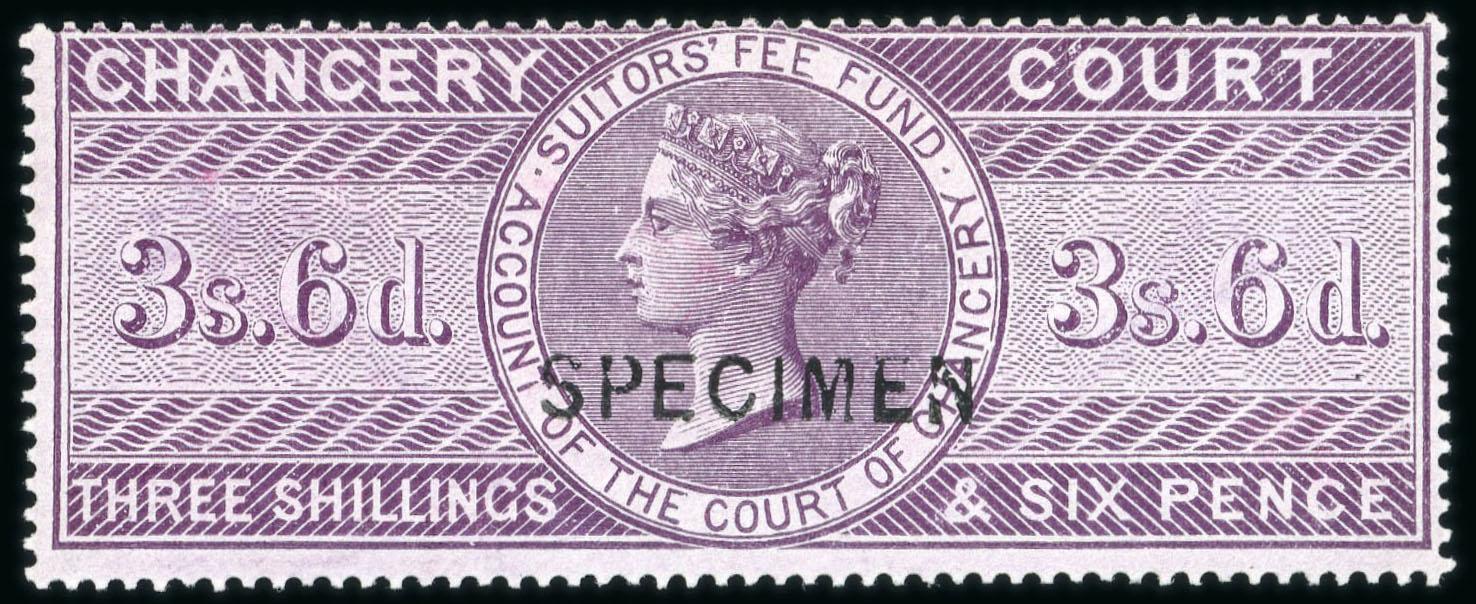
Type 6 often appears with a broken top to the “P” and sometimes with a slightly shorter and slightly curved right upright on the “N”.
Type 7
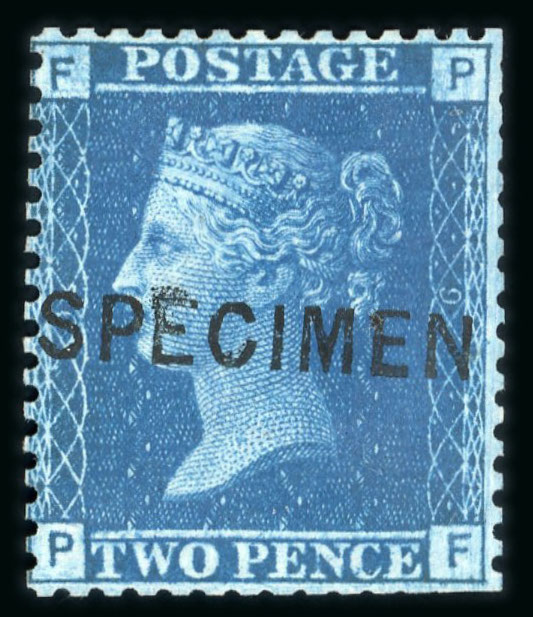
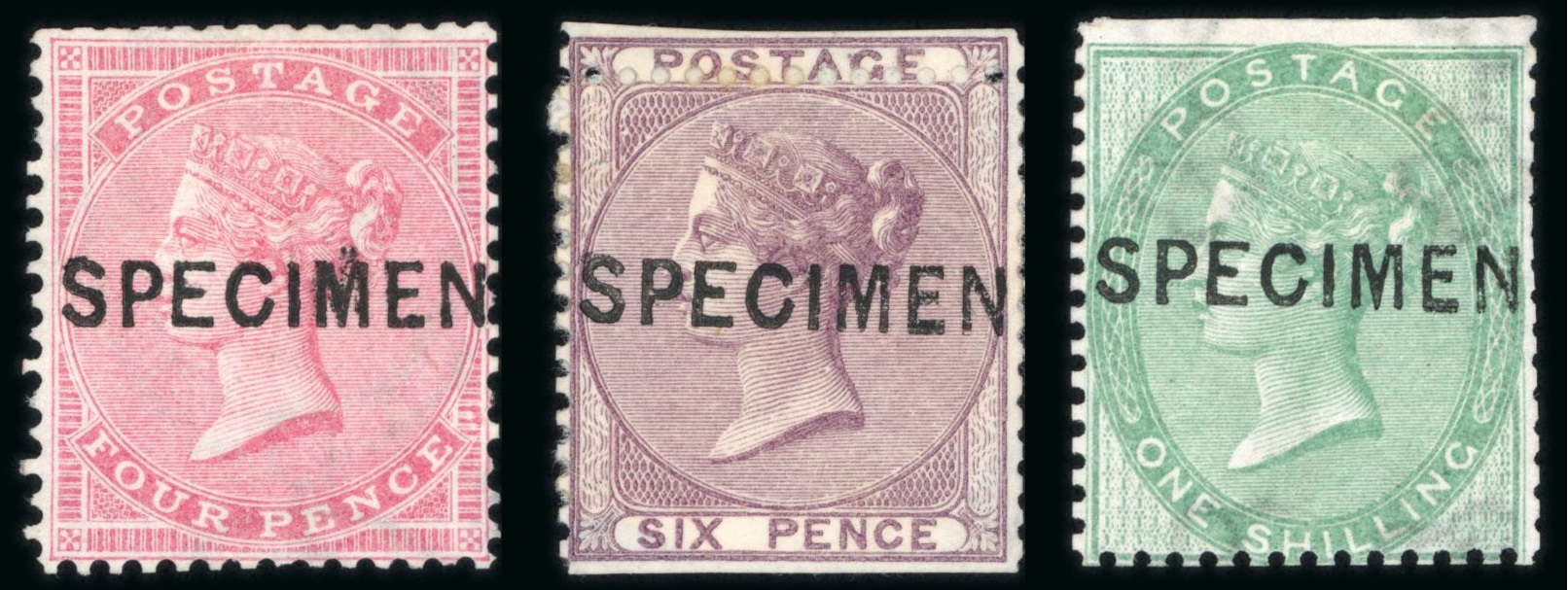
18.25 x 3mm, 1861ca.

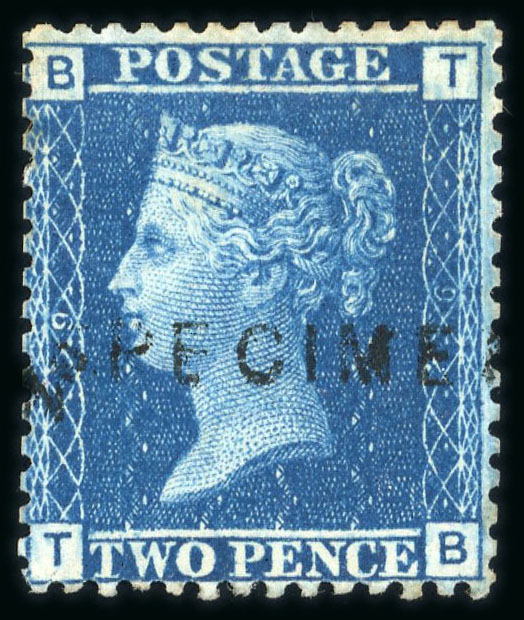
Type 7 is slightly taller and bolder than type 6 and appears only on 5 stamps, all of which are unique; 1857 1d plate 35, 1861 2d plate 9, 1856-7 4d rose, 6d plate 1 and 1s plate 1, which were produced for a presentation set.
Type 8
19.5 x 2.5mm, 1862-77

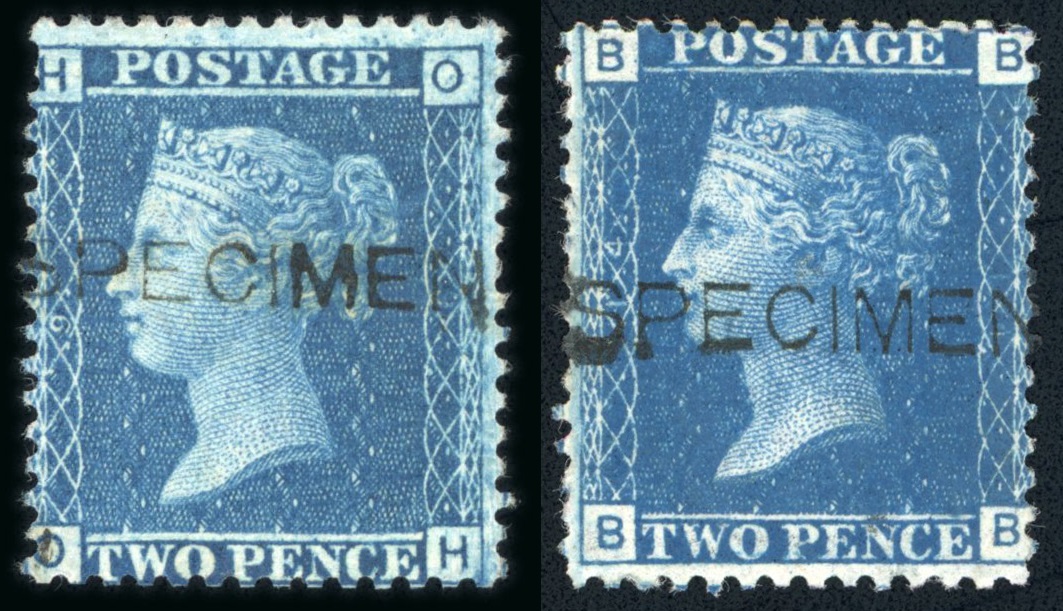
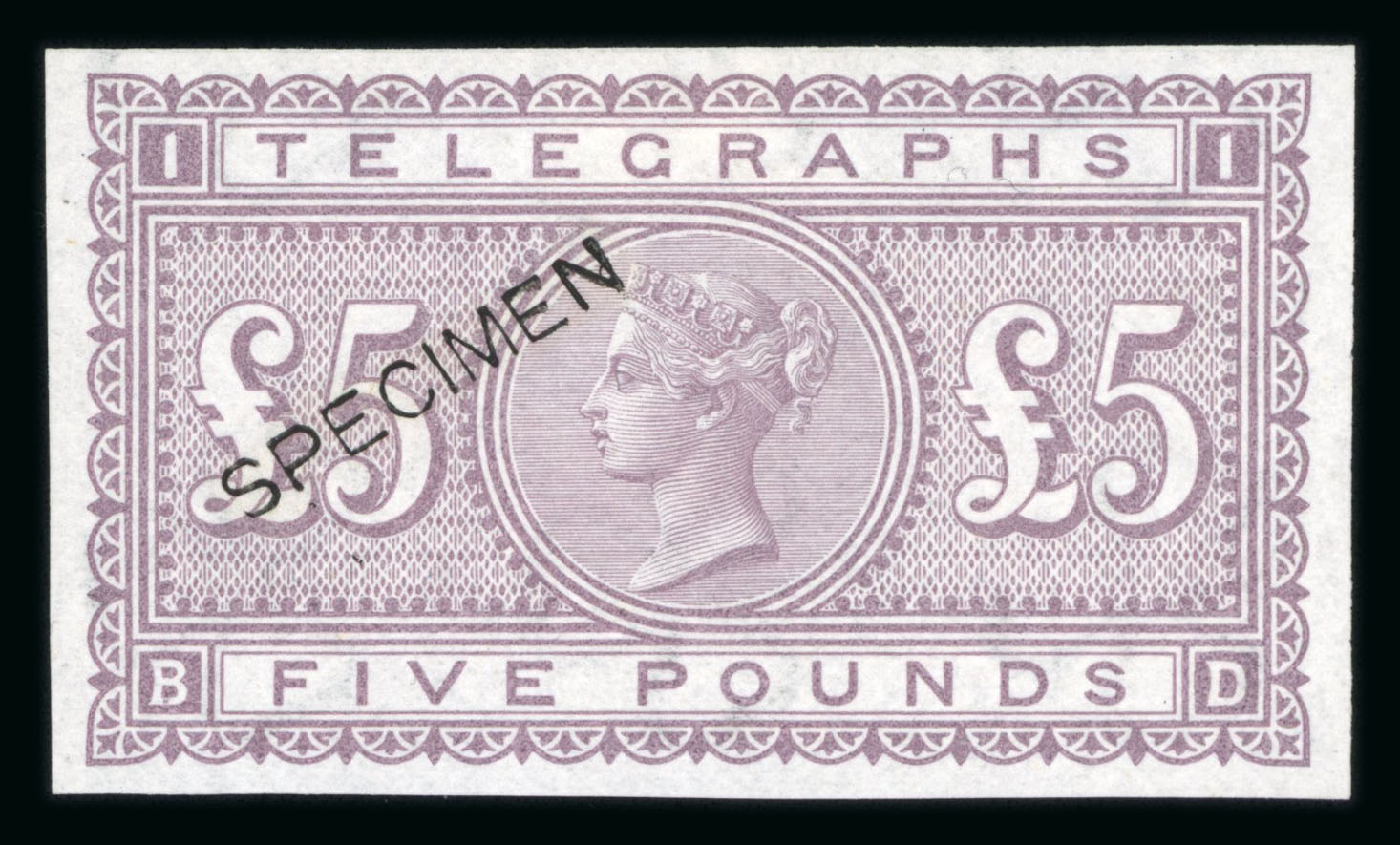
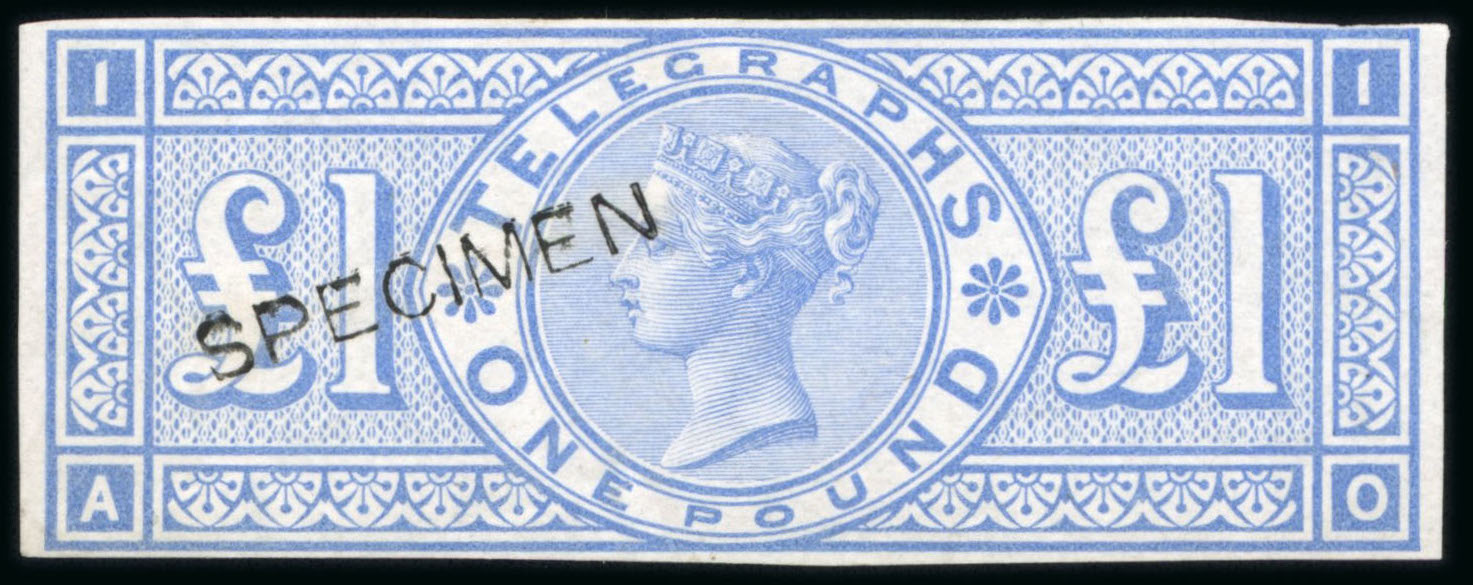
Perkins Bacon

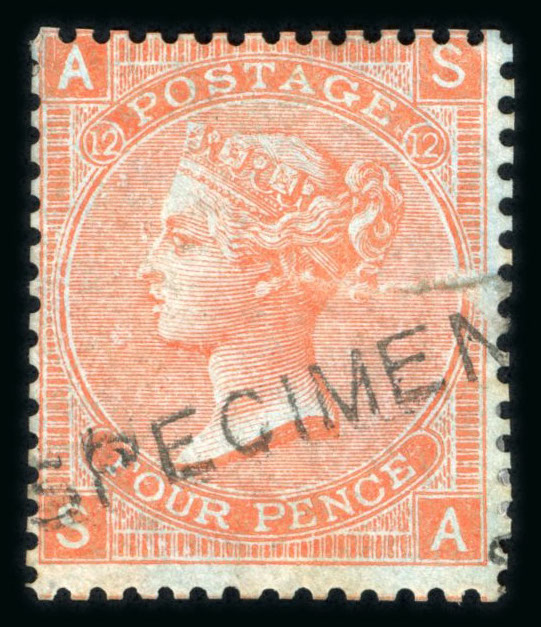
This handstamp isn’t listed or illustrated in the Appendix of Specimen and Cancelled handstamps in the specialised catalogue. Under the stamps themselves, they are noted as “Dr Perkins paper, “Specimen”. The only information I managed to find about this was in the GB Journal, vol.56 no.3, pp.63-68, by Graeme Sherman. He explains in detail how these trials came to be as well as a census of the known stamps. The simplified reason for the purposes of this article about why they exist is that John William Perkins was supplied watermarked paper (Crown, Garter and Emblems) to treat the prior to printing as a measure to prevent fraudulent removal of the cancellations from used stamps. However as the stamps exhibited a characteristic bluing of the paper, it rendered the trial a failure.
Type 9
14.75 x 1.75-2mm, 1871-1900

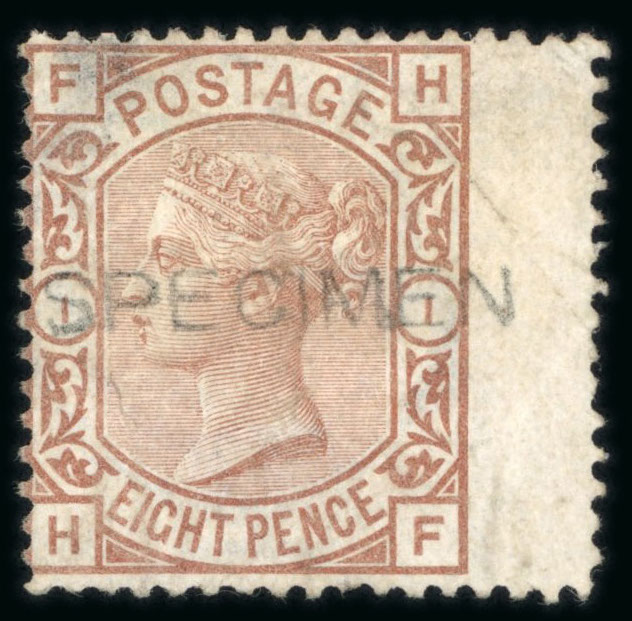
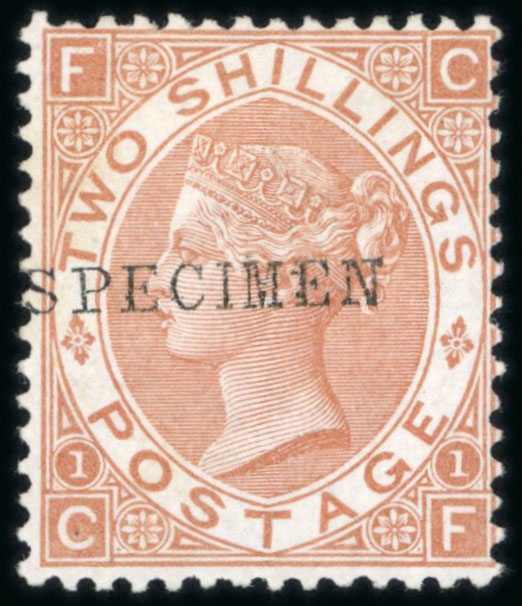
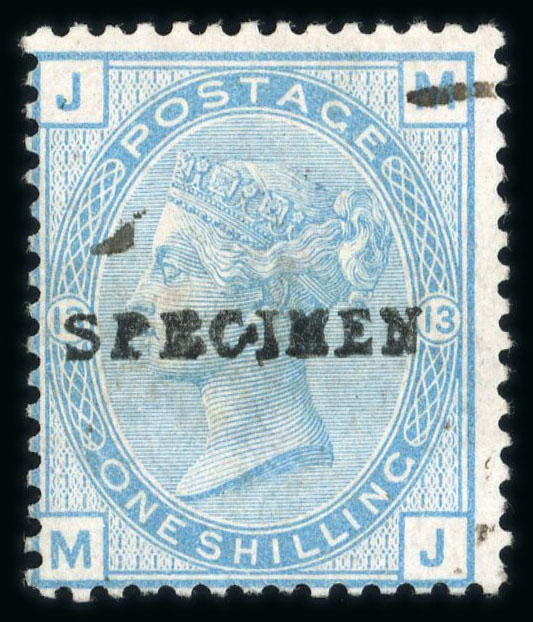
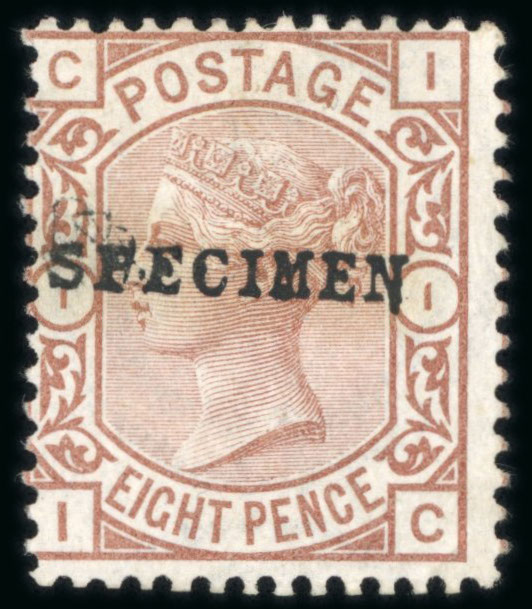
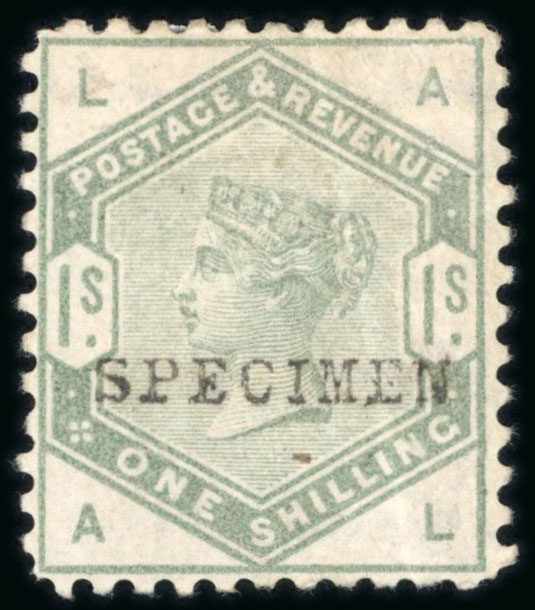
Type 9 has at least 8 sub-types and is the most commonly found specimen type and can be found on valuable stamps which can make them more affordable to the collector (such as the 2s brown and the unissued 8d purple-brown illustrated below). One lot to highlight in this sale is the Lilac & Green stamps perforated guage 12 instead of 14, which come from official perforation trials by De La Rue.
Type 10
20×2.5mm, 1874-87

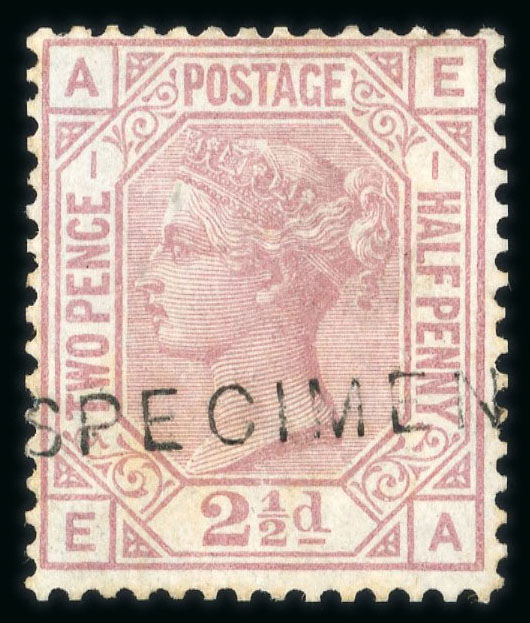
Type 10 is very rare. It has narrower E letters than types 8 and 11 which are similar, plus there’s a noticeable gap between E and C in type 10.
Type 11
20.25x3mm, 1876-1900

It is important to note that from 1892 only stamps with face values above 1s were overprinted “SPECIMEN” for the UPU. Consequently the 1892 4 1/2d Jubilee, the 1900 1/2d blue-green (illustrated below) and the 1s green and carmine overprinted “SPECIMEN” were only for official purposes and range from scarce to very rare.
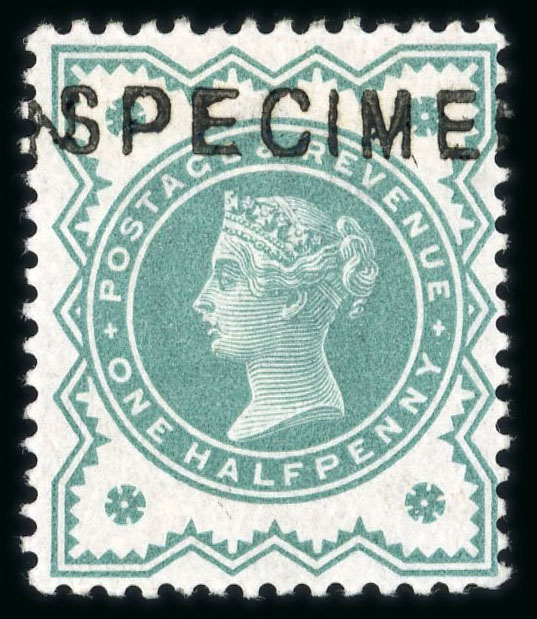
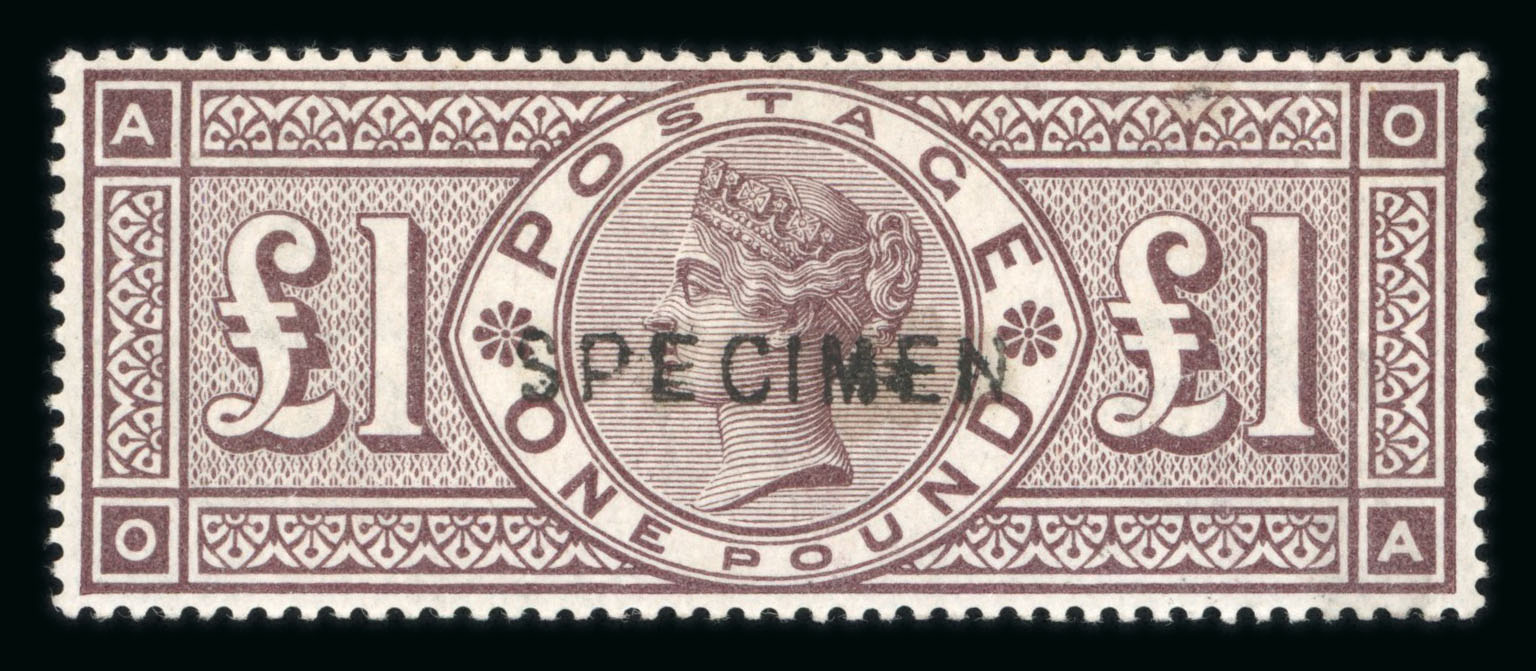
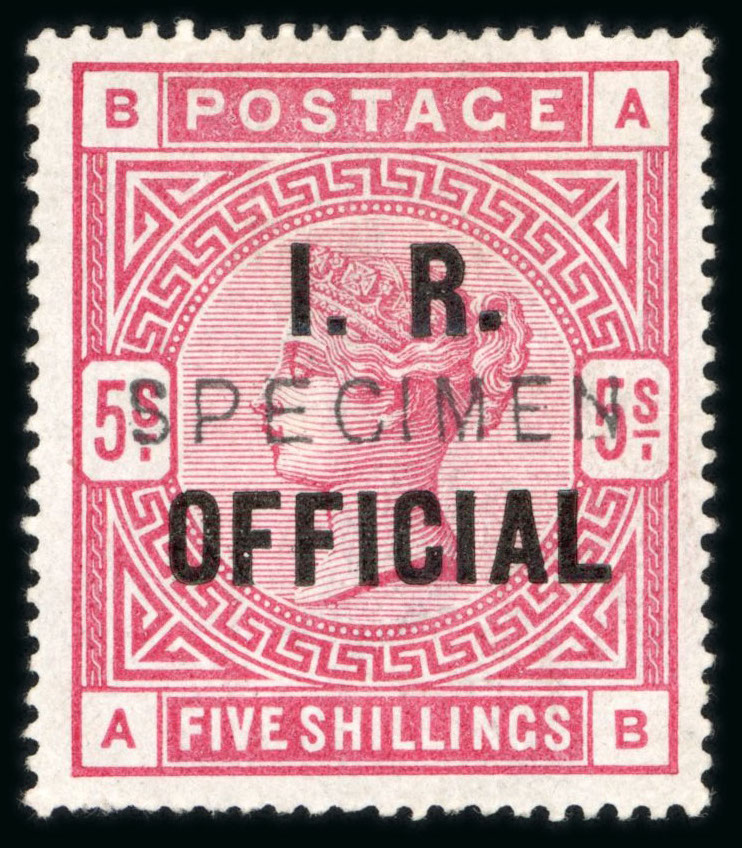
Type 12
15.5 x 1.75mm, 1881-87

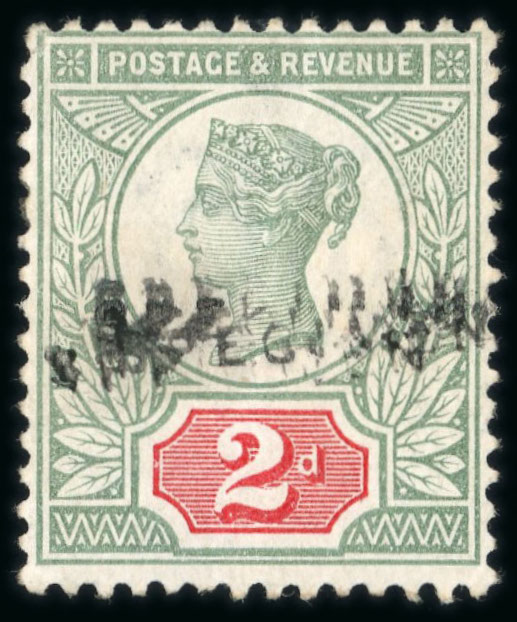
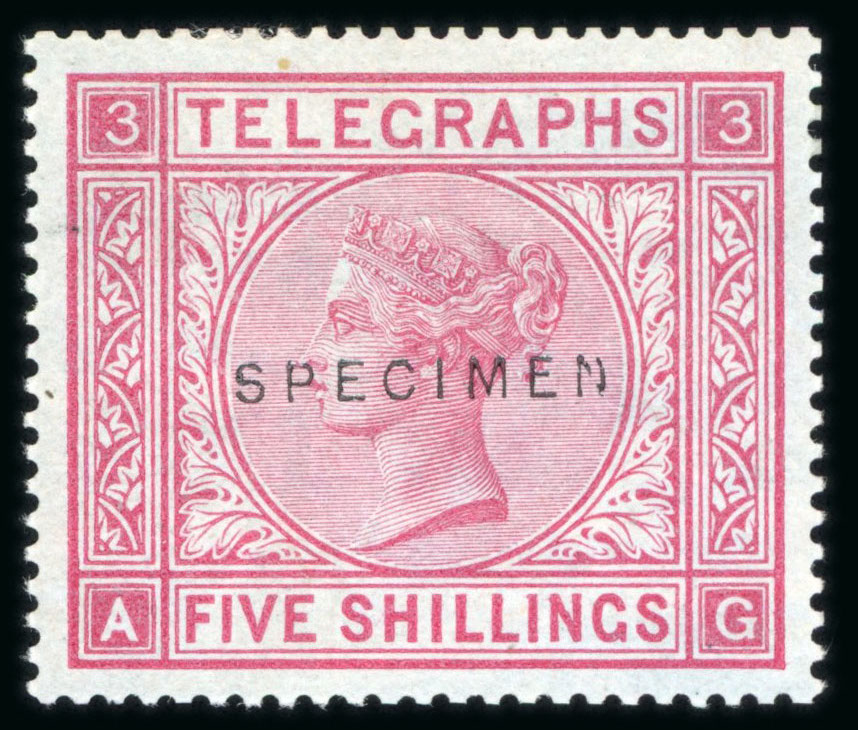
As can be seen below, errors such as double or in this case triple overprints of the “SPECIMEN” handstamps do exist. They can also be found inverted (lots 10036 with type 2 inverted and 10155 with type 9 inverted). Stanley Gibbons doesn’t list these varieties in their Specialised catalogue.
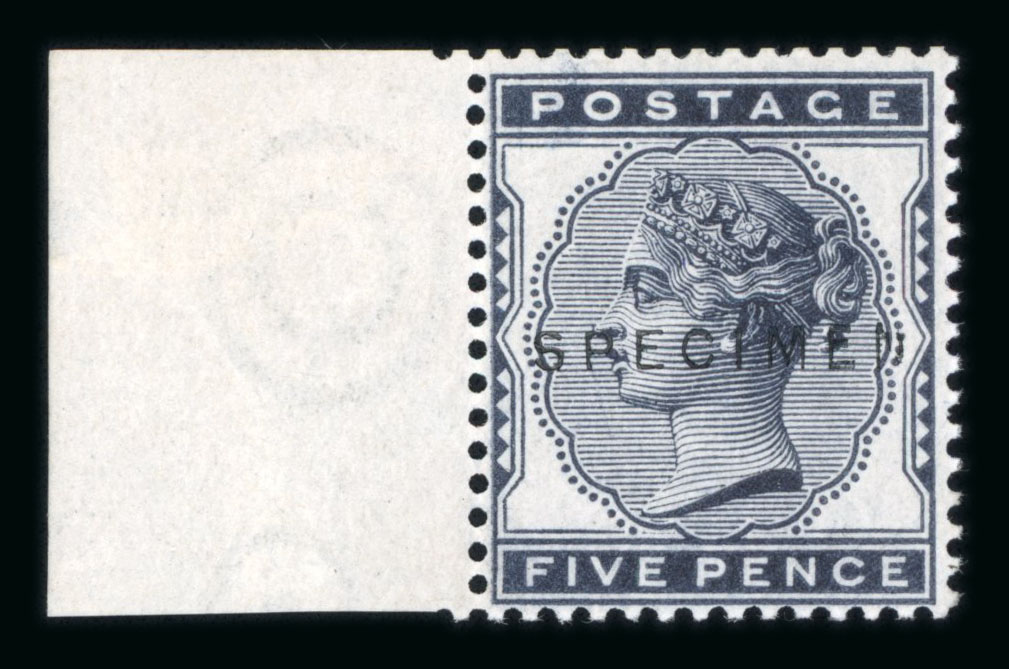
Type 13
15.25 x 1.5mm, 1883-92

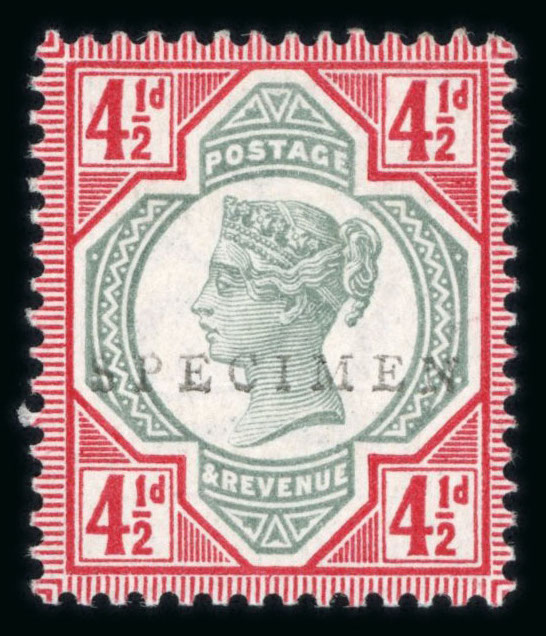
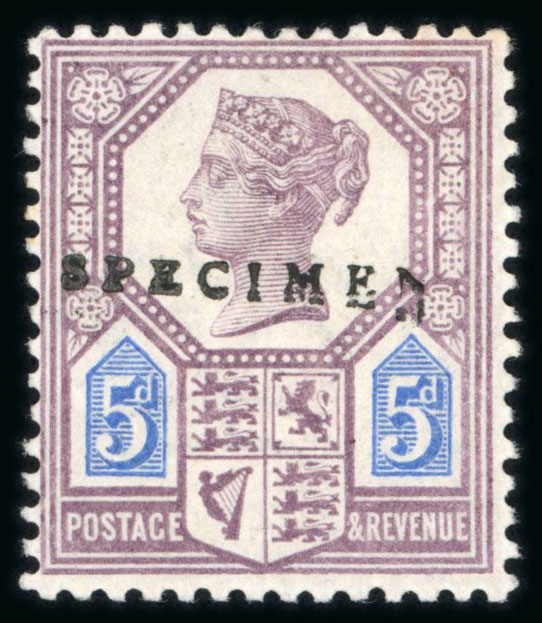
Type 13 is slightly similar to type 9 but smaller and more widely spaced. It was used on the colour trials for the 1892 4 1/2d, such as the example at lower left which is a colour trial in the issued colour. The 5d die II at lower right is not listed by Stanley Gibbons and is the only example I have seen.
Type 14
14.5 x 1.75mm, 1883-1900

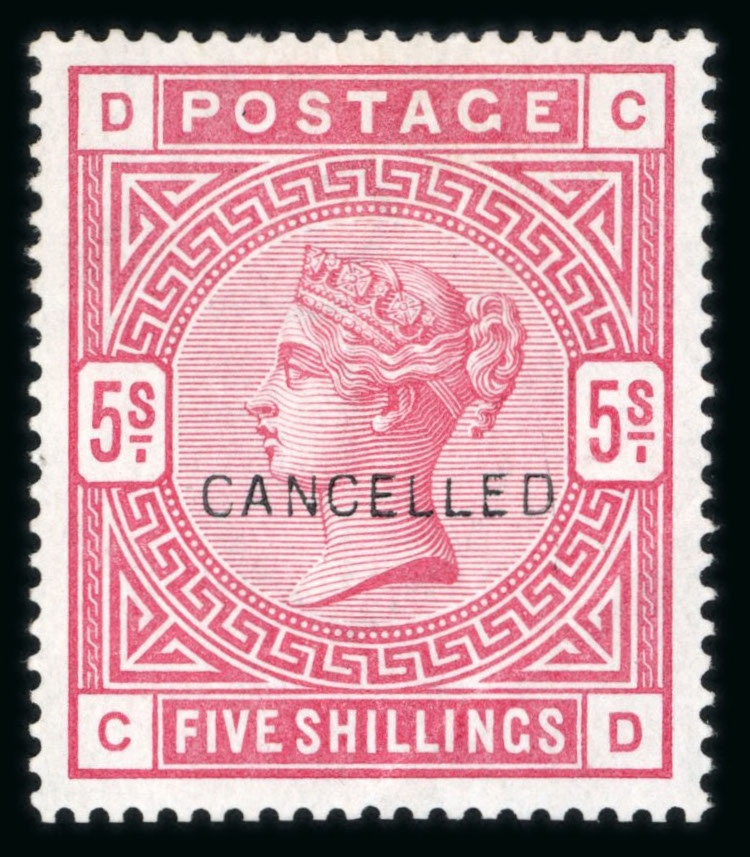
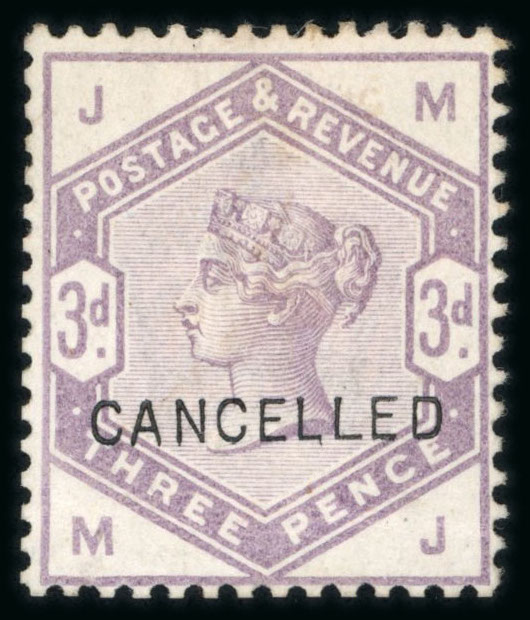
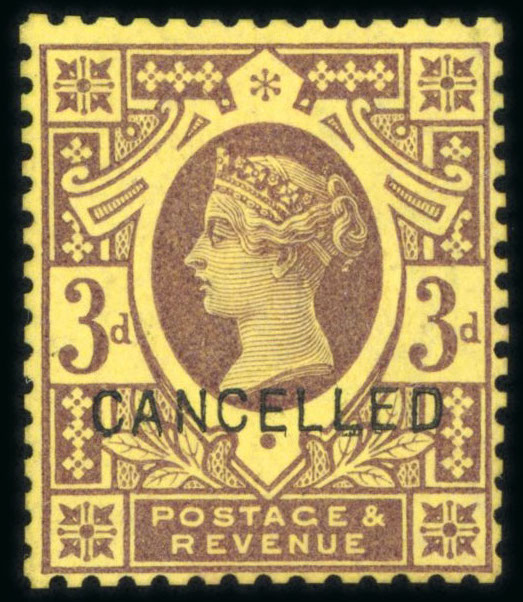
Type 14 “CANCELLED” can be quite often be found forged. In the genuine examples, the upright of the second L can often be seen slanting slightly forward and sometimes there is some extra ink at the foot of the overprint. These overprints were applied to stamps held as reference as a colour standard by De La Rue and Somerset House.
Type 15
14.5 x 2-2.25mm, 1891-1902

Type 16
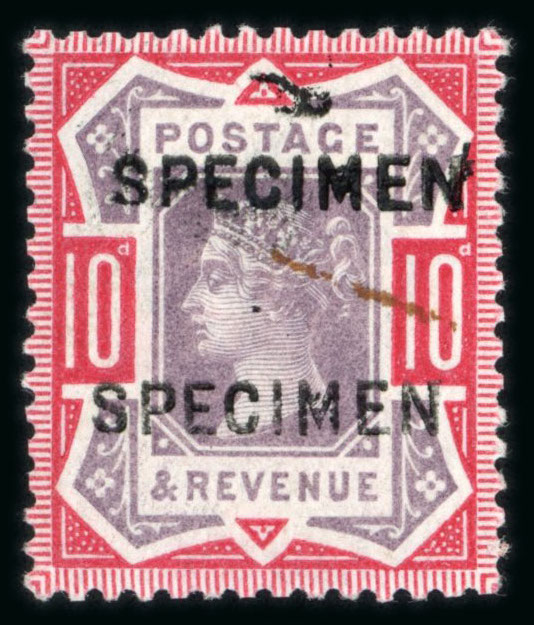
15.5 x 2.5mm, 1891-1902