


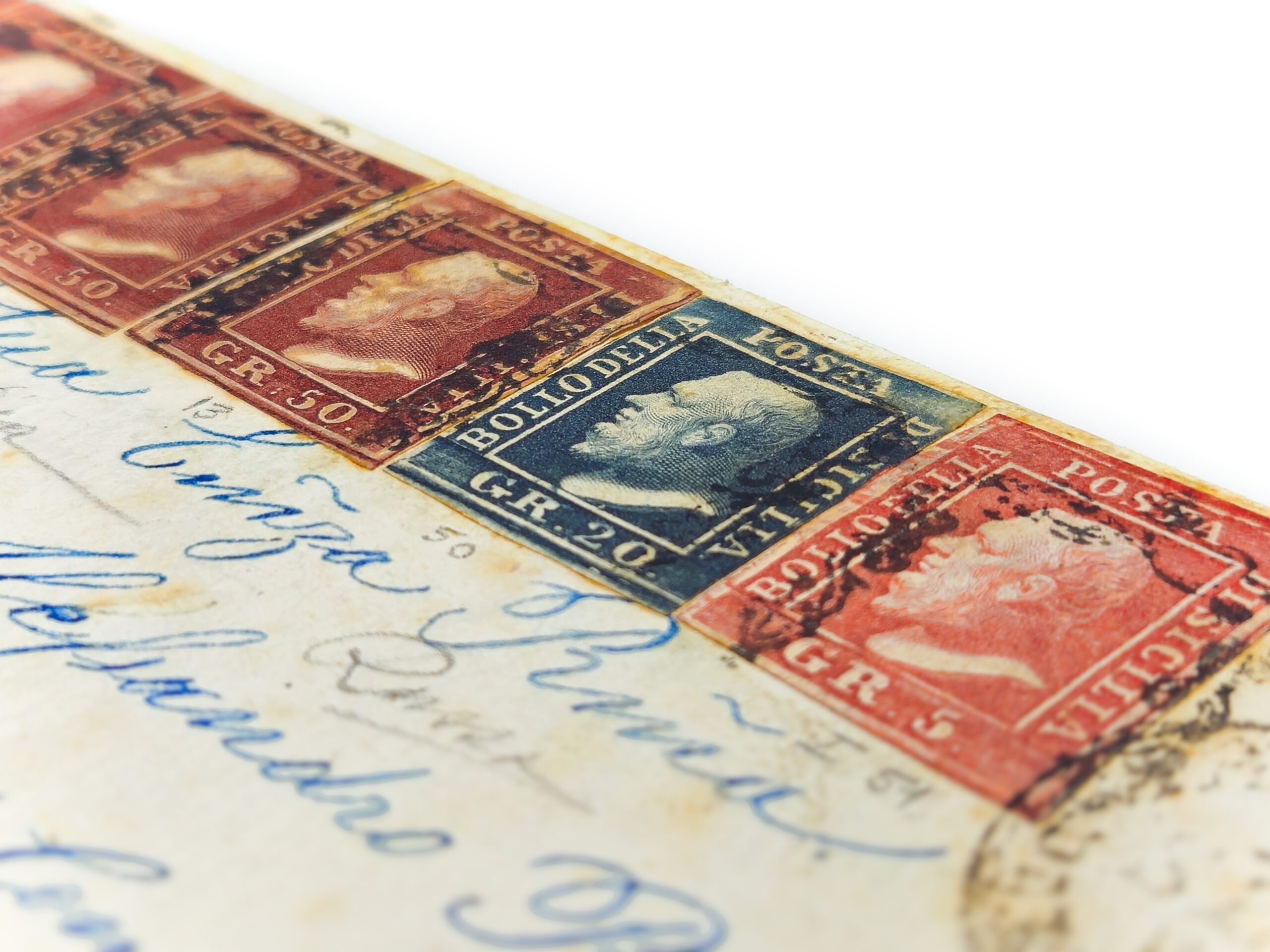
The Tomasini Collections of Classic Great Britain and Sicily
Part 2 – October, 2026
This first offering of the Tomasini Collections of Classic Great Britain and Sicily, auctioned on March 26, 2026, was a fantastic success, and we thank you for your participation! Wether you joined us online or in the auction room, your enthusiastic bids surpassed our expectations.
Philatelic Jewels Resurface After 60 Years in Hiding
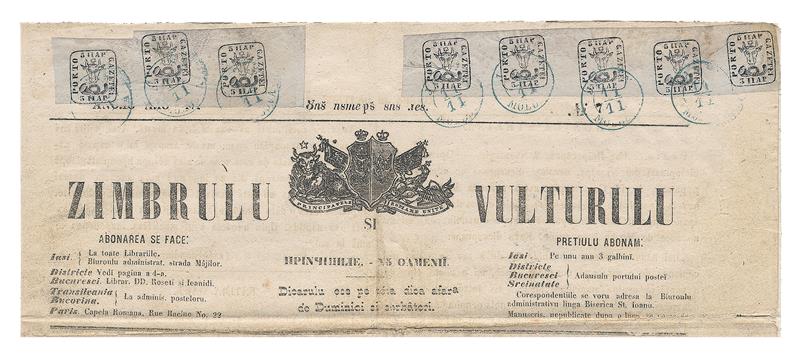
December 3, 2006: David Feldman’s Classic Romania auction, featuring the Tomasini/Künzi Grand Prix Collection Lot 20027, estimated €500’000-700’000, sold for €829,500. It holds to date the record of the most expensive Romanian philatelic item.
The David Feldman Company first became associated with Mario Tomasini through the sale of his extraordinary Romania collection. Offered during Monaco Phil 2006, that auction did more than attract attention, it smashed world records, many of which remain unchallenged today. The ‘Romanian Journal’ (illustrated adjacent) alone continues to stand as an unassailable reference point. Yet the true force of the Tomasini collection was never measured in prices, but in an uncompromising standard of quality.
The Tomasini Quality
Mario Tomasini emerged in the period immediately following the Second World War as one of the most intelligent and formidable figures of a new generation of collectors. Supported by legendary Italian dealers such as Renato Mondolfo and Giulio Bolaffi, he assembled collections built exclusively on what later became known as “Italian Quality:” Putting emphasis on the quality of a classic stamp, especially its colour, and more particularly, the size if its imperforate margins. Nothing average was tolerated; nothing questionable survived his scrutiny.
His early focus lay with the stamps of Italy and its colonies, a field he approached with genuine passion and relentless discipline. Tomasini studied printings, varieties, and quantities with a rigour that reshaped collective knowledge. For a time, he maintained a regular column in Italia Filatelica, devoted entirely to the “Varieties of Italy and Colonies.” In many cases, it is thanks to his work that we know today exactly how many stamps were printed—and how many were deliberately destroyed.
While continuing to lead major industrial enterprises, particularly in construction, Tomasini expanded his focus into classic philately. He began with the Old Italian States, applying the precision of an engineer and the eye of an aesthete. His intelligence, extraordinary memory, and ability to synthesise vast amounts of data allowed him to dominate every field he entered. Plate characteristics, surviving quantities, rarity of cancellations, colour classifications, nothing escaped his command.

1Gr., plate I, state I, rust brown (bruno ruggine), four horizontal pairs in a reconstructed strip of eight from positions 92-99; an outstanding mint multiple, showpiece.

Mario Tomasini (image provided by the Tomasini family and digitally restored)
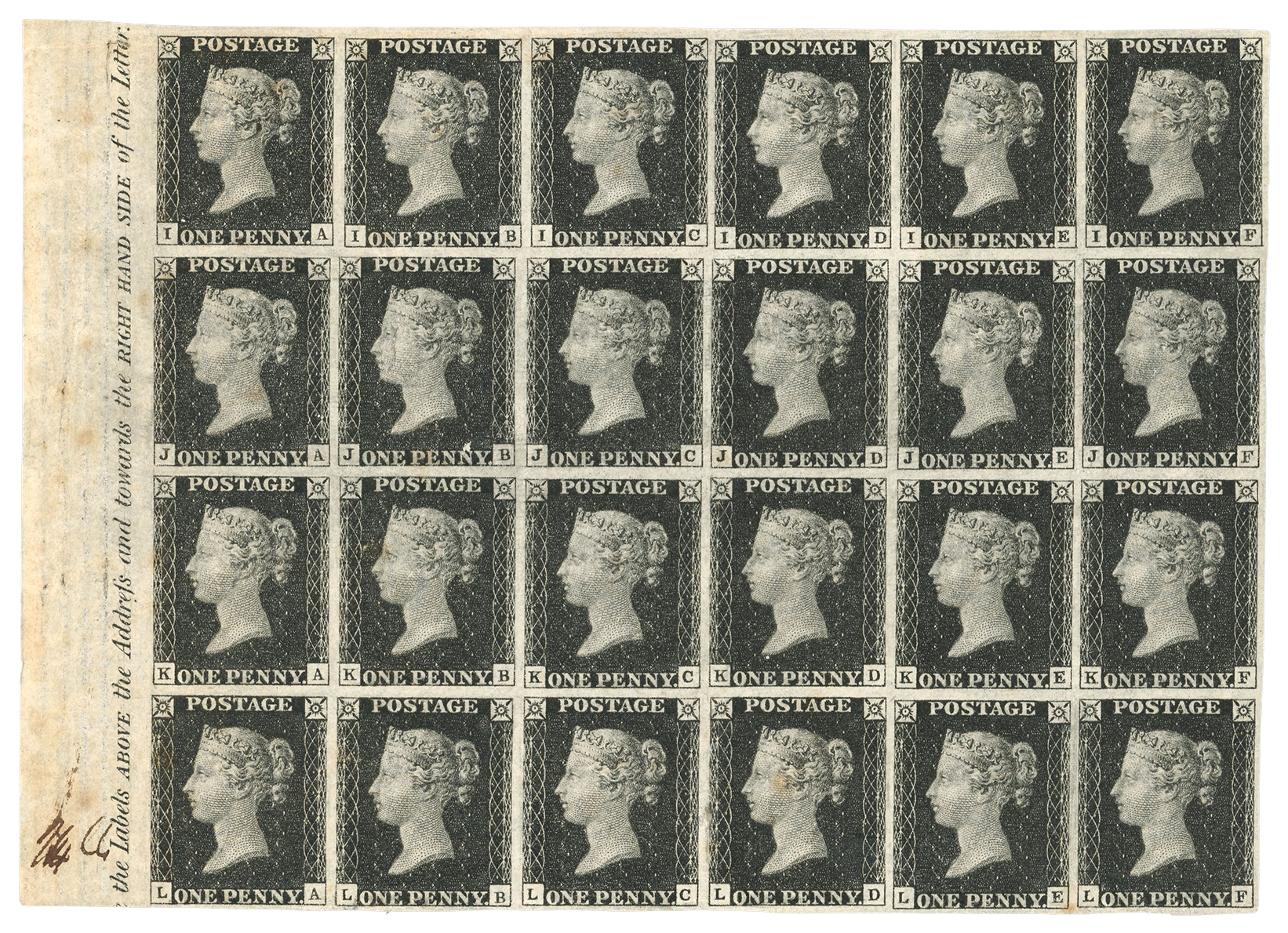
One Penny Black block of 24 from plate seven: The largest known multiple of the Penny Black in private hands. One of the supreme rarities of world philately and one of Mario Tomasini’s crown jewels.
Sold for £ 622’500, March 26, 2026.
Tomasini was not content to merely absorb existing literature. He studied stamps directly and relentlessly, often reaching conclusions that advanced or corrected the accepted canon. His definitive work on the imitations created to defraud the Italian post with the 15-centesimi issues of 1863 remains a standard reference. Equally influential was his research into the tête-bêche pairs of the Papal States ½ bajocco, which he identified in all known positional relationships.
From the Old Italian States, his reach expanded naturally to the classics of Europe. At the great “Sicilia 59” exhibition, he presented major rarities from Austria, France, Switzerland, the German States, and Romania, an exhibit that earned the International Grand Prix. Between 1959 and 1965, he continued to strengthen and expand his holdings, capitalising on the exceptional material then available on the market.
His dominance was reaffirmed repeatedly. In London in 1960, he exhibited some of the most important rarities ever shown, the legendary 1840 One Penny Black block of twenty-four, mint. In 1969, his collections earned another Grand Prix, this time in Bulgaria, cementing his reputation as a collector operating on a level few could approach.
Then, the collection vanished from public view. The silence only sharpened the legend.
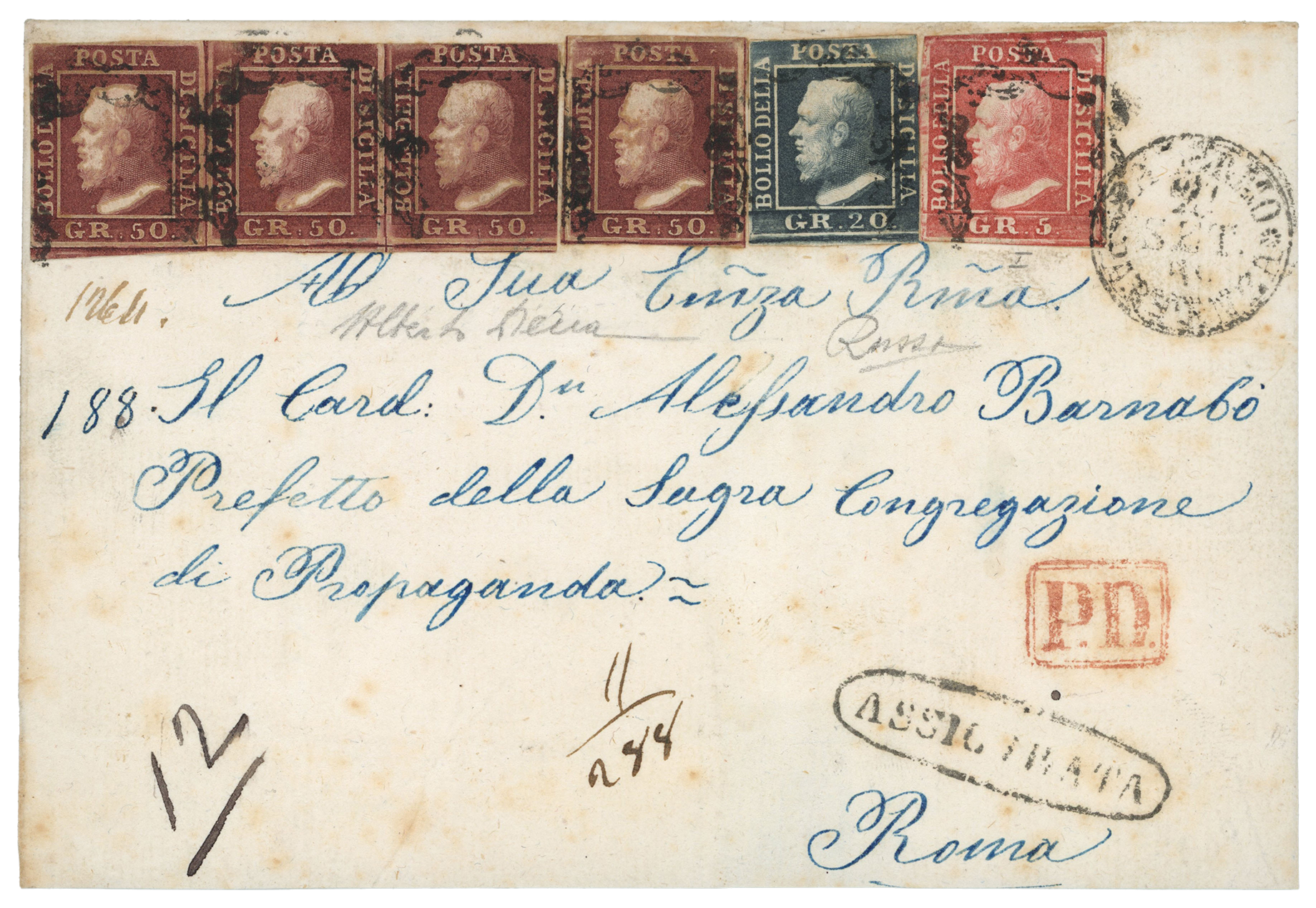
The “Cardinale Barnabò” Letter: The largest multiple of the 50 Gr. on cover and arguably the greatest rarity of Sicily.
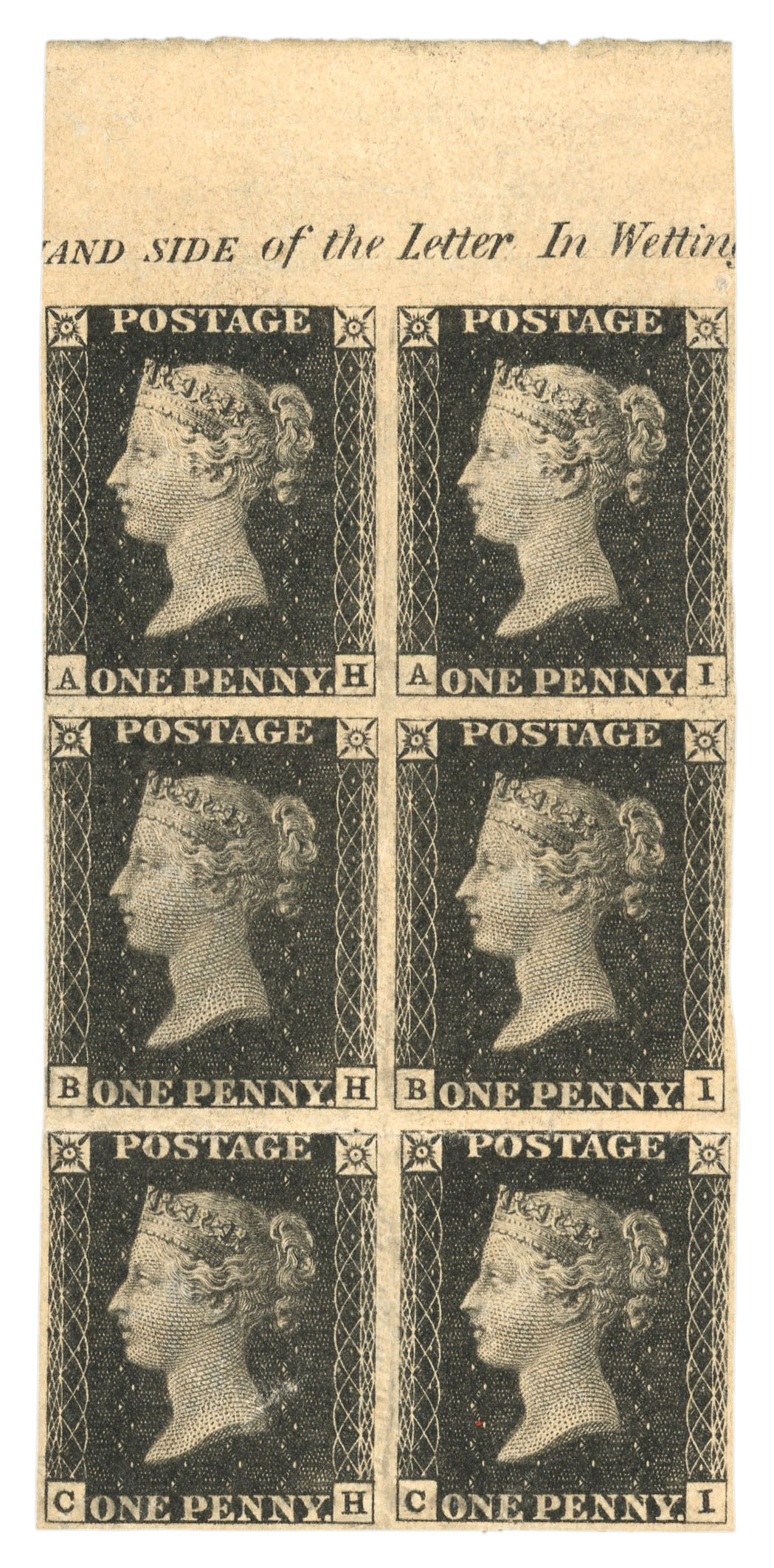
The Famous Ferry Mint Block of Six from Plate Eleven: 1840 1d Black, Plate 11 (AH–CI).
Sold for £ 124’500 on March 26, 2026.
The upcoming auctions
After remaining out of public view for more than sixty years, the Tomasini Collections of Classic Great Britain and Sicily now re-emerge, consisting of material shaped by a philosophy rooted in method, discrimination and coherence that continues to define the highest standards of collecting.
Beyond its celebrated masterpieces, the Tomasini Collections present a carefully selected body of material accessible to the committed collector. Each item, regardless of importance, was chosen according to the same uncompromising standards that defined Mario Tomasini’s approach.
As a result, the auctions present opportunities across a wide spectrum. Estimates range from £60 to £600’000, offering both an entry point into a legendary provenance and the chance to acquire true philatelic landmarks. Whether modest or monumental, every lot bears the unmistakable imprint of Mario Tomasini’s collecting quality.
The first part of these two collections was auctioned on March 26, 2026 in Switzerland. The competitive bidding proved the quality of the material offered. The second part of the collections will be auctioned in October 2026.
Opportunities of this magnitude do not repeat.
They surface only once in a lifetime.
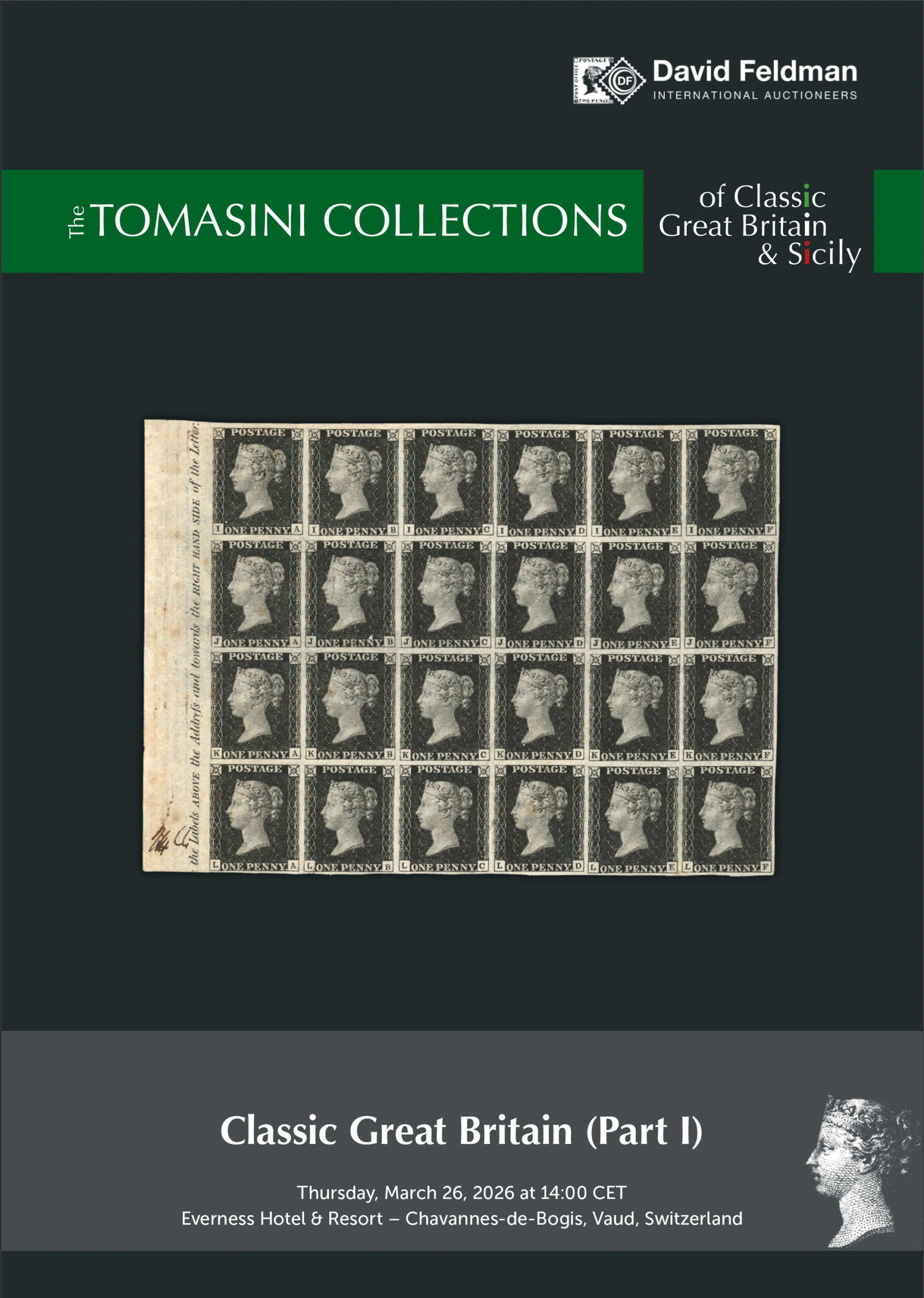
The Tomasini Collection of Classic Great Britain – Part I
Thursday, March 26
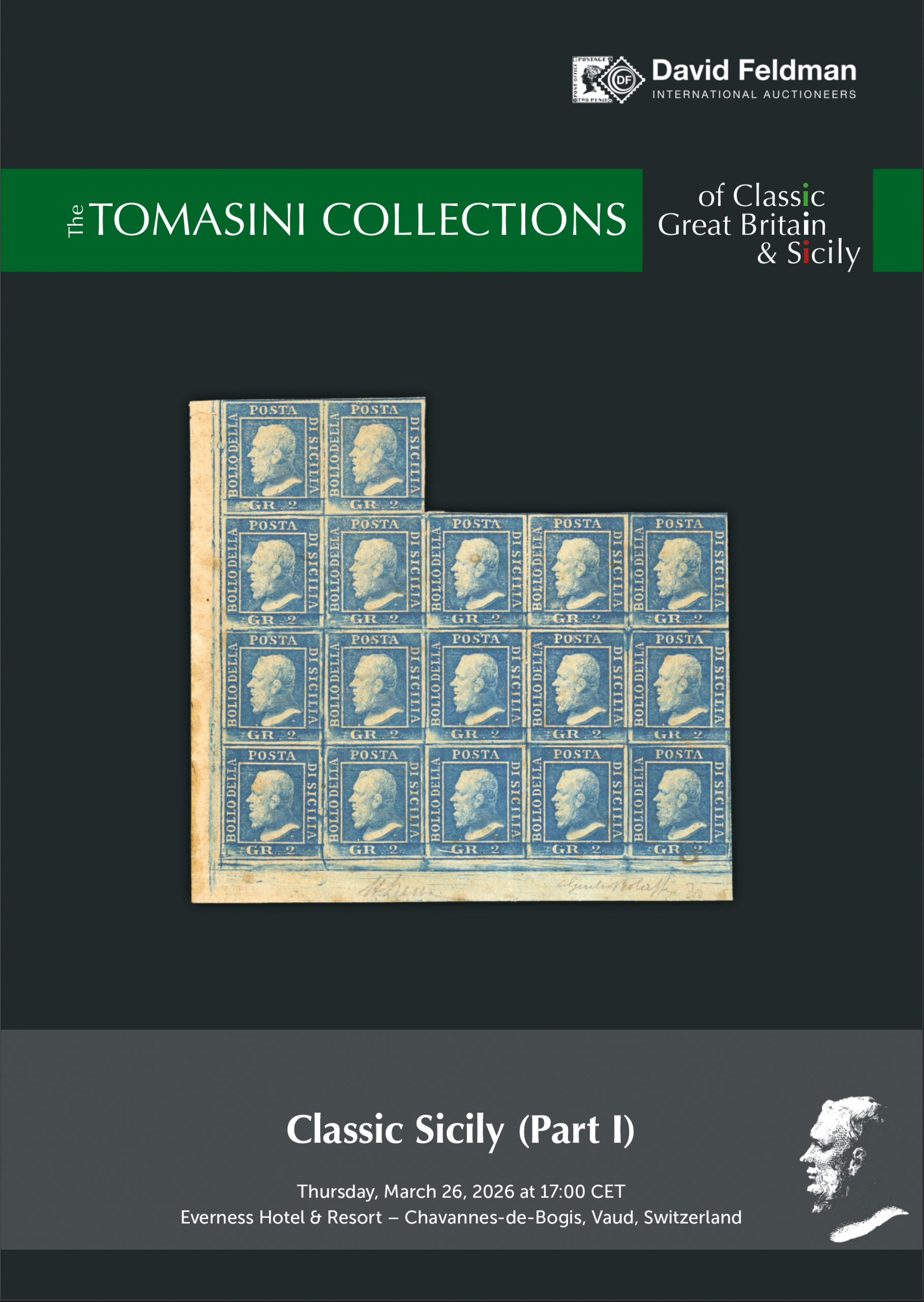
The Tomasini Collection of Classic Sicily – Part I
Thursday, March 26