


The David Feldman team of philatelists are passionate about stamps and postal history from around the world. In this article we’ve each taken a moment to highlight something that particularly caught our interest in our November 18th-24th auction series, whether it’s for its beauty, its rarity, the story it tells, or simply because it reminds us of somewhere we have had a beer…
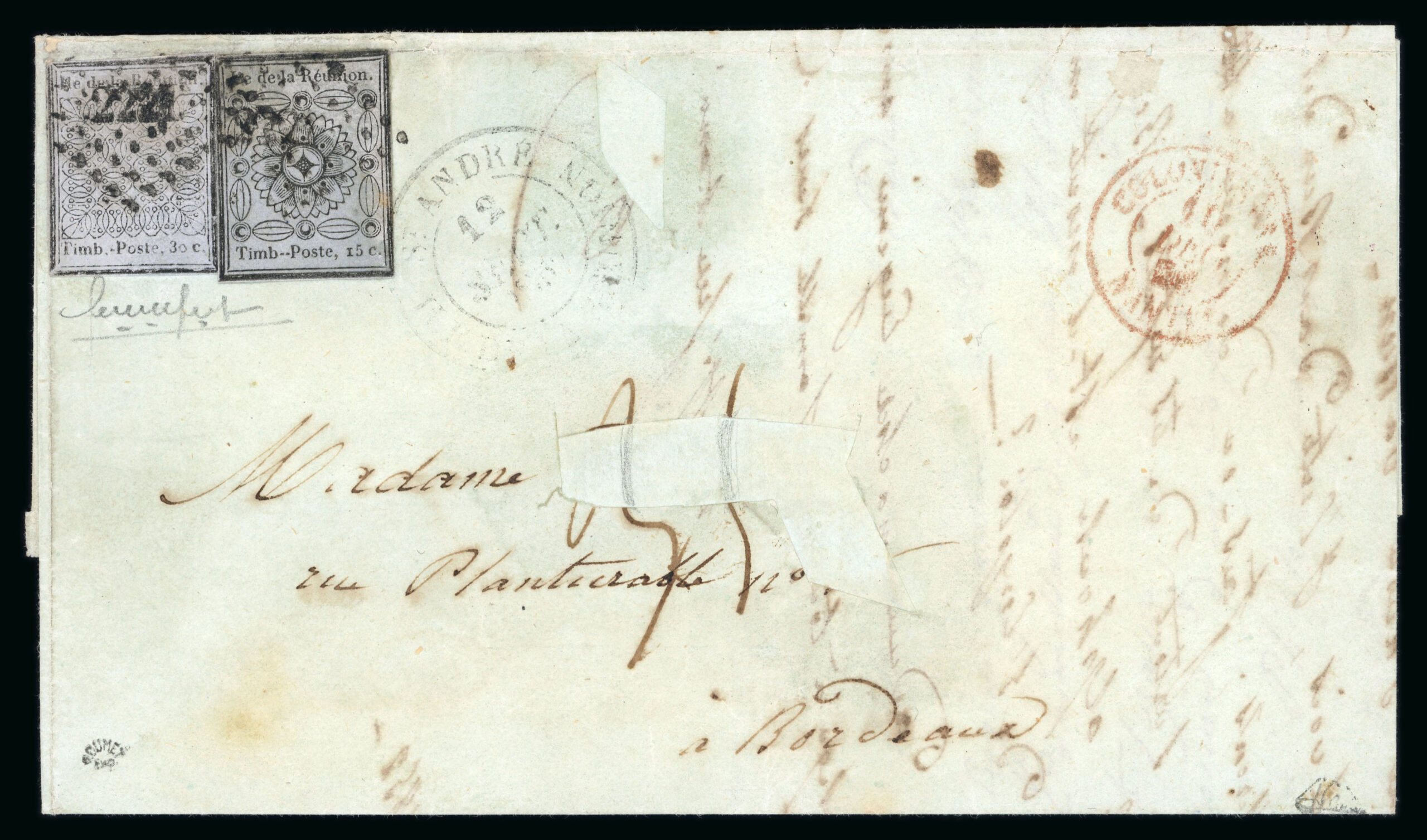
Jean-Roger Bardeau: As a great lover of stamps from the French Colonies, my favourite item for this new sale is undoubtedly this magnificent cover from Réunion. Franked with the first two issues to Bordeaux, having such a piece in your hands is almost a philatelist’s dream! The reason? These stamps are legendary and almost mysterious; in fact, Réunion is the only French Colony to have issued its own stamps only three years after the first stamps from the mainland, and seven years before the first issue of the Colonies Générales in 1859. The Governor of the island Pierre Doret, who initiated the project, was undoubtedly influenced (jealous?) by neighbouring Mauritius, which had been issuing its own stamps since 1847. But the 7,500 examples printed were not very successful and very little used, and therefore became very rare and very difficult to obtain, even in poor condition. So seeing and owning such a letter with double postage is almost a miracle!
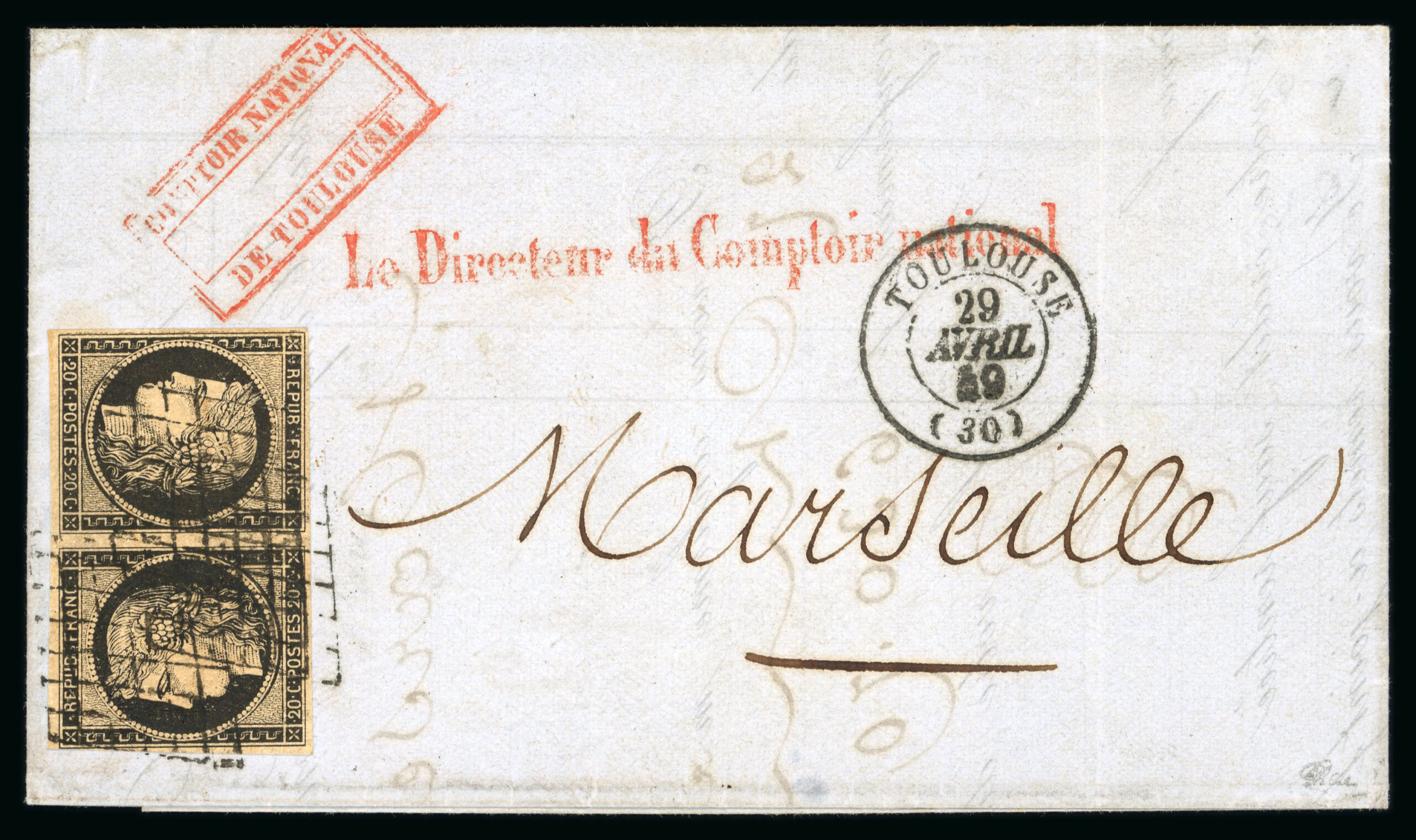
Francois Roullier: My favorite item in the upcoming auction series is a cover from 1849 franked with a tête-bêche pair of the 20c black. This stamp is the very first stamp issued in France and this letter was sent in the first year of their issue. « Tête-bêche » means that one of the stamps in the pair is inverted compared to the other. This variety of printing well known to philatelists is rare, all the more so on a cover. The fact that this cover is also in a superb state of preservation, with very well struck handstamps and the variety being perfectly visible, makes this a remarkable item of French philately!

Marcus Orsi: Des Quail’s collection of Irish postal history has many wonderful items to highlight. However, my favourite and somewhat eclectic it the Window Man. One of the most unusual members of the Post Office staff were known as Window Men and are remembered by the receipt they issued for Secured Delivery Mail. This receipt comprised of an impression from a steel engraving, which was bound in book form and when torn out, the left-hand side had a jagged edge. Letters containing money were required to be handed in at the Post Office Window, where double postage was charged and a receipt given. There were two types of this receipt. Arthur Baker was appointed Clerk of the Window in 1819 and was in office as a Window Man from 1826 to 1830.
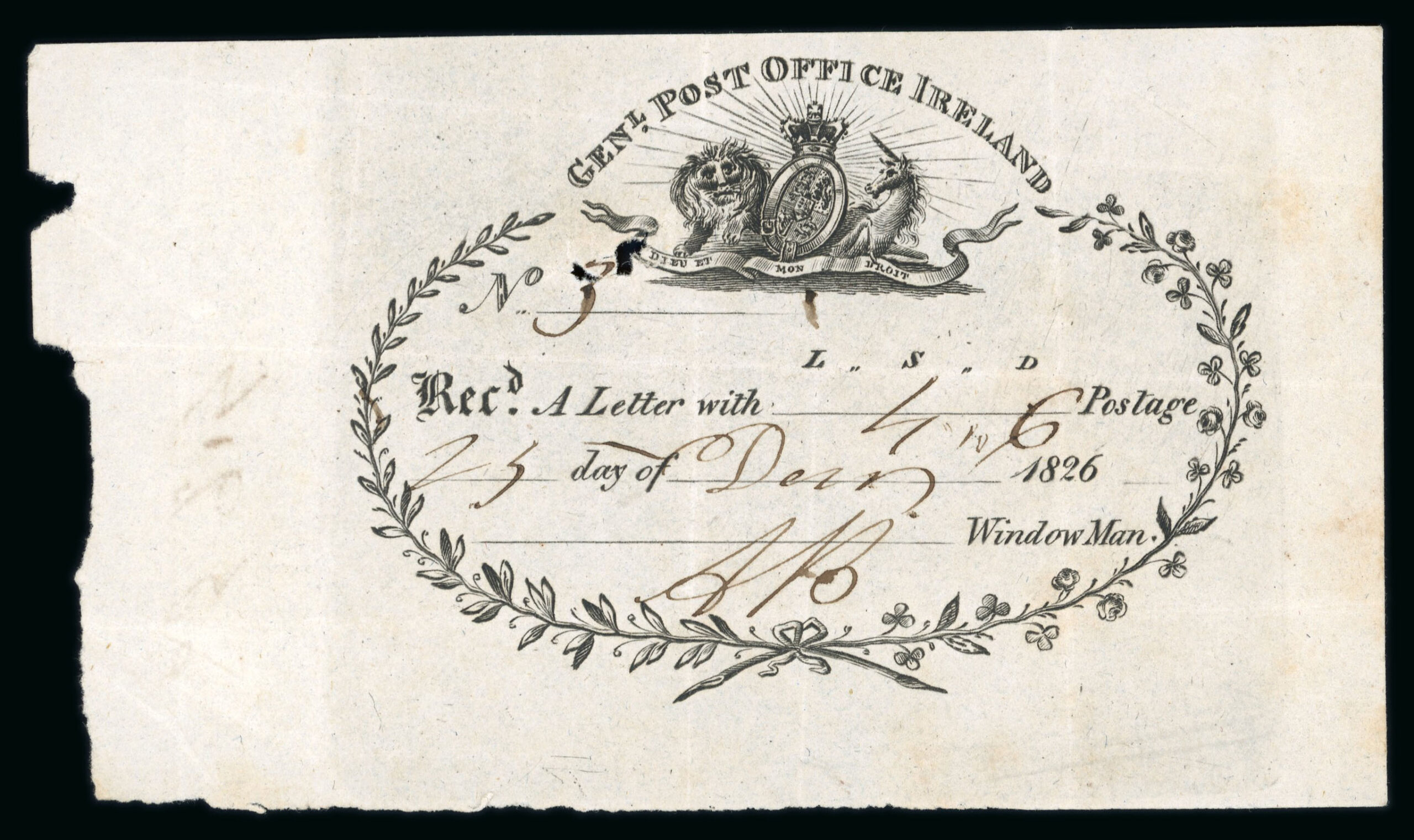
Lot 60618: 1826 (25.12) « The Window Man » (type 1 showing larger sun rays) receipt for a Christmas Day money letter inscribed « No3 Recd A Letter with sç D6 Postage 25 day Dec 1826 AB Window Man » and initialled by Arthur Baker. One of the two usages recorded for the year of 1826.
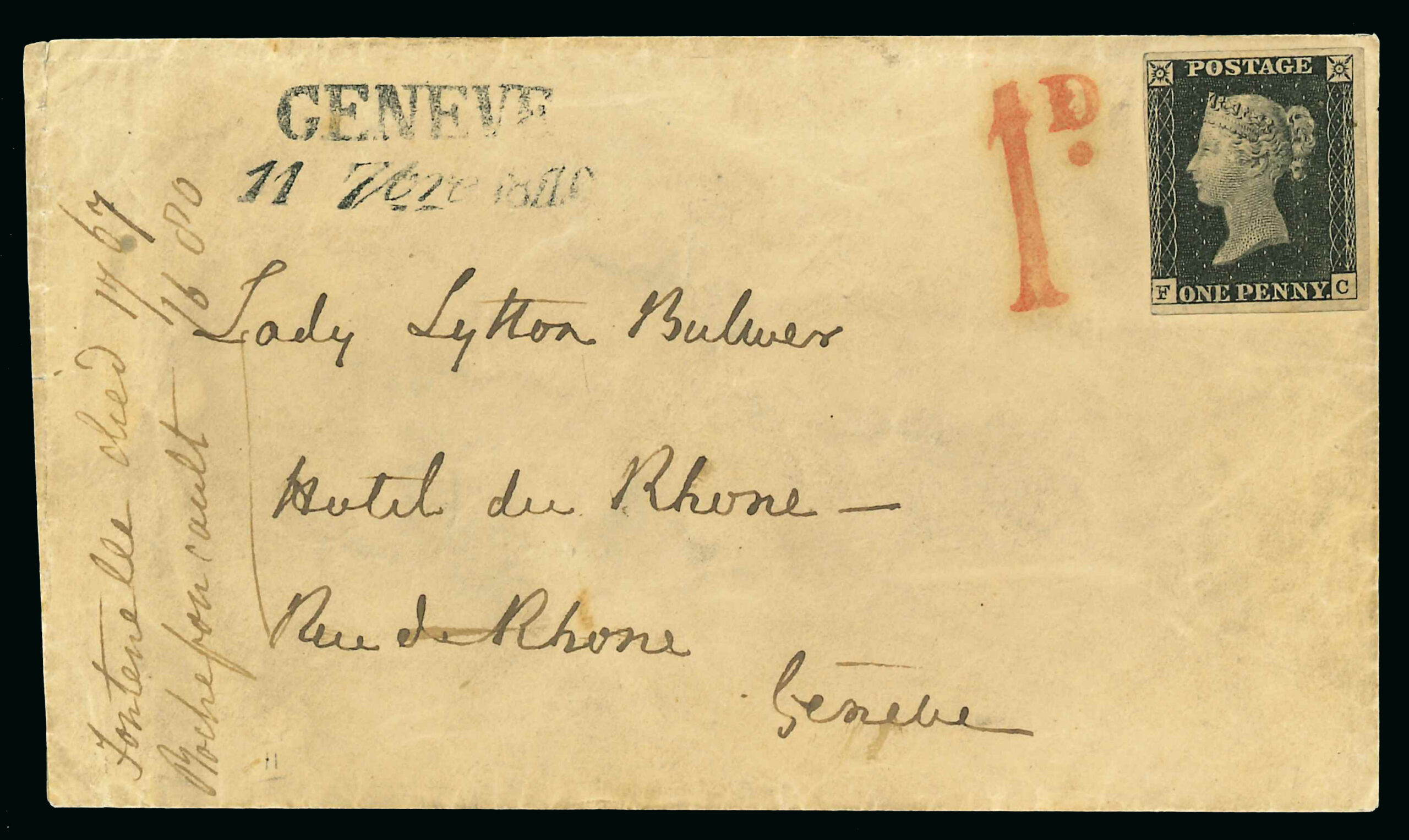
Allan Westphall: I am interested in the meeting of philately and (personal) history, and so I’m fascinated by lot 10002 of our Swiss auction, a letter sent in Geneva in 1842 to Lady Lytton Bulwer, a British novelist resident at the time at the Hotel du Rhône. Lady Lytton Bulwer was married to Edward Bulwer-Lytton, a prominent writer and politician, but the marriage ended in a bitter strife in 1837, and he falsely accused her of insanity and had her incarcerated in an insane asylum. In 1842 she sought refuge in Geneva where she stayed for 4 years, spending most of her time writing novels in a small room with a view over Geneva Lake. Being in a rather miserable state, she sought to write with her two children back in England without success, and she was in severe financial distress (her former husband had persuaded the manager of her hotel to charge her the highest possible rent). The Lady befriended a few resident British in Geneva, and one person sent her this letter in September of 1842 on which they used a Penny Black stamp. This stamp was not valid in Switzerland and the postal clerk (seeing perhaps a stamp for the very first time) did not cancel it. Instead, he struck a red “1d.” due mark next to it to indicate the 1 décime that Lady Lytton Bulwer should pay on receipt at the Hotel on the Rue de Rhône.
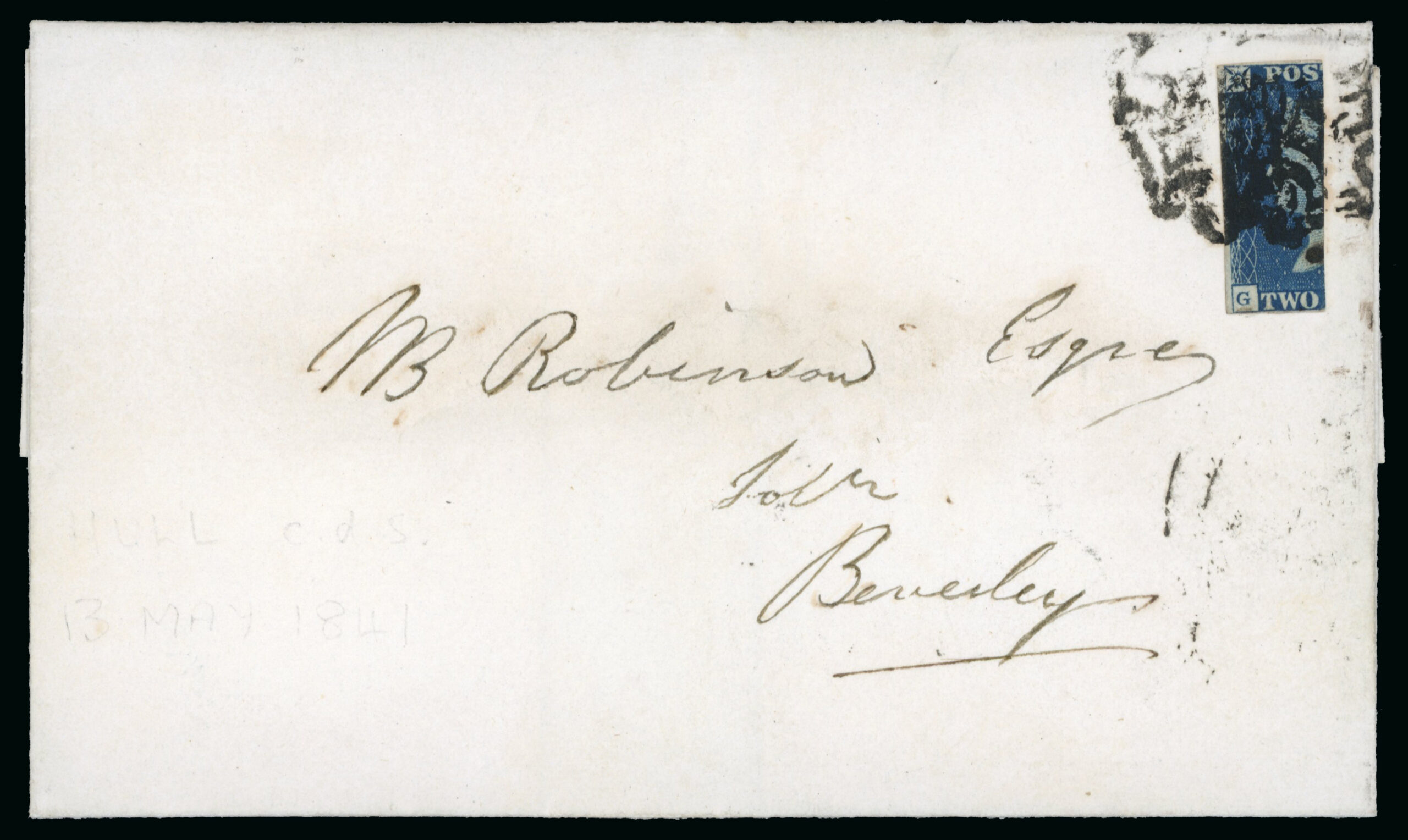
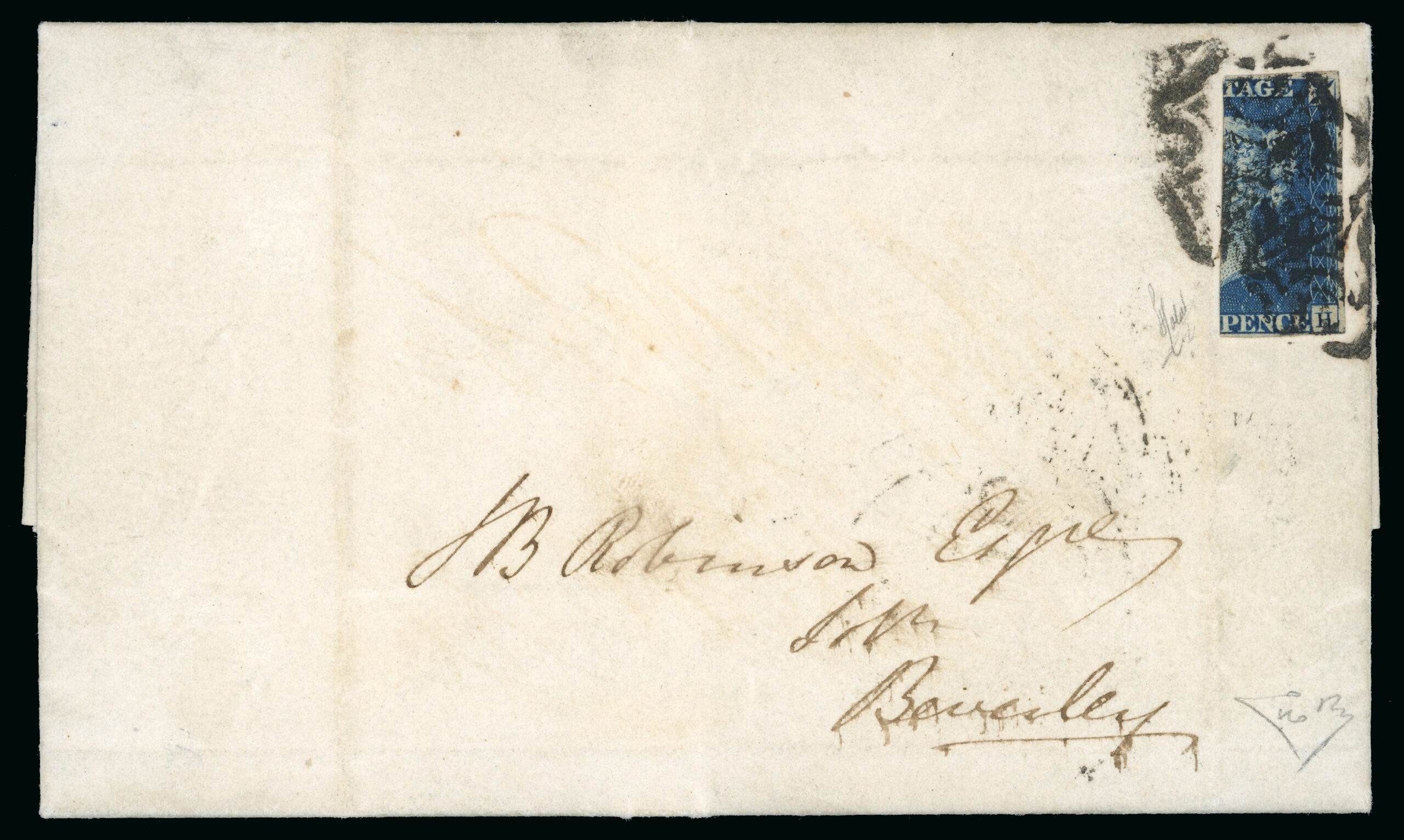
Guy Croton: We have many spectacular items in our upcoming Great Britain catalogue, but for me lot 40217 is the most important. This pair of covers are franked with the left and right vertical bisects of the same stamp which were both accepted for postage. Not only that but it’s the 1840 2d blue, the second stamp issued in the world, so this is incredibly early for a bisect usage, just over a year after the stamp was issued. In fact we know of only one other bisected 1840 2d blue that was accepted for postage. So these two covers (offered together at auction for the first time) are extremely important in the history of philately,
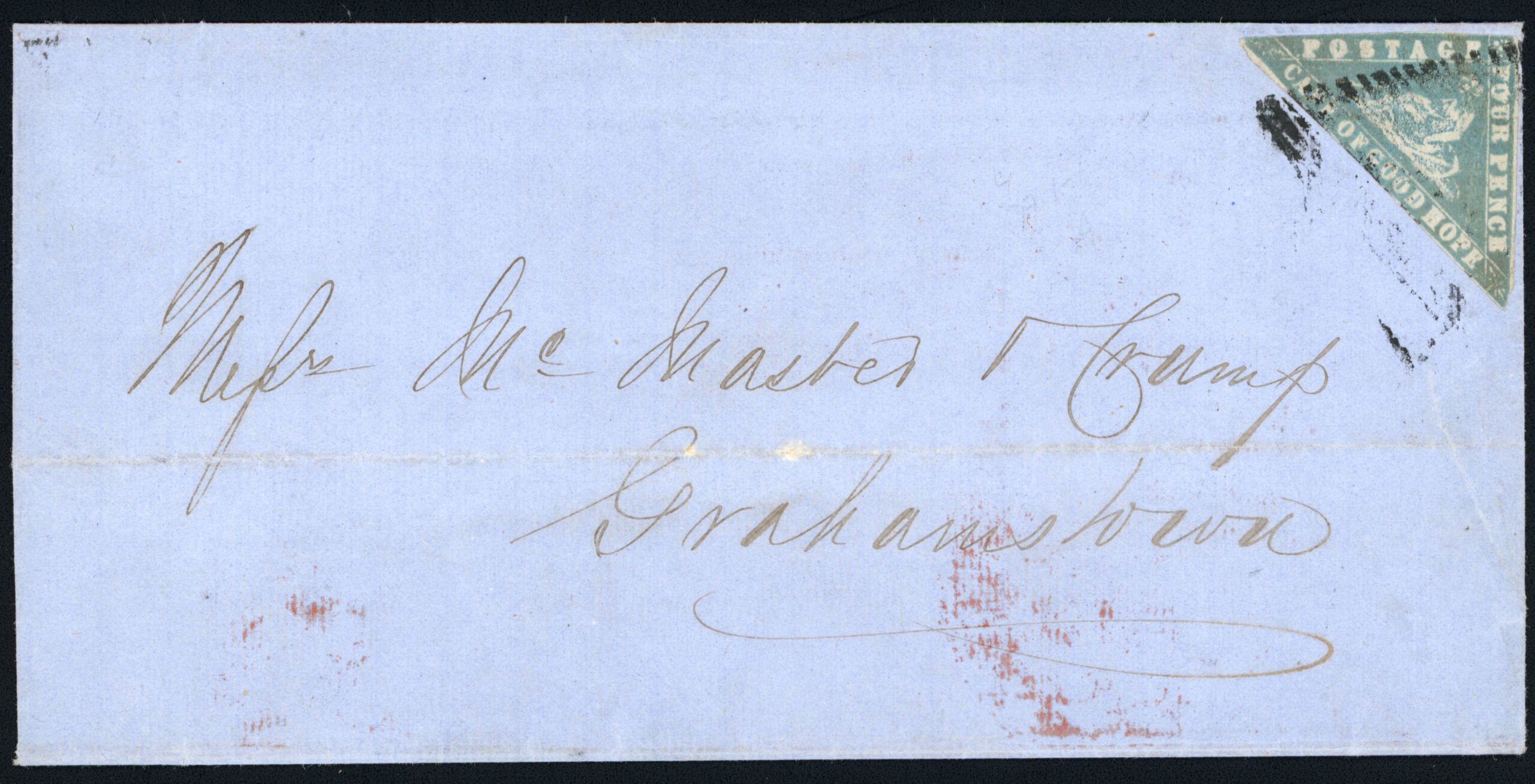
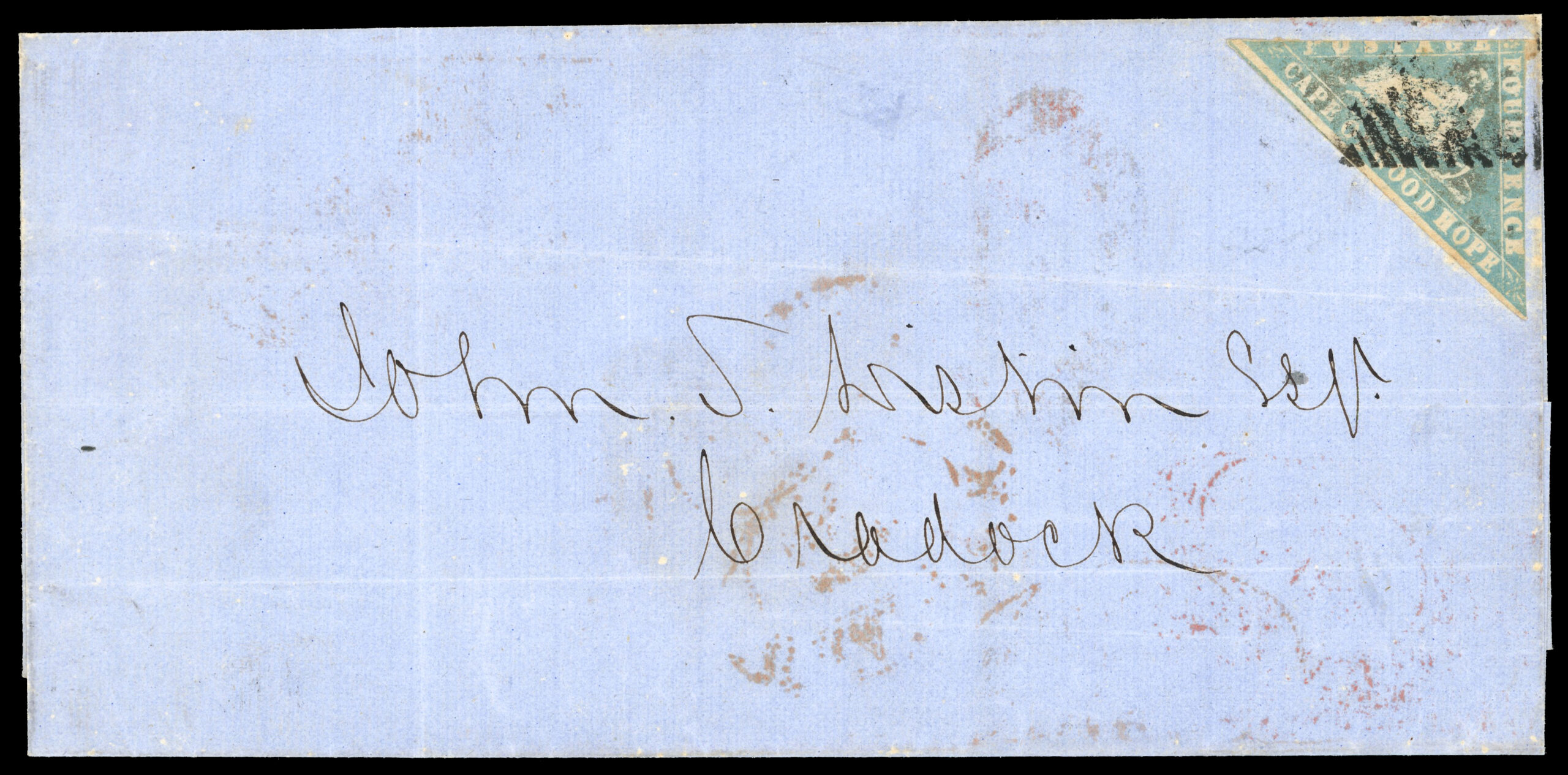
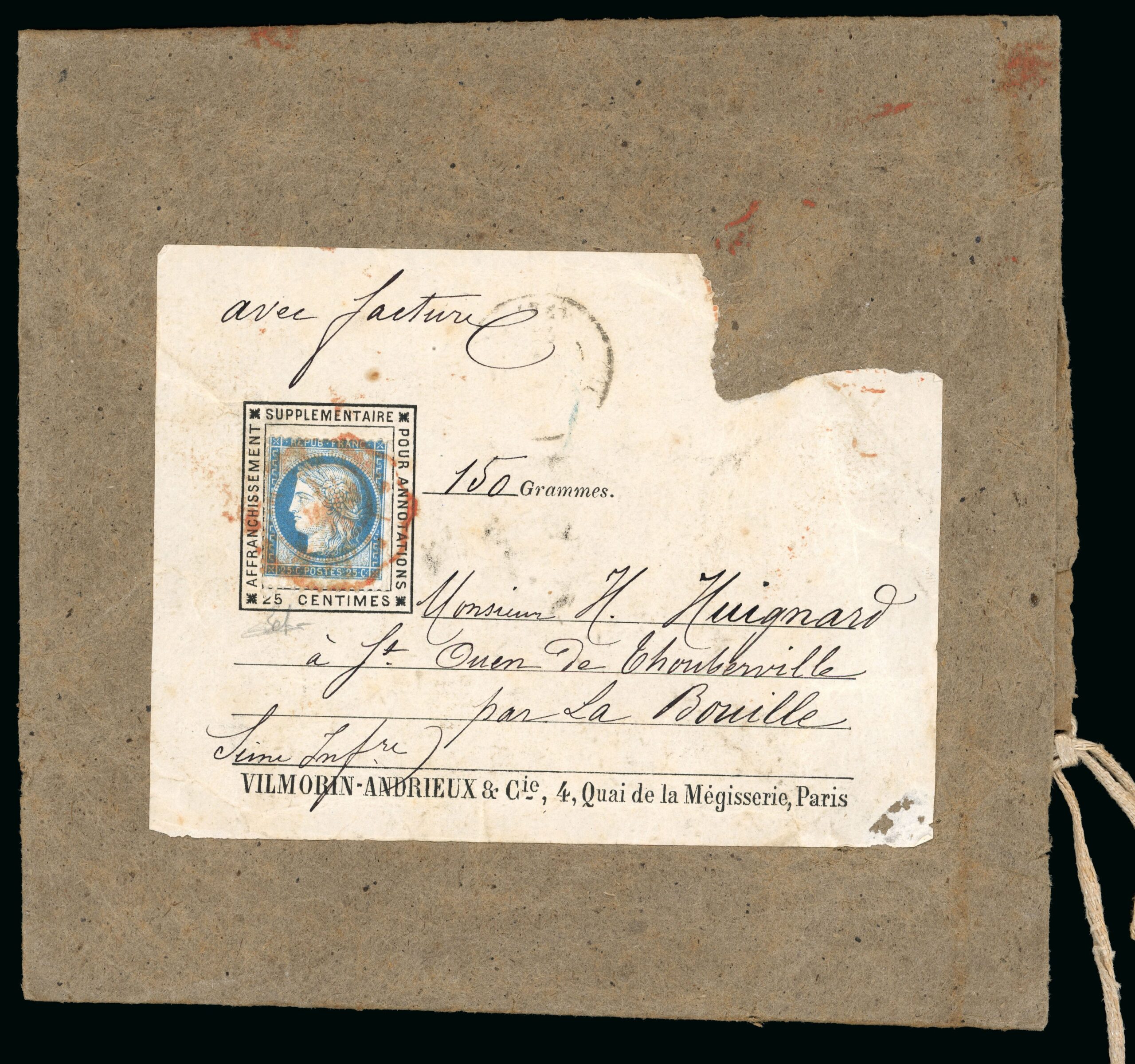
Gérald Imbert: As a great admirer of blue stamps, with a preference for the classics, my favourite item was consigned at the Paris show in May and since then, despite all the many other consignments, my opinion has not changed! Lot 30091 is an 1871 Cérès 25c (Yv. °60) on a precursor of a stamp holder printed on a Vilmorin-Andrieux letterhead shipping label stuck on a large thick envelope (seed bag type) with red cancellation, signed Behr. I remain very attached to the visual appeal but also to the originality, and that is what I find particularly interesting about this item. Not only that but starting price is very attractive and no doubt there will be a lot of excitement at the auction for this lot.