


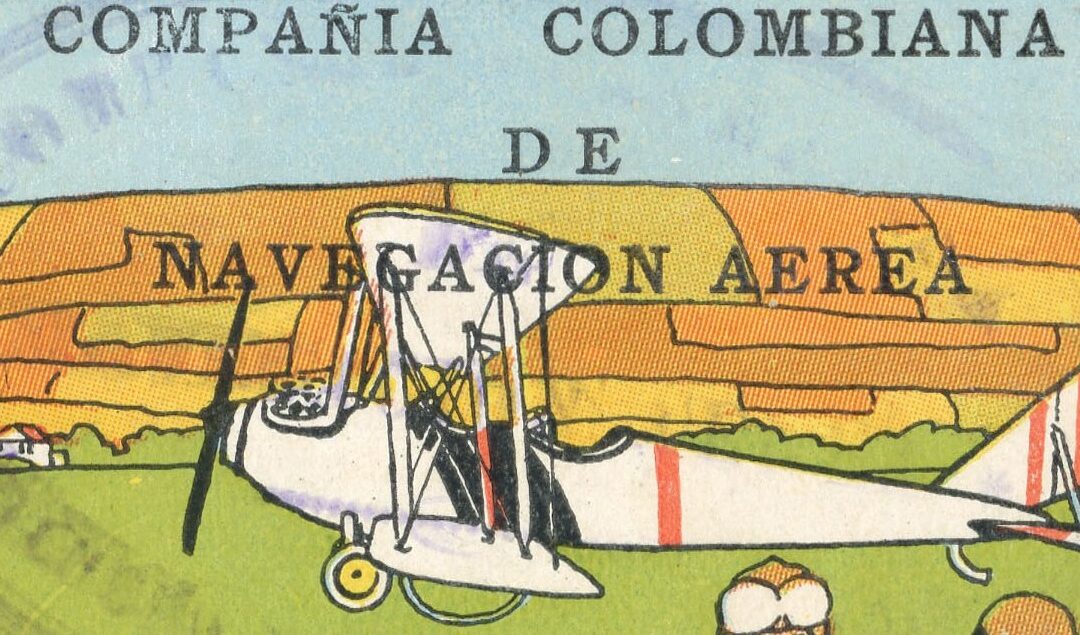
Our Autumn 2025 auction series features 200 lots of airmail stamps, covers and collections throughout all our catalogues. The article below gives a brief overview of early airmails whilst highlighting our various specialised catalogues and the important and unusual airmail items they contain.
The Golden Age of Aviation, the period between World War I and World War II, saw a rapid change from the slow wood-and-fabric biplanes to the fast, streamlined metal monoplanes and luxurious airships taking to the skies, as flight progressed from the realm of daredevils and pioneering aviators to seeing civilians cross the seas and travel the world in comfort and style. It’s a romanticised period of history, and one with very close links to philately from its infancy as pilots would carry special mail, create cachets and even their own stamps or overprints, with the purpose of publicity and fund-raising.
Early Mail Carried Through the Air
Although homing pigeons had long been used to send messages, the first mail to be carried by a vehicle in the air was using a hot air balloon. The most famous circumstance of balloon mail being used was during the 1870-71 Siege of Paris, known in French as a ballon monté, which was the only means by which communications from the besieged city could reach the rest of France. Around 66 balloon flights were made with each balloon given its own name such as Le Neptune, Le Franklin, Le Garibaldi, Le Général Uhrich, Le Washington, Le Gravilliers, etc. The vast majority of these succeeded with only five captured by the Prussians and three that went missing, thought to have come down in the sea. The number of letters carried has been estimated at around 2.5 million, and entered the post wherever the balloon happened to land which wasn’t always in France; the longest distance travelled was by La Ville d’Orléan which reached Norway over 1’000 miles away! Collectors are interested in which balloon a cover was carried on, its contents and sometimes very importantly its destination. Our France & Colonies catalogue features 27 lots of ballon montés including scarcer examples as well as major rarities with destinations such as Puerto Rico, Réunion, Brazil, Chile and USA, as well as a collection with 87 examples.
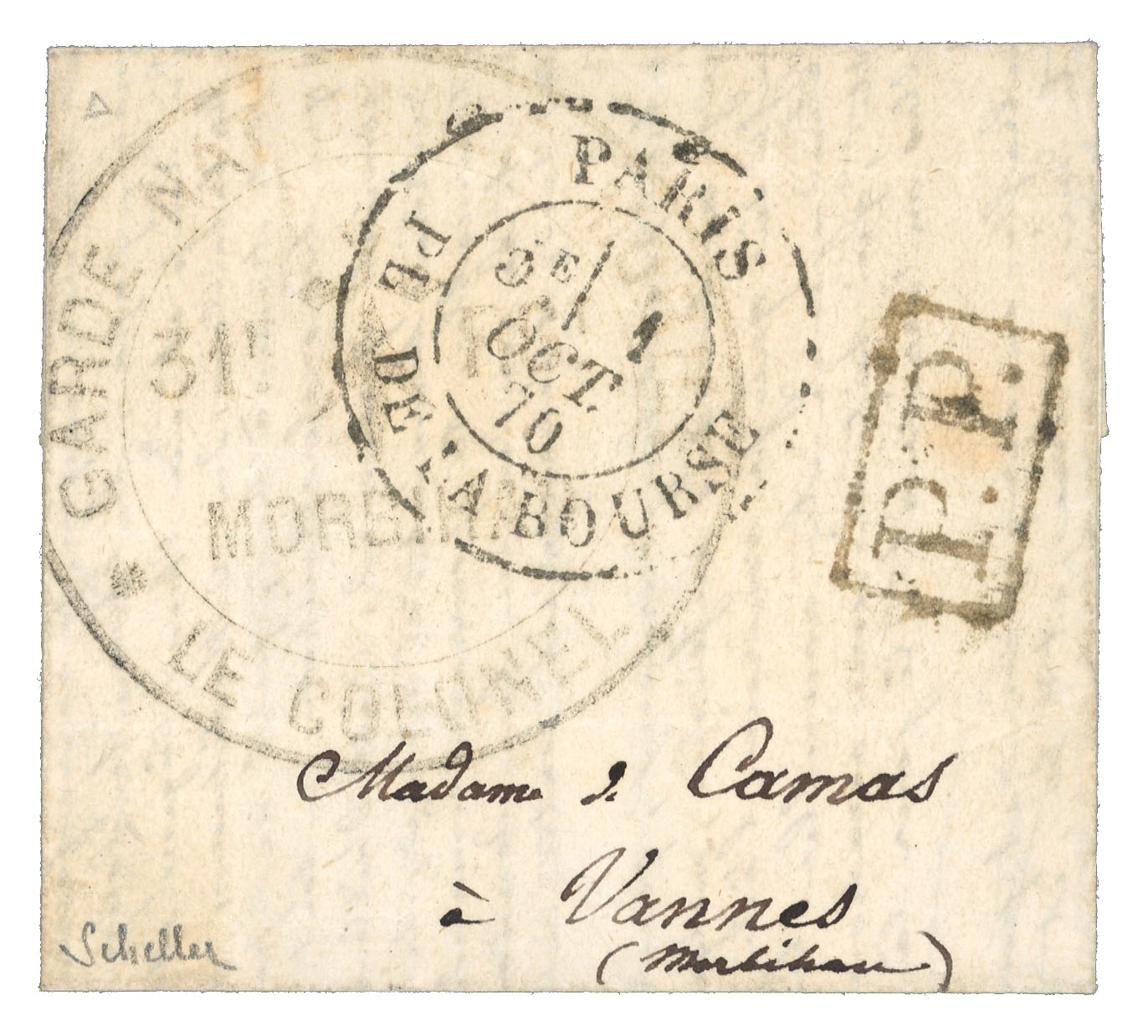
Fig. 1. Lot 20116: 1870, miniature military mail unstamped letter from « PARIS PL. DE LA BOURSE 1 OCT 70 » to Vannes, with black circular handstamp reading:
GARDE NATIONALE MOBILE
31 Rgt
MORBIHAN
* THE COLONEL *
The Early Airmails Carried by Planes
The world’s first airmail was in India in 1911, piloted by Henri Pequet who flew 6’500 letters a distance of 13km (8.1 mi) from Allahabad to Naini. The letters bore an official cancellation reading « First Aerial Post, U.P. Exhibition, Allahabad. 1911 ».
Egypt’s first airmail delivery took place in 1914, when Marc Pourpe took part in an « Aviation Week » held in Heliopolis, near Cairo. While there he flew the 1’250 miles from Cairo to Khartoum in Sudan, with stops in Luxor, Wadi Halfa, and Abu Hamed. Just as with the India flight, a special cachet was issued to commemorate the event and applied to the mail carried by Pourpe which read: « POSTE AERIENNE / L.N.A. / MARC POURPE / 1913-14 / CAIRE-KHARTOUM ». Our Egypt catalogue has one of the covers carried on this flight showing in figure 2. Pourpe died later that year when he crash landed after an aerial reconnaissance over the Somme in WWI.
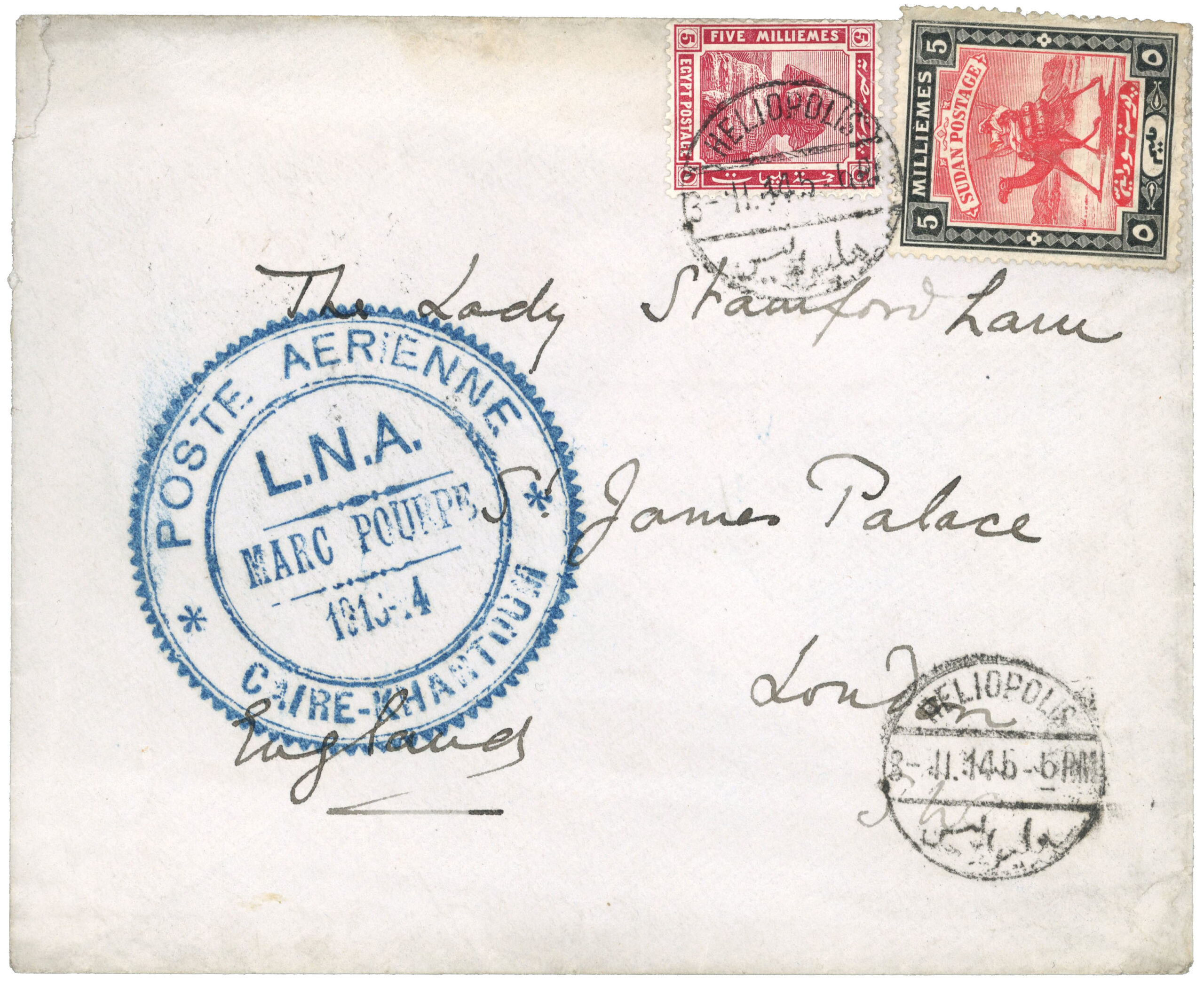
Fig. 2. Lot 10334: Egypt’s first airmail
Even with WWI still raging, the first airmail stamp was issued by Italy in 1917, who overprinted 200’000 stamps for the experimental flight between Rome and Torino. The next major milestone came in 1919, when Alcock and Brown completed the first transatlantic airmail flight.
Also in 1919, companies and pilots in Colombia were experimenting with airmail flights and our Latin America & USA catalogue has some examples. On June 18th 1919, aviator William Knox Martin, flew an experimental flight with a special 2c stamp overprinted “1er Servicio Postal Aero 6-18-19” (fig. 3) which was used on the 160 covers flown, of which we have two in our auction.
Colombia even had the world’s second ever airline. Depending on which Wikipedia page your read, it was either the Sociedad Colombo Alemana de Transportes Aéreos (SCADTA) or the Compañía Colombiana de Navegación Aérea (CCNA).
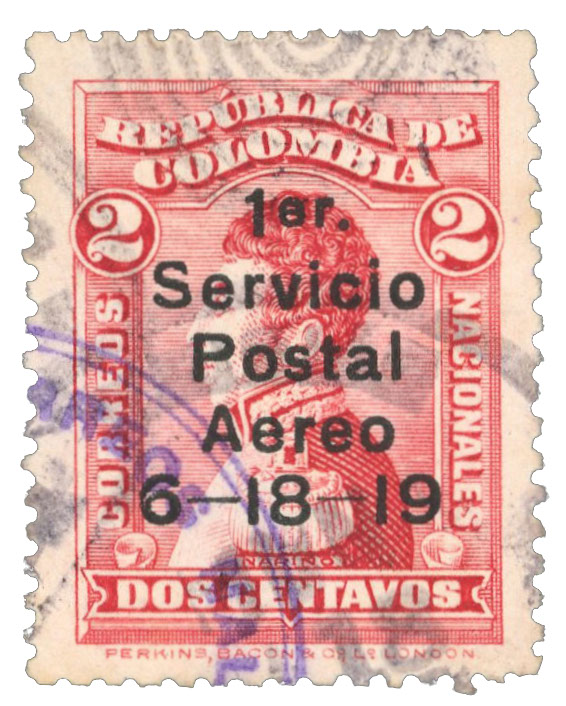
Fig. 3. Lot 30147: Knox Martin 2c used
The first official airmail flight in Colombia was operated by the CCNA on February 22, 1920, between the cities of Cartagena and Barranquilla. The aircraft was a Farman F40 « Cartagena » piloted by René Bazin, with Guillermo Echavarría Misas as the mail driver and George Goupil as the mechanic. The flight lasted 1 hour and 10 minutes1. The first CCNA stamps were printed at the Valiente Printing House in Barranquilla, using advertising vignettes provided by Curtis representatives and surcharged 10c along with the company name, which make (in my opinion) some of the most attractive stamps ever produced. Though I do have a colleague who refers to them as « jam jar labels », so they’re not to everyone’s taste. Below are a selection from lot 30150 which contains 8 of the 9 issued stamps.


Fig. 4. Lot 30150: Four examples of the 1920 CCNA stamps from this lot (clicking on an image will expand it)
Perhaps a case of semantics, the Wikipedia page for SCADTA2 says that it became the first airline to officially establish an airmail service (emphasis on the « service » I presume) on 19th October 1920, using seaplanes to travel river by river delivering mail. It issued its own stamps to provide an airmail service to and from Colombia and the US, Canada and various South American and European countries. Our Latin America & USA catalogue features some SCADTA issues including the cover illustrated in figure 5 which was sent registered from Guayaquil in Ecuador to Barranquilla in Colombia with the franking including the scarcer 50c on 10c green.
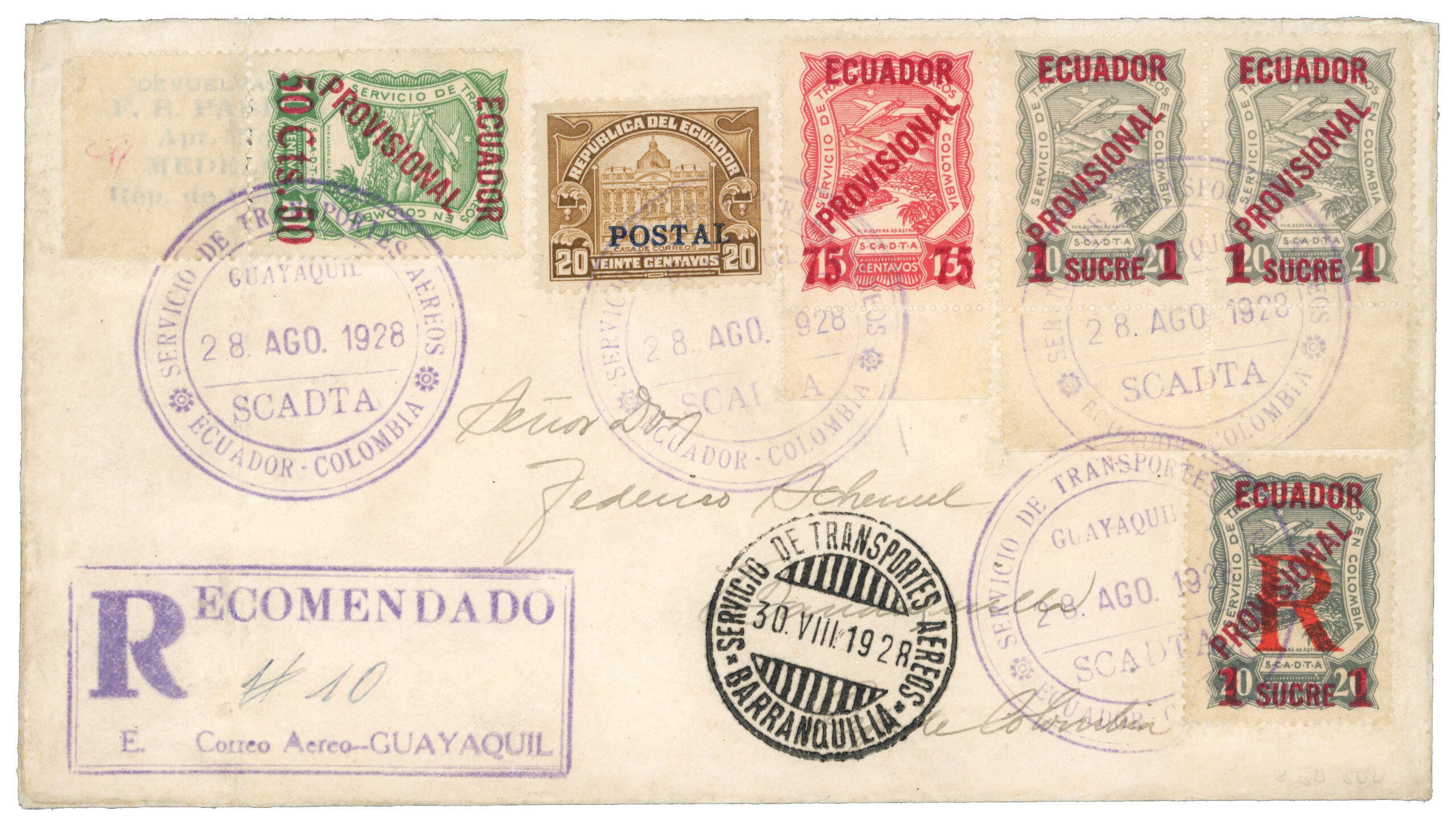
Fig. 5. Lot 30229: 1928 (Aug 28) SCADTA airmail cover from Ecuador to Colombia
Innovations continued and in the late 1920s, experiments were undertaken to catapult flying boats from the decks of cruise liners, using compressed air and powder that propelled the aircraft off the ship. This new system was inaugurated on 13th August 1928, when the « Île-de-France » liner launched a Lioré et Olivier H-198 seaplane 450 miles from the US coast. This experiment was a success and allowed the mail to be delivered approximately 24 hours ahead of the ship. The seaplane carried 1’700 airmail covers, franked with a surtax of 10Fr.
On arrival, the enterprising French Postal Agent on-board the « Île-de-France », Jules Cohen, convinced the French Consul General in New York that there was a shortage of 10Fr stamps for the return journey and to allow the overprinting in New York of 3’000 90c Berthelot stamps and 1’000 1.50Fr Pasteur stamps with a 10Fr surcharge (see fig. 5), which he conveniently just happened to have with him.
During the return voyage, he sold only 1’135 Berthelot and 250 Pasteur stamps. When he reached Le Havre he sold a further 2’150 surcharged stamps for 35Fr each, before the postal authorities at Le Havre seized the rest. By that evening, the stamps were going for 100Fr each, and a few days later the price had increased to 1,000Fr. Dangerous forgeries of the surcharge and covers exist.3
Our France & Colonies catalogue includes over 30 airmail stamps, covers and collections, with several mint examples and two covers of the Île de France issues, with lot 20236 illustrated in figure 6 showing the larger spacing between « 10 FR. » and the obliterating bars on the top stamp, which was a feature of the second-lowest row of stamps in the setting of 50 overprints.
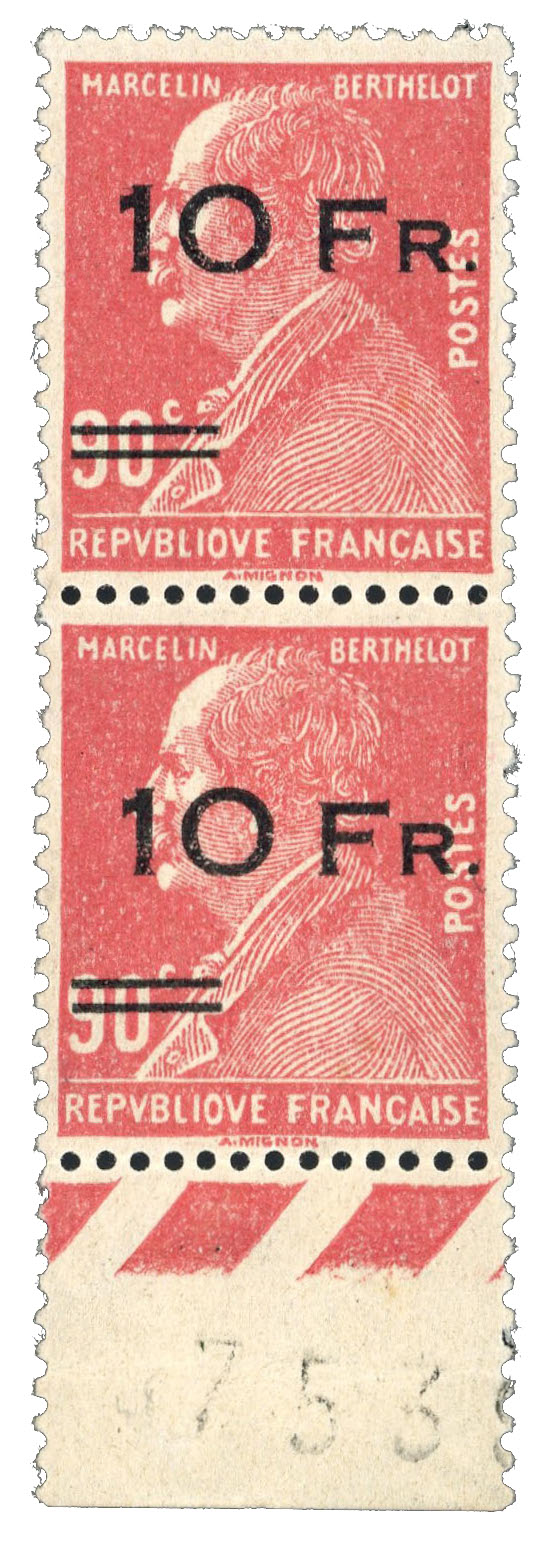
Fig. 6. Lot 20236: « Île de France » 10Fr on 90c Berhelot mint vertical pair showing larger spaced surcharge on upper stamp.
Crossing the Atlantic and the Rise and Fall of the Airship
As previously mentioned, the first flight across the Atlantic took place in June 1919, and it was only a couple of weeks later that the first transatlantic flight by rigid airship, and the first return transatlantic flight, was made by Major George Herbert Scott of the Royal Air Force in the airship R34 from Scotland to Mineola, New York, taking about four and a half days. It was the first flight to transport paying passengers. It wasn’t until October 1928 that the airship Graf Zeppelin began the first non-stop transatlantic passenger flights from Friedrichshafen in Germany to Lakehurst, New Jersey.
Thereafter, the Graf Zeppelin made regular passenger flights across the North Atlantic from Frankfurt-am-Main to Lakehurst. In the summer of 1930, a South Atlantic route was introduced, from Frankfurt and Friedrichshafen via Lakehurst to Recife and Rio de Janeiro. The return flight gave the opportunity for Argentina, Brazil and Bolivia to produce their own stamps for the mail. Our upcoming Latin America & USA catalogue features some of these issues.
Thereafter, the Graf Zeppelin made regular passenger flights across the North Atlantic, from Frankfurt-am-Main to Lakehurst. In the summer of 1930, a South Atlantic route was introduced, from Frankfurt and Friedrichshafen to Recife and Rio de Janeiro in Brazil. The return, via Lakehurst, gave the opportunity for Argentina (fig. 7), Brazil and Bolivia (fig. 8) to use their own Zeppelin stamps to frank the mail. The Brazilian issues were actually a semi-official issue made by the Luftschiffbau Zeppelin GmbH and printed in Germany (fig. 9).
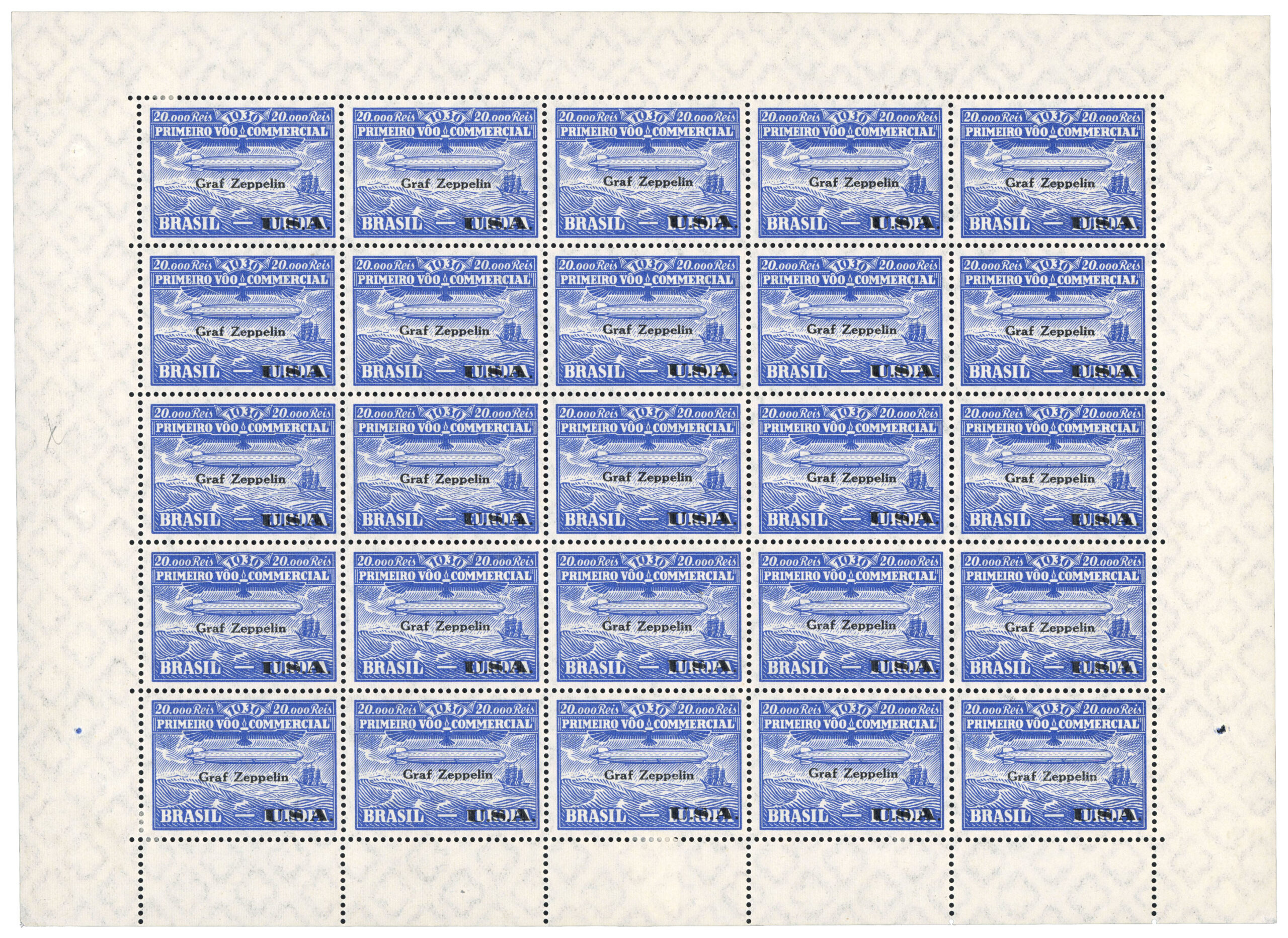
Fig. 9. Lot 30122: A complete sheet of the 20’000R value with « Graf Zeppelin » and « U.S.A. » overprint, part of this lot with both other values.
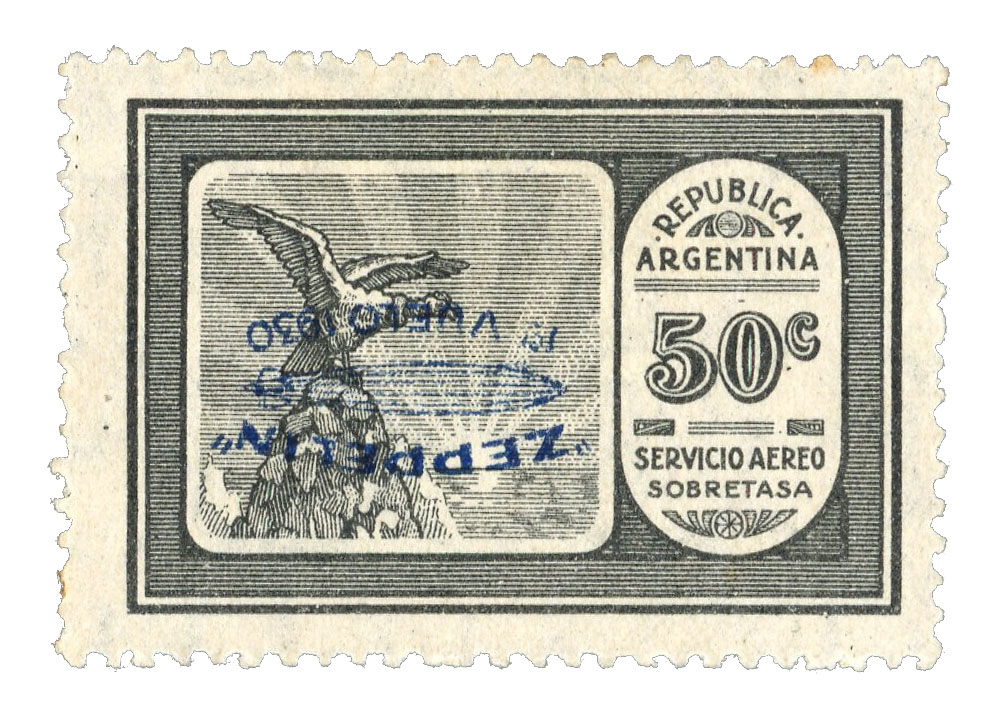
Fig. 7. Argentina’s 50c Zeppelin stamp with inverted overprint « ZEPPELIN » / 1o VUELO 1930
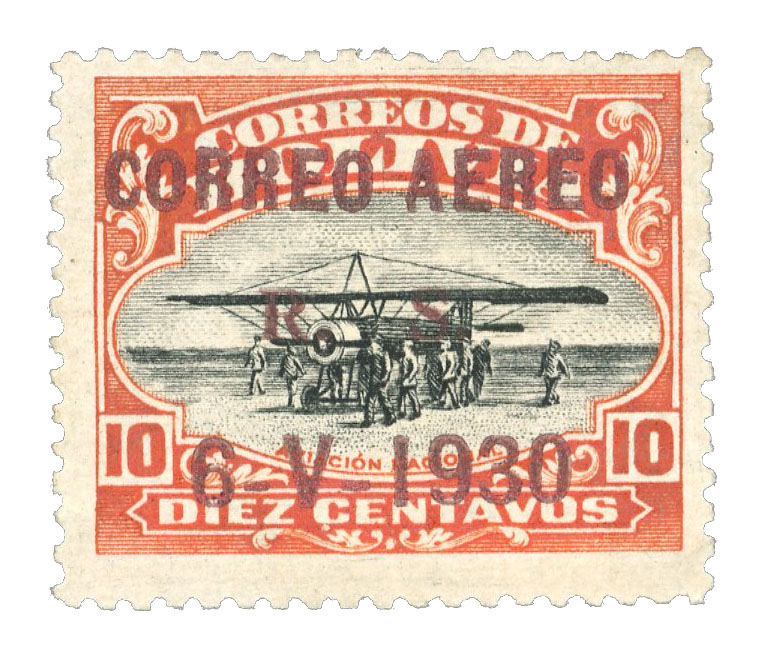
Fig. 8. Lot 30021: Boliva 10c with scarce brown overprint of « CORREO AEREO / 6-V-1930 »
But the most famous issue created for this flight is known as the « Parahyba provisional », which was a large « 5 » handstamped on a small quantity of stock of 20’000r Zeppelin stamps by the Condor Syndicate agent in Parahyba because his supply of 5’000r stamps was exhausted. To date, only three unused examples, one on piece and seven used on cover/card (from Parahyba or Recife) are all that are known. This item illustrated below is a superb example that we have in our upcoming auction and is estimated at CHF30’000-35’000.
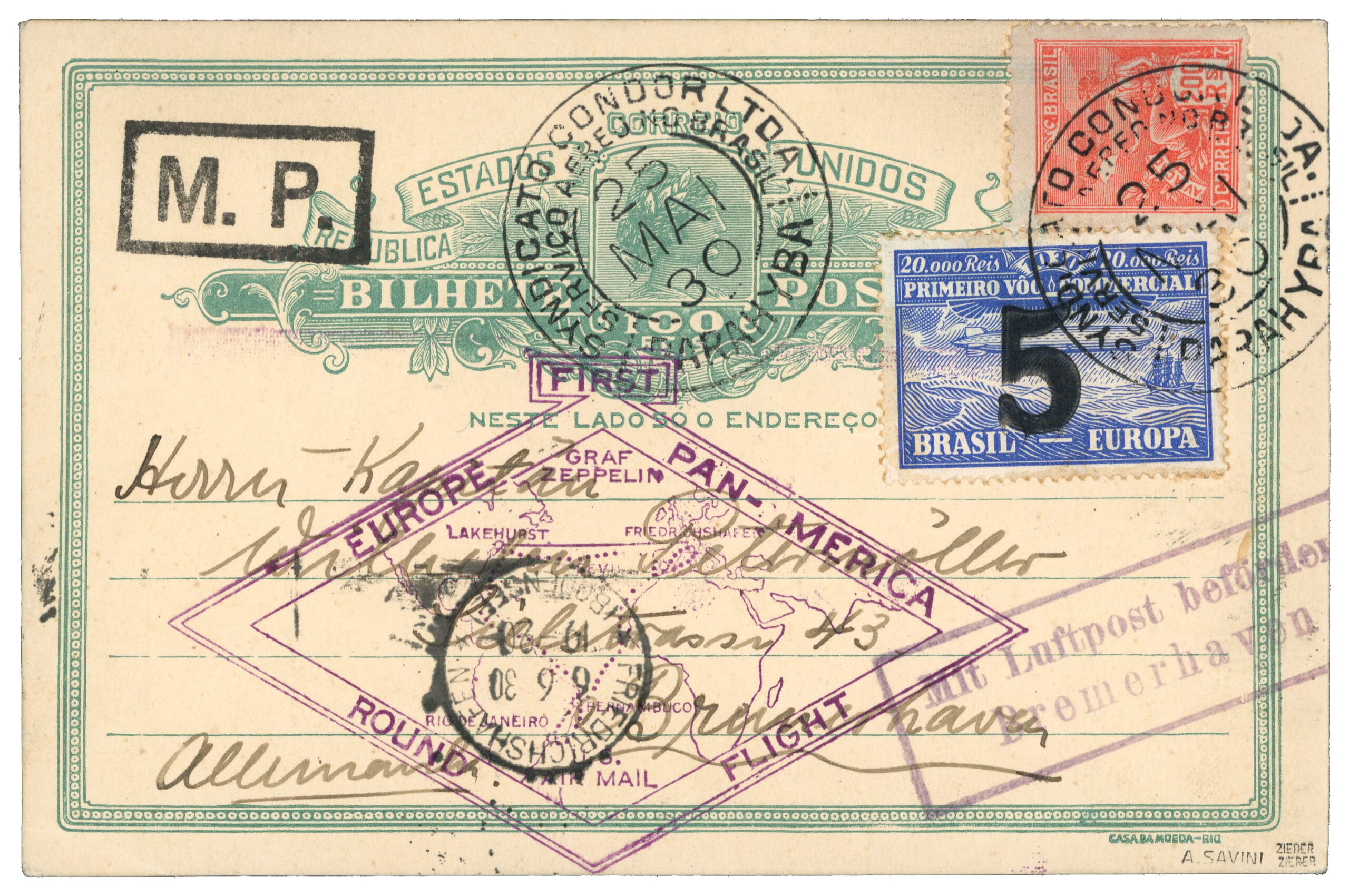
Fig. 10. Lot 30118: The « Parayhba » provisional « 5 » on 20’000R on card from Parahyba for the Europe Pan-America Round Flight.
The 1930s saw the German Zeppelins successfully compete with other means of transport. They could carry significantly more passengers than other contemporary aircraft while providing amenities similar to those on ocean liners, such as private cabins, observation decks, and dining rooms. Zeppelins were also faster than ocean liners. The downsides to operating airships were that often the crew would outnumber passengers, and on the ground large teams were necessary to assist mooring and very large hangars were required at airports. So by the mid-1930s, only Germany still pursued airship development.
The « Graf Zeppelin » continued to operate a passenger service between Frankfurt and Recife in Brazil, taking 68 hours. In the mid-1930s, work began on an airship designed specifically to operate a passenger service across the Atlantic. The « Hindenburg » (LZ 129) completed a successful 1936 season, carrying passengers between Lakehurst, New Jersey, and Germany. However on 6th May 1937, the Hindenburg suffered a catastrophe in Lakehurst as it approached its mooring, suddenly burst into flames and crashing to the ground. Of the 97 people aboard, 35 died along with one American ground-crewman. The disaster happened before a large crowd, cameras and news reporters, with the news broadcast around the world, which shattered public confidence in airships and brought a definitive end to their « golden age ». The day after the Hindenburg disaster, the « Graf Zeppelin » landed safely in Germany after its return flight from Brazil. This was the last international passenger airship flight4. Illustrated in figure 11 is one of two covers in our upcoming Europe & Overseas catalogue that were salvaged from the wreckage that were prepared as mail for the return trip of the « Hindenburg ». The other example can be found here.
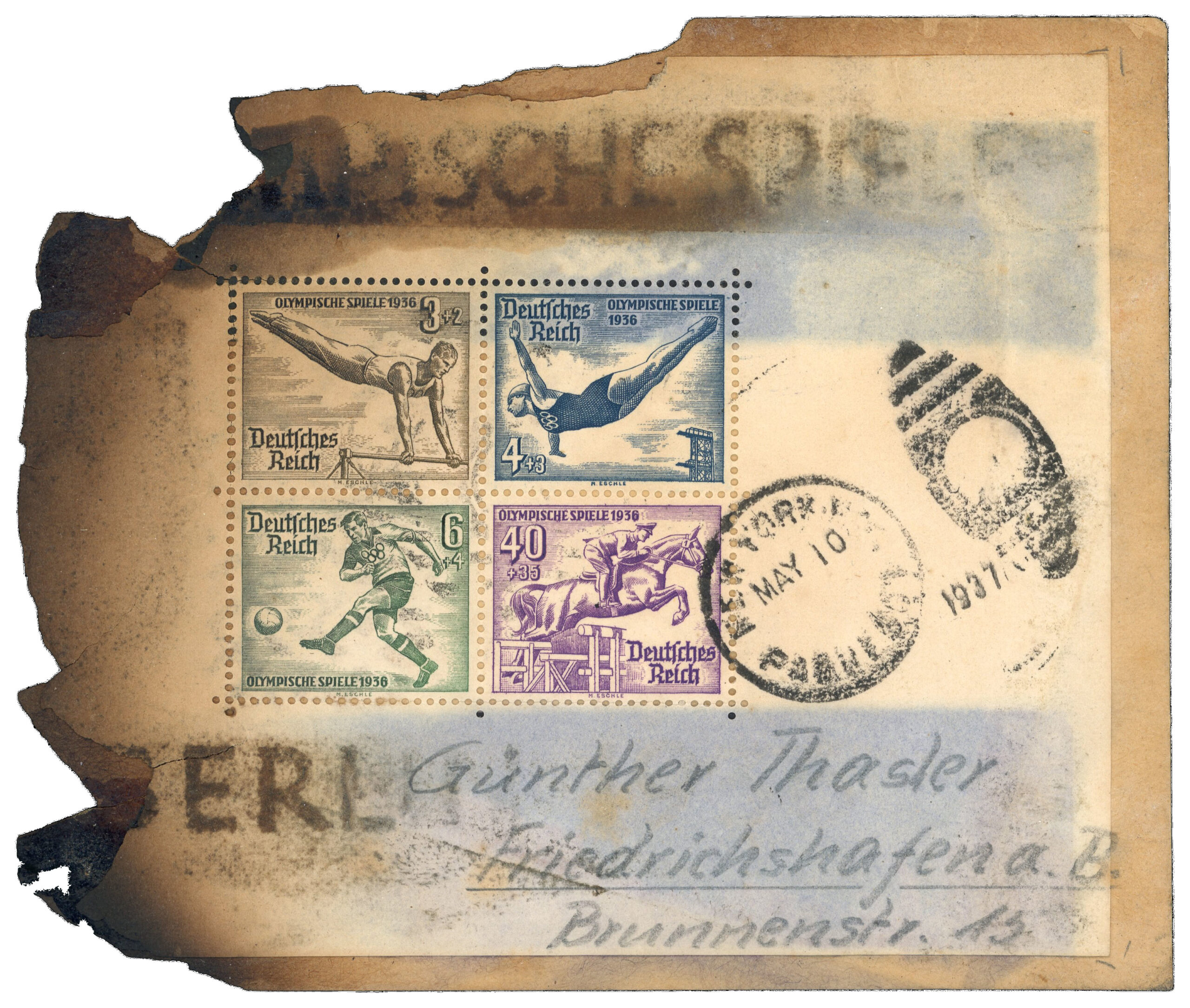
Fig. 11. Lot 41595: Hindenburg crash cover, the only recorded example with the Olympic mini sheet as a franking
And to round-off off this article, I thought I’d highlight an item in figure 12 that I had never seen before, and which neatly rounds off the story of the airship. Below is a cover sent from the British Post Office in Tangier, Morocco, two days before the Hindenburg crashed, arriving in Gibraltar the next day. It is endorsed « MAIL VIA AIRSHIP HINDENBURG » and « By Airmail via Francfot M. Germany / By Airship U.S.A. ». However the disaster occurred before the cover left Gibraltar and the endorsements erased and handstamped: « NO SERVICE AIRSHIP HINDENBURG / GIBRALTAR 6 MY 37 ».
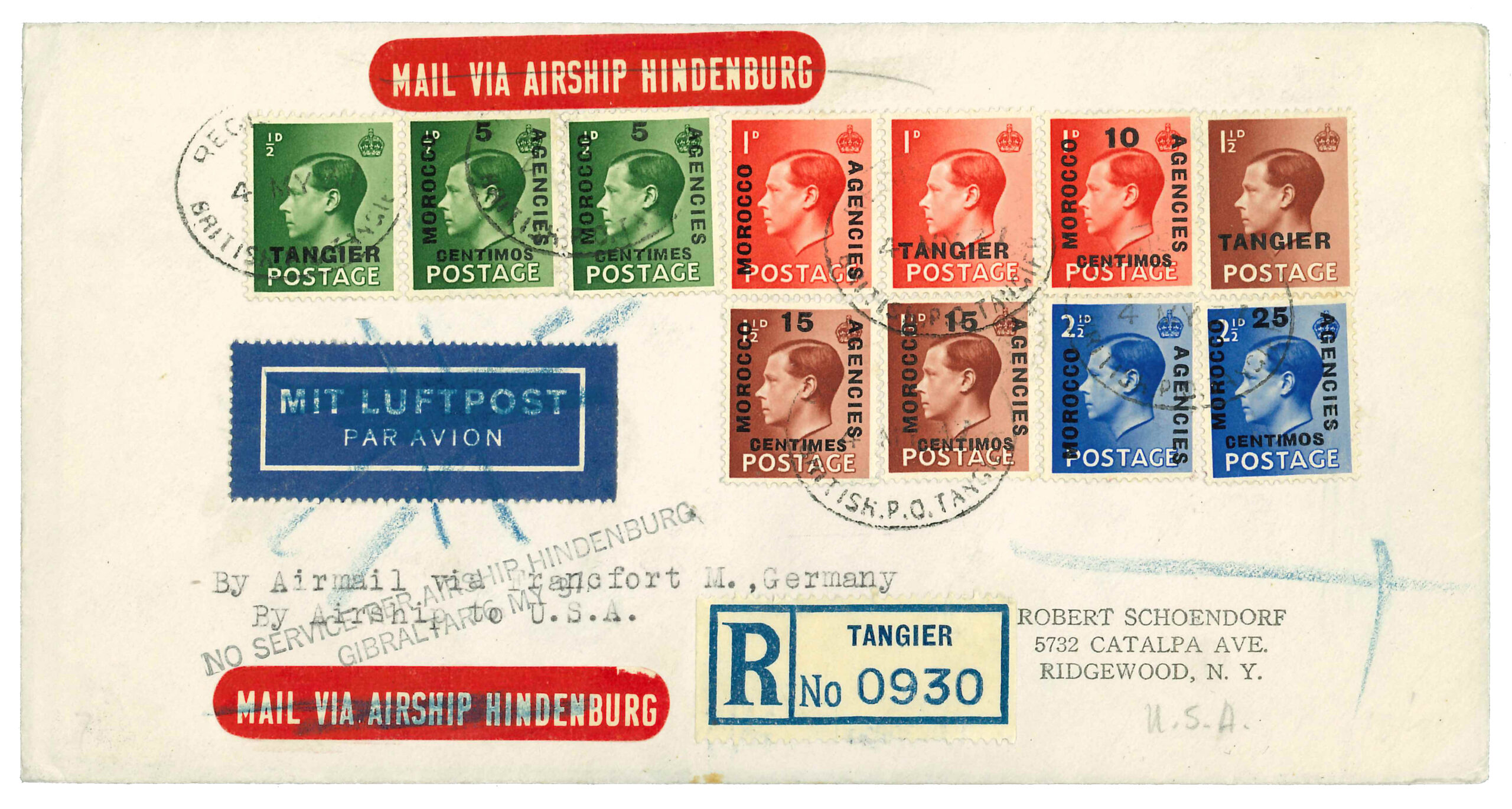
Fig. 12. Lot 41596: « NO SERVICE AIRSHIP HINDENBURG / GIBRALTAR 6 MY 37 » handstamp on cover
For those who are interested in studying the range of aerophilately we have in our auction series, you can use the links below to find single stamps and covers, groups and comprehensive collections:
References
1 Wikipedia page for CCNG:
https://es.wikipedia.org/wiki/Compa%C3%B1%C3%ADa_Colombiana_de_Navegaci%C3%B3n_A%C3%A9rea
2Wikipedia page for SCADTA:
https://en.wikipedia.org/wiki/SCADTA
3The Postal History of the ICAO by Albert Pelsser:
https://applications.icao.int/postalhistory/aviation_history_the_catapult_mail.htm
4 Wikipedia page for Airship
https://en.wikipedia.org/wiki/Airship