


The following in an article written by Vincent Beghin of Maison Calves, translated into English and reproduced with their kind permission. It highlights a selection of lots in our upcoming auction of France & Colonies on 19th June 2024.
It took ten years for the French administration to follow the example of the British who, on May 6th, 1840, issued the world’s first postage stamp, the famous “Penny Black”, bearing the image of Queen Victoria. In France, in fact, it was only on August 24th, 1848 that the national assembly passed the decree establishing the use of stamps, and only on January 1st, 1849, that the postage stamp finally appeared in France. It is black in colour, like its British relative, but, since France was not a monarchy, it bore the effigy of the Republic which, at that time, took the form of Ceres, the goddess of harvest. Figure 1 shows a public notice announcing the details of the stamps and the postage rates.
The event of France’s first postage stamp, it must be said, did not immediately fill the public with enthusiasm. The French, in fact, considered the initiative of the Post Office to be inappropriate. According to the rules of courtesy of the time, it was the recipient and not the sender who ought to pay the postage. When a stamp was used by the sender to prepay the postage it could imply the inability of the recipient to pay the small amount. Furthermore, some customers were sceptical: if a letter was prepaid, they wondered, might the post office not be less determined in locating the address, since there was no money to be collected from the recipient?
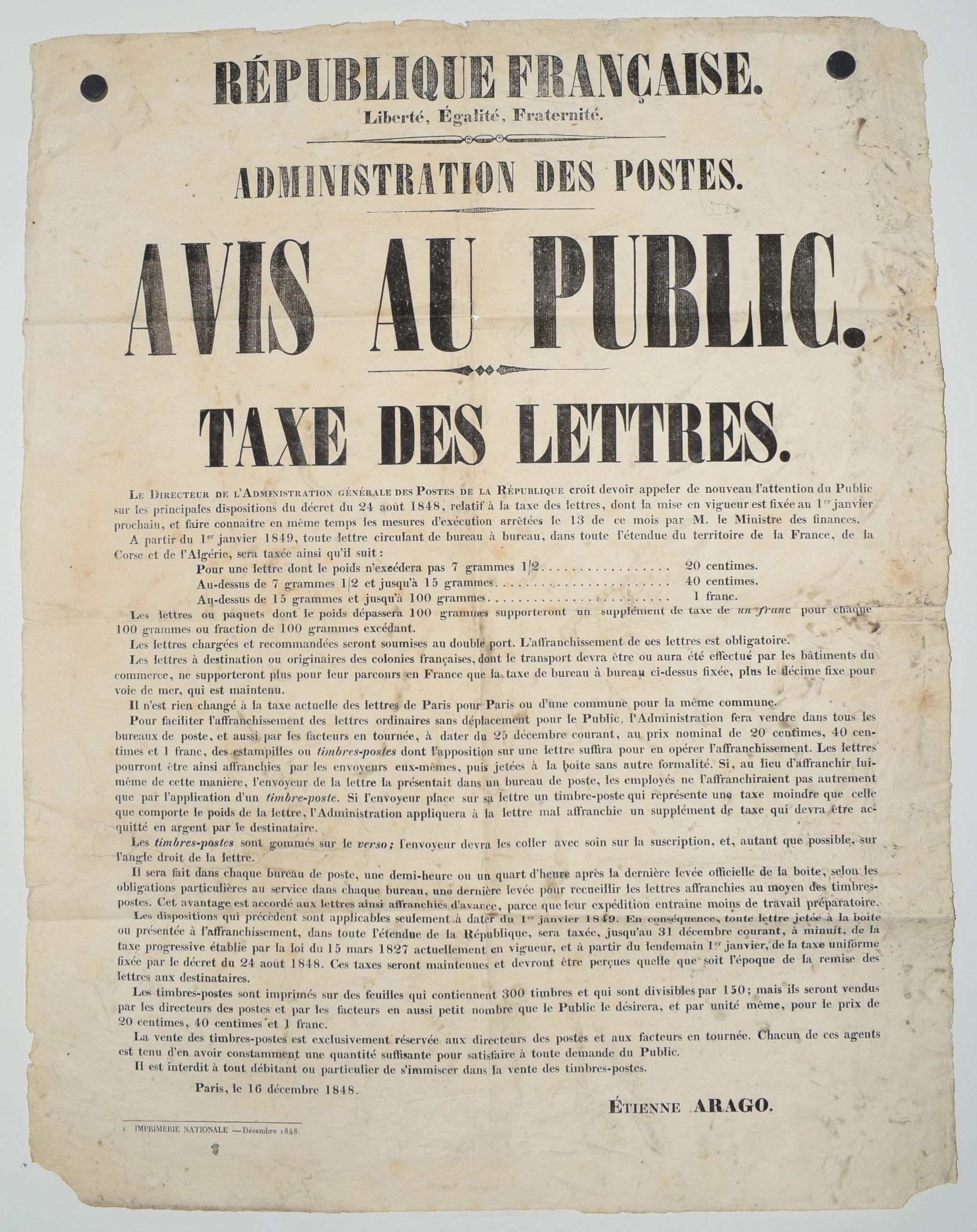
Fig. 1: Part of lot 40000 in our upcoming June 19th 2024 auction, an 1848 postal notice for the issue of the postage stamps
For reasons such as these, the stamp did not get off to a smooth start. At the end of 1849, a mere 10% of letters were sent with a stamp, and it was not until 1859 that the tide was turned, with 85% of letters being franked. As for the “20 centimes black”, it disappeared from offices well before then, in October 1850. Why so soon? Quite simply because the Post Office became aware that unscrupulous customers were reusing copies that had already been cancelled, the black colour of the stamp making the cancellations barely visible to postal clerks.

Fig. 2: Lot 40037 from our upcoming June 19th 2024 auction, an 1849 cover from Bordeaux (Gironde) to Deols (Indre), affranchissement with a Cérès 20c black with complete sheet margin at left, tied by the usual grid cancel
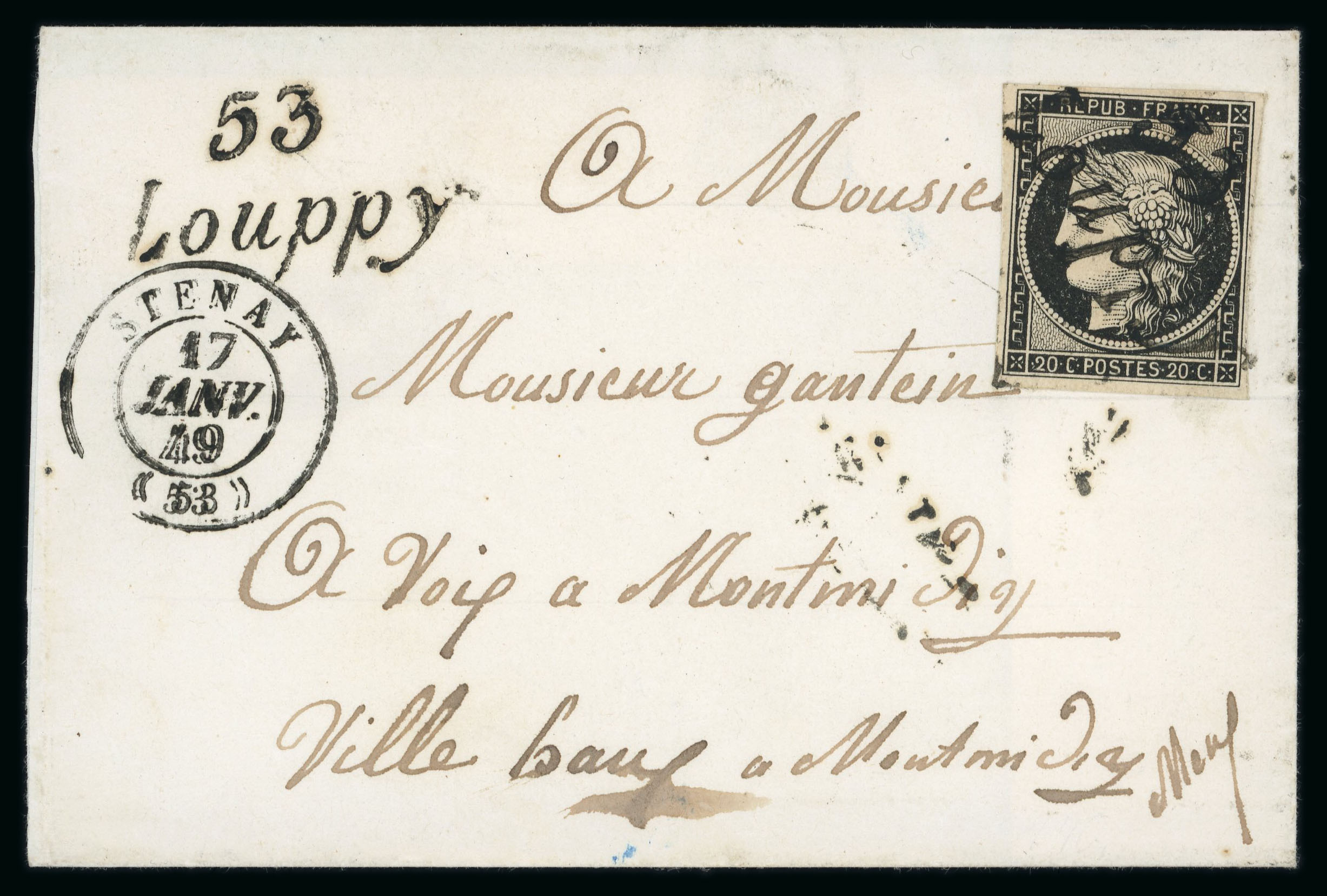
Fig. 3: Lot 40020 in our upcoming June 19th 2024 auction, an example of a cursive cancellation on a cover from Louppy (Meuse) to Montmédy, franked with Cérès 20c black, obliterated by the first type “53 LOUPPY”.
If the postal administration had planned everything for the printing of the stamps, the same cannot be said for the cancellation processes. Thus, the standard grid cancellation (see fig. 2) only appeared in post offices in Paris on January 10th, and even later in the Provinces (a few offices, Creuse being one example, only received it in March). In the absence of standard cancellations, several options became possible: stamps cancelled by a date stamp, by a pen stroke, or by a “cursive” handstamp (bearing the name of the post office in cursive writing, see fig. 3). Such makeshift cancellations, sometimes using several of these means simultaneously, occurred when postal clerks were forced to use whatever came to hand in the office.
The 20 centimes black holds a special place in the hearts of collectors. With a production of 41,698,800 copies (including 31,000,000 actually sold), it is not one of the world’s rarest postage stamps, but many philatelists are keen to own at least one example – if only to be able to hold it in their hands. Furthermore, a few rare and prestigious pieces can make prices soar.
Among a great diversity of usages, the most sought-after examples are those bearing a cancellation from the very first day of use of stamps in France, namely the 1st of January 1849. The cover illustrated in fig. 4 is particularly interesting for several reasons: the cancellation used is the rare type 13, and it is a beautiful strike on an equally beautiful imperforate stamp showing four ample and balanced margins. What’s more, it is the only known first day letter bearing the black 20c black from France’s Côte d’Or.
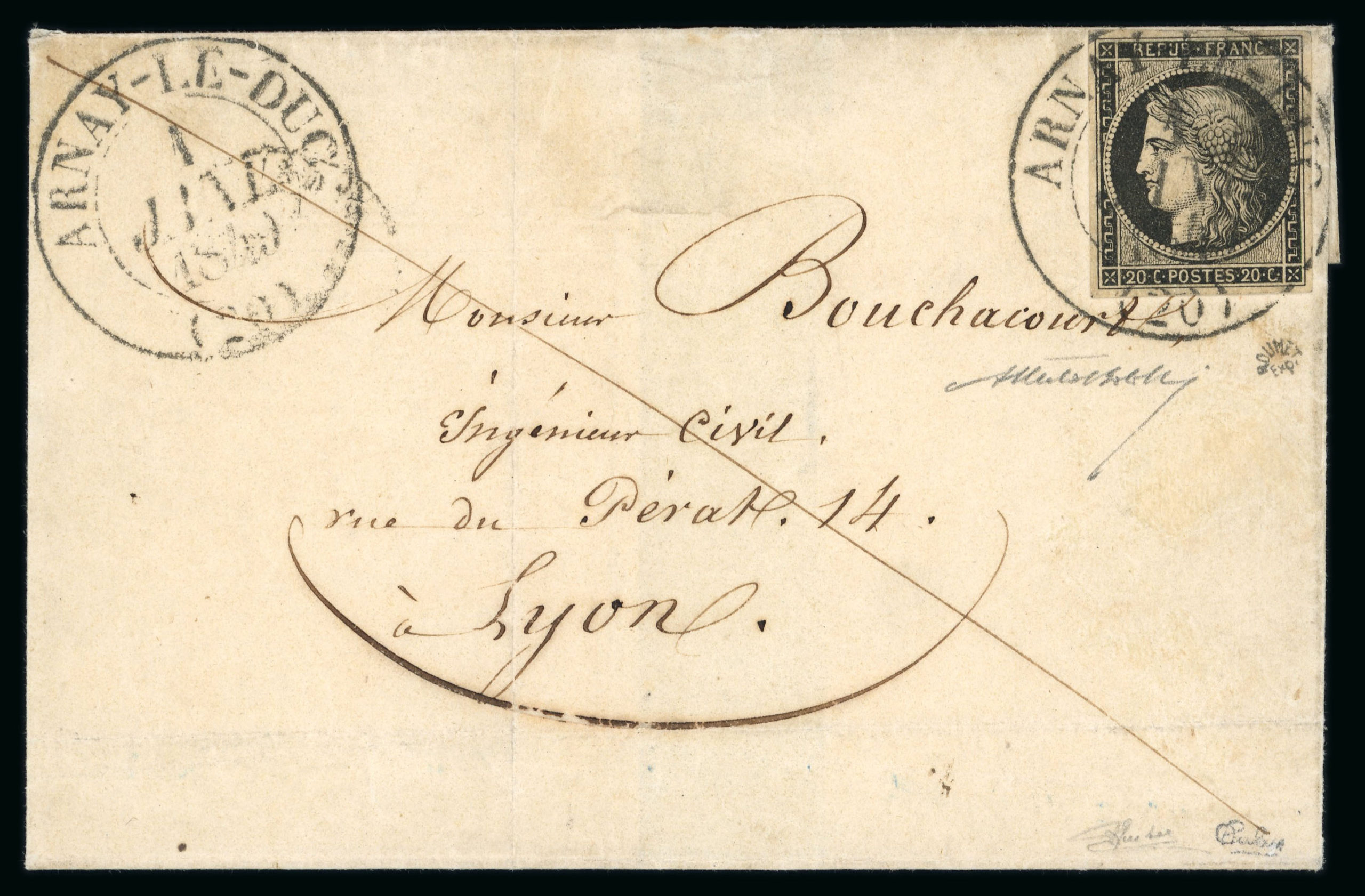
Fig. 4: Lot 40019 in our upcoming June 19th auction, a cover sent from Arnay-le-Duc (Cote d’Or) to Lyon, bearing a 20c Cérès (YT 3) struck by large datemark type 13 on 1st of January 1849, the first day of postage stamp usage in France.