


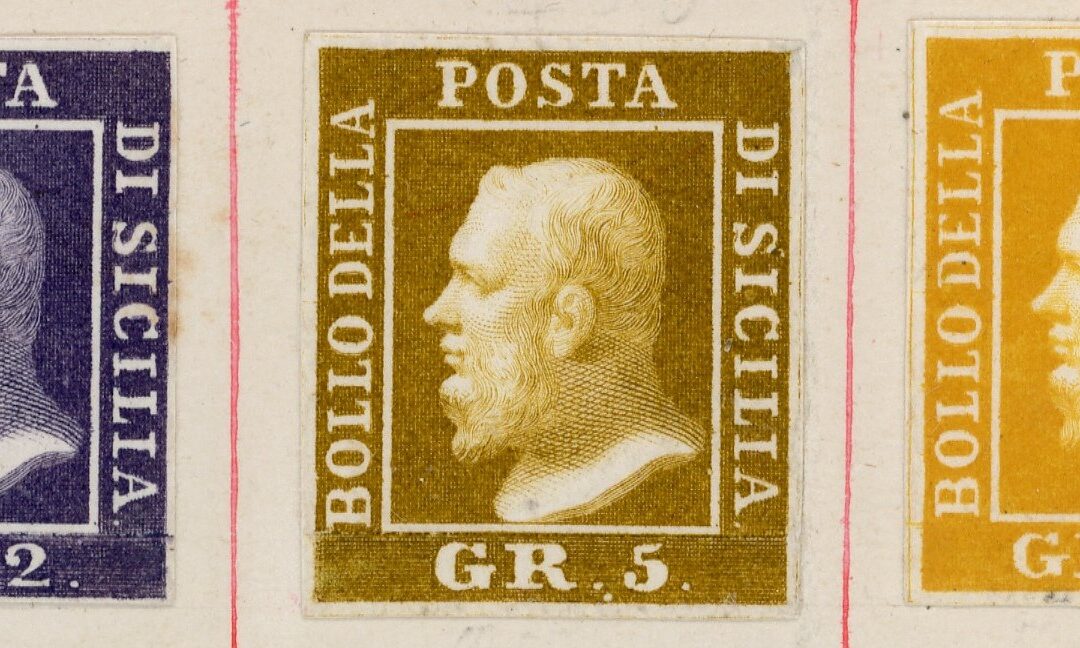
Part 1 of the Tomasini collection of Sicily is the most important offering to come to the open market in generations, and hasn’t been seen since the 1960s. The following is an overview of the background to these iconic stamps with some highlights from the upcoming auction on March 26th.
The Kingdom of the Two Sicilies was the last of the Italian States to issue stamps on 1st January 1859. However King Ferdinand II, depicted on the issued stamps, died less than 5 months later on May 22nd. He was succeeded by Francis II although it was decided to continue to use up the remaining stamps. Then only a year later in May 1860, Garibaldi landed in Sicily and led the “Expedition of the Thousand”, which resulted in Sicily being annexed to the constituting Kingdom of Italy on 21st October 1860. The last recorded use of the Sicilian postage stamps in Sicily is 23 July 1860 so these issues were in use for only about a year and a half, but their design, colours, printing and variety of frankings have ensured that these short-lived issues have been keenly sort-after by collectors from around the world.
Essays and Proofs
In 1858 the Postal Administration took into consideration the printing of the Sicilian stamps. Some essays had been prepared by the engraver Giuseppe Barone in Palermo which were printed on paper of various colours, in a rectangular horizontal shape showing the Bourbon crown and “fleurs-de-lis” with the wording “R. POSTE DI SICILIA” (fig. 1).
However it was decided that the stamps were to show the portrait of the King. The chosen artist was Tommaso Aloysio Juvara from Messina, who was considered one of the best engravers in Europe. The advice given to Juvara and his assistants was to ensure that it was impossible to create the detested tricolour with the stamps (red, white and green, which was the symbol of the liberal revolutionary party), and that the handstamp cancellations were able cancel the stamp without defacing the King.

Fig. 1: Lot 30000, a selection of 28 essays by Barone.
Juvara made a portrait of the King facing left with the inscription “BOLLO DELLA POSTA DE SICILIA” around the frame. Figure 2 shows the resulting proofs of the seven values which were printed in various colours along with an extra example showing the use of the cancellation, which had been made in cooperation with the painter Carlo La Barbera from Palermo. On 28 February 1858 King Ferdinand approved them.
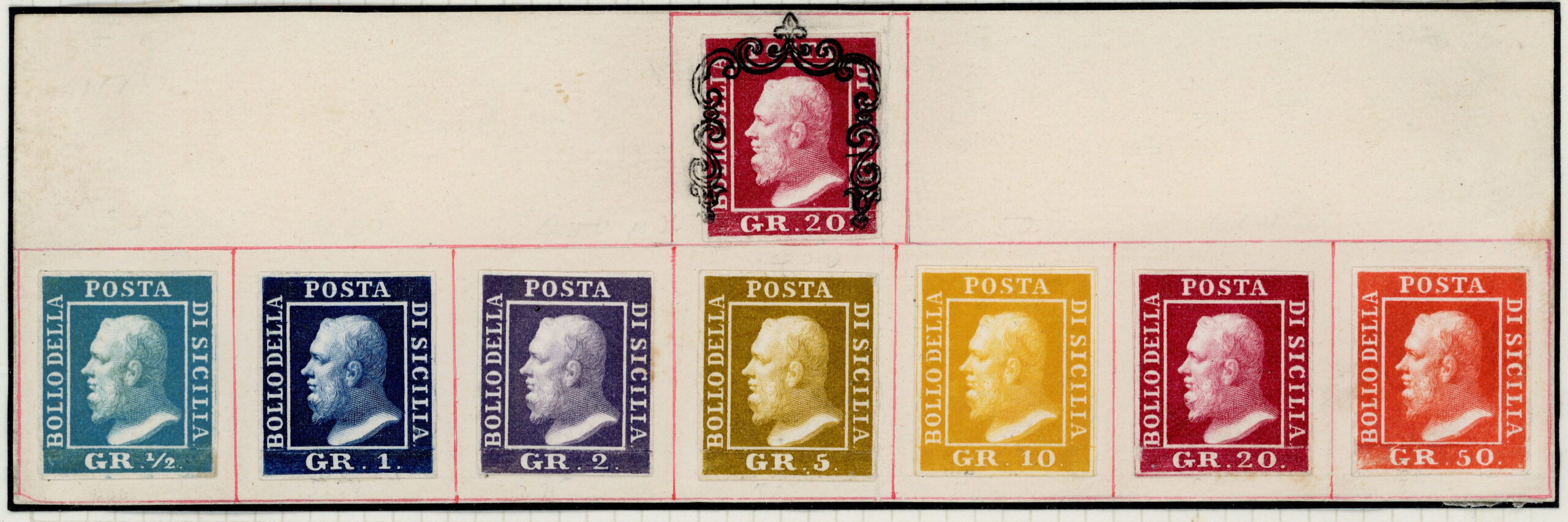
Fig. 2: Lot 30001, set of colour trials by Juvara plus an example showing the use of the cancellation handstamp.
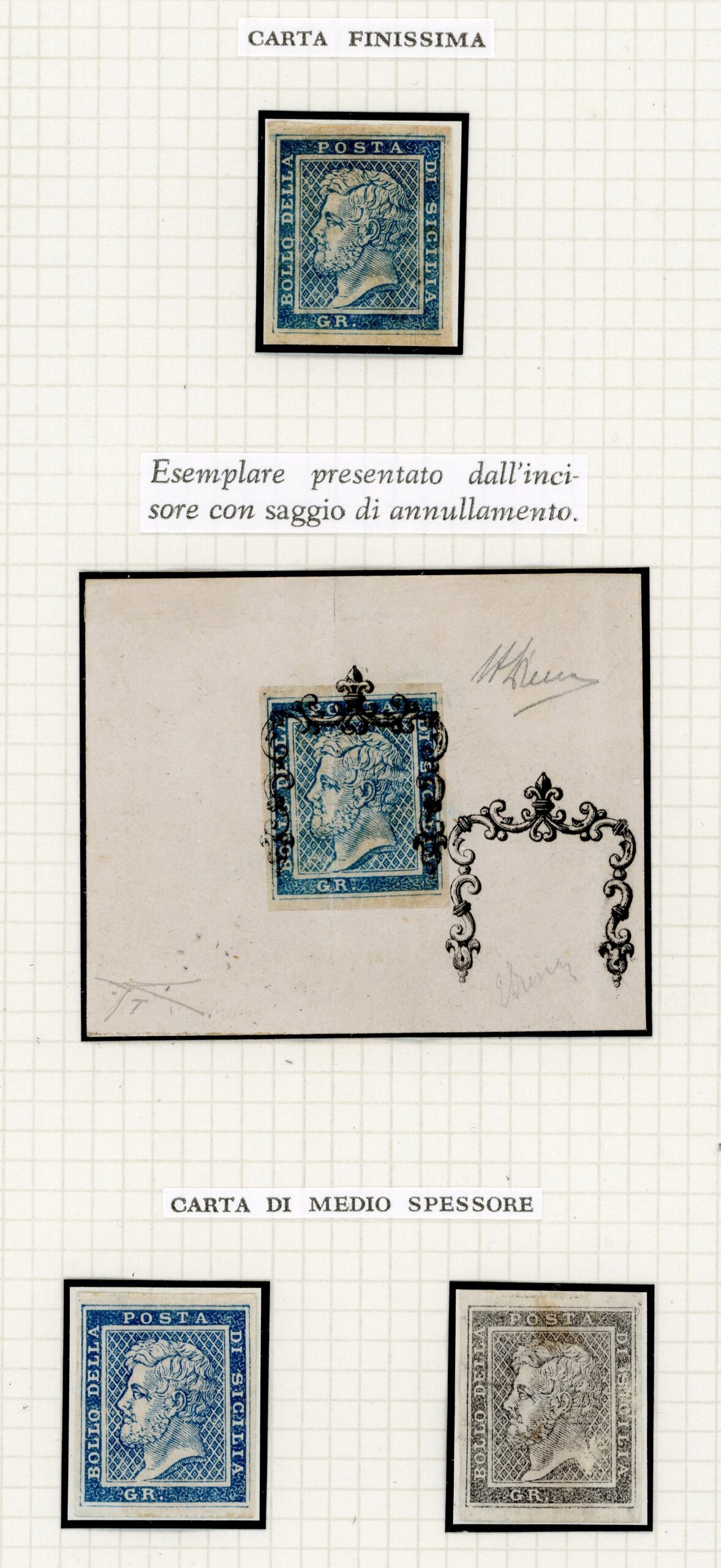
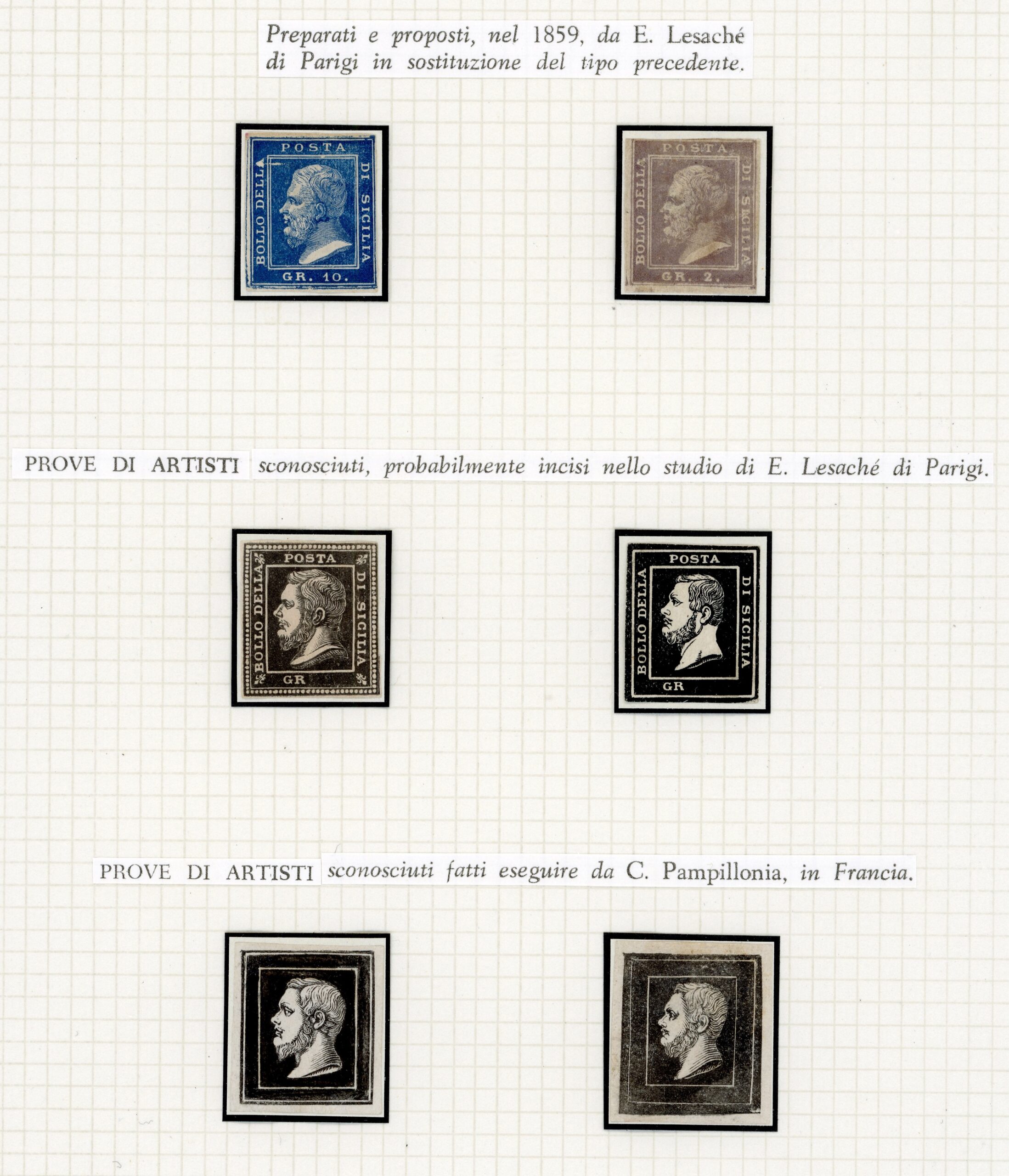
From the steel die made by Juvara copper plates were prepared for the recess printing which was done in the printing house of Francesco Lao in Palermo. The first printings were not satisfactory and the engineer Antonio Pampillonia was given the task of looking for better methods of printing in France. With the help of modern methods Lecoq printed some essays, in various types, from engravings by Lesache (fig. 3 and fig. 4). But they were not up to the standard of Aloysio’s work.
The colours chosen were orange-yellow for the 1/2 grano, brown for the 1 grano, blue for the 2 grana, carmine for the 5 grana, indigo for the 10 grana, slate-grey for the 20 grana, and brown-lake for the 50 grana. The preparation of the inks was inconsistent over the course of the printings, resulting in distinctive shades for each value. Though care should be taken as some differences in colour can be caused by oxidising of the ink. The freshness of the stamps in the Tomasini collection is one of the stand-out features, having been carefully preserved for over 60 years. One of the rarest shades in this collection is lot 30007, which is the 1/2 grano in olive-yellow (giallo oliva).
The stamps were printed in sheets of 100, and more than one plate was prepared for some of the values; three plates for 1 grano and 2 grana, two plates for 1/2 grano and 5 grana. Thanks to the nature of impressing the die on the copper plate there are characteristics in the impressions which can be unique to that position on the plate, so plating of the stamps is possible with the help of a book such as the one by Paolo Vaccari (see ref#2 below).
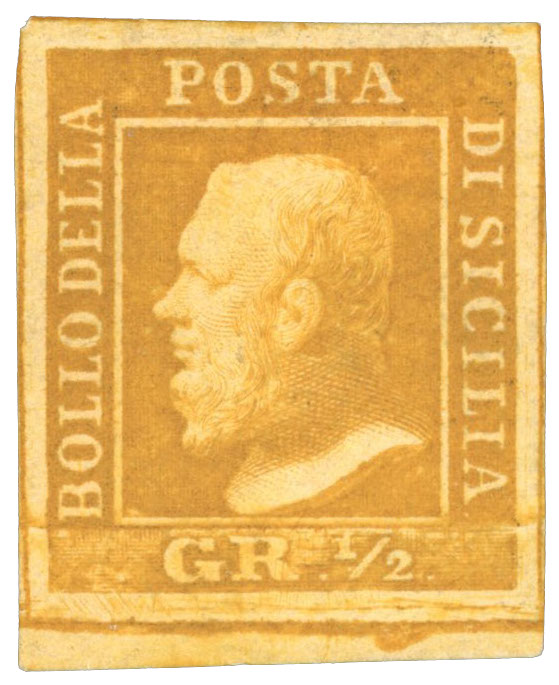
Fig. 5: Lot 30007, the 1/2 grano mint in olive-yellow (giallo oliva).
Plate wear was obviously a problem for the printers, and was often remedied by retouching individual clichés on the plate to varying degrees by hand. Lot 30045 is the most famous and significant example of these retouches, shown on the right hand stamp in fig. 6 (click to enlarge the image). In comparison to the left hand stamp it is easy to see the heavy retouch lines in the King’s hair and beard, cheek and eye shading, as well has the hatched lines for the background shading in front of his face. The engraver didn’t try to redo his ear! This example is one of only two recorded, and emanates from the prestigious collections of Ferrary and Hind which were sold in the 1920s and 1930s respectively. It’s highly likely it has been in the Tomasini collection since the Hind sale.

Fig. 6: Showing on the left an example of the 1 grana with good definition, and on the right, lot 30045, the 1 grana with major retouching from position 18 in the sheet (click to enlarge to compare the details).
Note: Ricky hasn’t quite finished what he wanted to talk about so there will be an update in the next day or two about the different gum and paper used as well as the major double print varieties. And maybe about the postal history.
References
- “The Postal Service in Sicily and the Stamps of Ferdinand II of Bourbon”, by Nino Aquila FRPSL, AEP, London Philatelist September 2003 vol.112 no.1308 pp.260-276.
- “Sicilia 1859 Tavole Comparative dei Francobolli” by Paolo Vaccari