


Lot 40198 – THE SPHAERUS COLLECTION The Role of Health Stat
Lot 40198 – THE SPHAERUS COLLECTION
The Role of Health Stat


1/3
Lot 40198 – THE SPHAERUS COLLECTION The Role of Health Stat
Greece » Early Prephilatelic Period
Prix réalisé
32’000 EUR
Estimation
30’000 – 40’000 EUR
Date de vente
jeu. 29 juin 2017 at 14:00 (Europe/Zurich)
Description
THE SPHAERUS COLLECTION
The Role of Health Stations and Lazarets in Greece – The Gold Medal Collection
History
The prevention from the contagious diseases in Greece, such as plague and cholera, was one of the main concerns of the newly borne State, since the years of the Struggle for Independence (1821 –1827).
The Mediterranean ports old practice, i.e. the opening and/or slitting of mail and its fumigation by sulphur or dipping in vinegar was the only known protection measure. This procedure was applied at the borders or the sea ports, before the mail was delivered to the relative post office for its onward transmission. In 1845, the detailed Bill on Sanitary Authorities legalized the disinfection of mail arriving from countries in which there was an epidemic or they were suspected for an outbreak.
The great danger was coming from Turkey, Egypt, Danubian Principalities and Russia with large Greek minorities and extended commerce, as Greece represented an intermediate step for the Western Europe and vice versa.
By the increase of communication due to technology (Austrian Lloyd introduced iron ships in 1852 and screw-steamships in 1853) and, consequently, the direct calls to Eastern Mediterranean ports by the Westerners, the epidemic diseases of plague and, after 1850s, cholera, were directly spread to Europe either by sea lanes (via Italy or France) or by land (via Russia, Germany, Italy, France), having as a result the special attention of Hellenic Sanitary Authorities for the postal arrivals from West as well.
The mail fumigation in Greece was abandoned in 1893, a decade after the discovery of cholera vibrio, and appropriate protection was considered the disinfection of the mail bags only.
The seals of the various temporary and permanent health offices and their depended maritime or terrestrial lazarets as well as the fumigation practices applied, are important postal history evidence for the establishment of the postal routes and the transportation means of a letter, in cases of postal markings’ absence.
The presentation and description
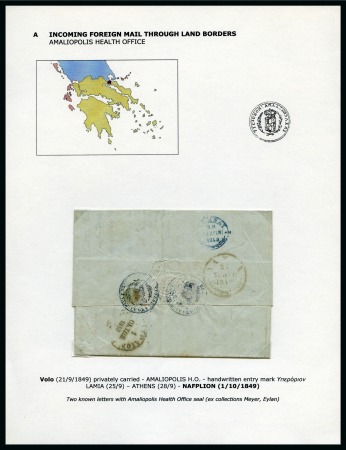
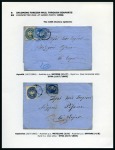
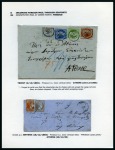
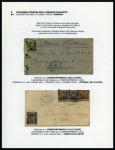
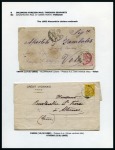
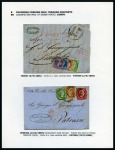
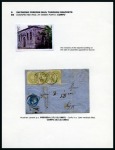
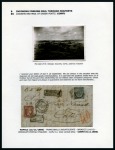
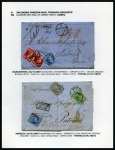
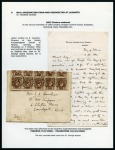
1836-1950 An extensive and specialised collection expertly written up and mounted on 128 album pages (179 items), the collection is arranged in the following way with incoming foreign mail through land borders such as Amaliopolis, Taratsa, Fourka Derveni, Makrynoros and Vonitsa (15 pages), incoming foreign mail through sea ports including Syra, Piraeus, Corfu and Kalami etc., plus mail fumigated on board French ships coming from both Ottoman & Western ports, additionally transit mail disinfected in Greece and showing both single and double disinfections (80 pages), domestic disinfected mail from the Poros Plague of 1937, Syra in 1842 and 1850, plus the Piraeus Cholera outbreak of 1854 (4 pages), mail originating from and disinfected at lazaret stations including Syra, Taratsa, St,George island and Spinaloga island (9 pages), the use of health stations and lazarets officials seals on general dispatch mail from Syra, Vostitsa, Marathonission, on postmasters mail from Serifos, Syra and Makronissos and on Official documents from Milos, Patra and Aktion (8 pages).
Highlights include one of two known covers with Amaliopolis Health Office seal, apparently unique cover with disinfection slits from Amaliopolis Health Office, possibly the unique cover with Fourka Sanitary Compond seal, unique usage of the Makrynorosplus Health Office, the only items from the Poros plague, only recorded letters from the Tararsa & St.George lazaret office, one of two recorded Spinalonga Lazaret cachets, one of three known seals of Vostitsa, Marathinission seal only two recorded and both in this collection etc., plus many Greece/Austrian Levant combination usages, attractive balance lot of some 87 items additional unmounted covers, cards and documents, a truly amazing assembly and a life time achievement in this most interesting of subjects (more than 260 covers, cards & or documents) (Est. € 30’000/40’000)
Rarity: There are a number of items that are extremely rare or unique
Provenance: Lefkofridis, Eylan, Meyer
Note: Please consult our website for complete scans at www.davidfeldman.com Vente aux enchères
Catalogue
Des scans et images complémentaires sont ajoutés de manière continue, et l’ensemble des illustrations de tous les lots sera disponible d’ici le 1er juin 2026.
Si, après cette date, vous ne trouvez pas les images souhaitées en ligne, nous vous invitons à nous contacter.
Pour toute information complémentaire concernant ce lot, veuillez nous contacter.